
REVIEW · BIG ISLAND
Farm to Table Cooking Class at Kulaniapia Falls
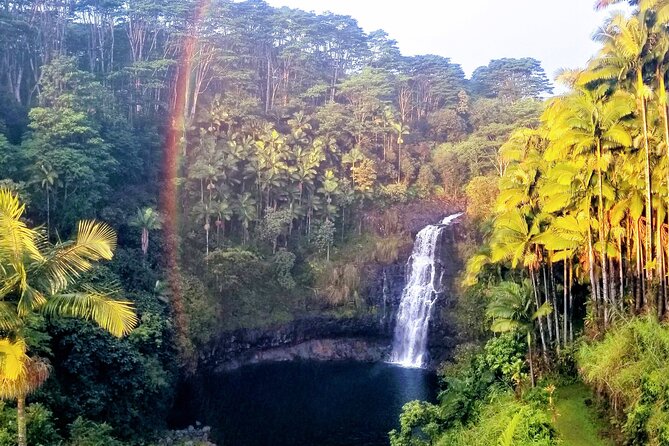
The best part of this four-hour experience happens before lunch: you walk through Kulaniapia Farms and pick the ingredients that will soon land on your plate. Fresh food becomes more meaningful when you harvest it yourself, especially in a tropical garden with a waterfall nearby and views toward Hilo Bay and Mauna Kea.
I like the small group, capped at eight, and the chance to see farm-to-table work in practice rather than hear a polished speech about it. I also like that 90 percent or more of the meal comes from the farm, with seasonal produce shaped by what is ready that morning. The main thing to consider is that the cooking may be partly demonstration rather than a full hands-on class, so do not expect to control every pan or pot.
Key points to know before you book
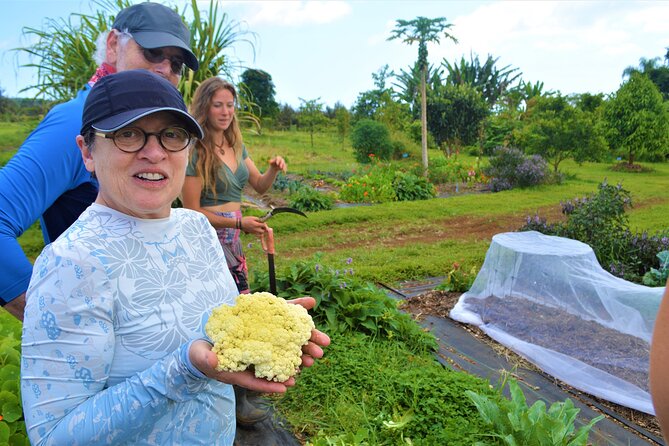
- You harvest most of your lunch yourself: Seasonal vegetables from Kulaniapia Farms make up at least 90 percent of the meal.
- The setting is part of the experience: Expect tropical gardens, a waterfall, Hilo Bay views, and sightlines toward Mauna Kea.
- The group stays small: A maximum of eight people makes it easier to ask questions and work together.
- Closed-toe shoes matter: You will walk over uneven ground and through weedy areas while collecting produce.
- The meal is plant-based: This is a good pick for people curious about fresh vegetables and simple island cooking.
- Plan for a relaxed morning: The class begins at 9:30 a.m., lasts about four hours, and ends where it starts.
A farm morning instead of a standard cooking class
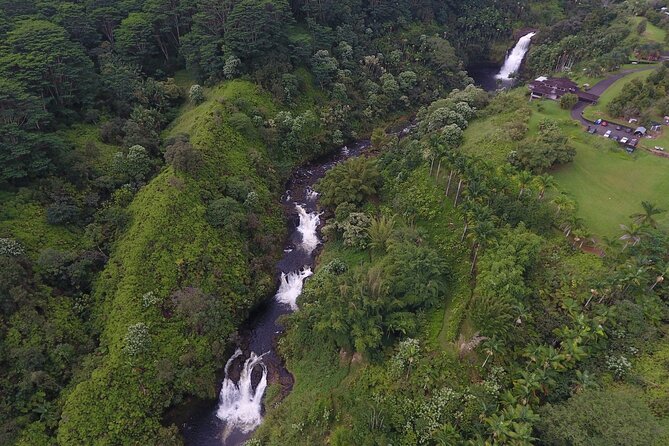
Kulaniapia Farms sits at 100 Kulaniapia Drive in Hilo, on the grounds of the Inn at Kulaniapia Falls. The setting gives this activity more character than a cooking room in town. You may begin near the waterfall, walk through bamboo gardens, and then head toward the working farm before settling in to prepare lunch.
The farm grows food in rich volcanic soil, and the class puts that fact to practical use. You will not simply look at rows of plants. You will help choose and harvest the vegetables that become part of your meal. The exact menu changes with the season, so the experience is guided by what is ripe rather than by a fixed restaurant-style list.
That seasonal approach is one of the strongest reasons to book. It shows you what farm-to-table means when the kitchen cannot depend on the same ingredients every day. You may not leave with a formal lesson in Hawaiian agriculture, but you will see the link between soil, weather, harvest, and lunch in a direct way.
More Cooking Classes in Big Island:
- Quad ride, waterfalls & aunthentic cooking class in munduk
★ 4.9 · 53 reviews
The 9:30 a.m. start and first walk
The activity begins at 9:30 a.m. at Kulaniapia Farms. From there, a member of the farm community leads you through the gardens and explains how the property grows food. The pace is relaxed, with time to look closely at the plants and select produce.
Past hosts have included Natalie, Davey, Adrian, and Ayden. Their roles have varied. Natalie led a farm walk and harvest session, while Davey handled the cooking portion in one particularly well-liked class. Adrian helped turn the morning into a social, hands-on event, and Ayden brought plenty of energy to another session. The staff changes, so you should expect the personality and teaching style to vary from one date to another.
You may also encounter other farm details during the walk. Past sessions have included collecting eggs, feeding goats, tasting bananas directly from the tree, and sampling local coffee. These touches make the morning feel connected to a working property, not just a staged lesson.
The exact order can change, but the pattern is clear: walk, harvest, prepare, eat. You should wear tennis shoes or other closed-toe, flat shoes. The farm includes uneven ground and weedy sections, and sandals would be a poor choice for this part of the morning.
Choosing vegetables from volcanic soil
The harvest is the heart of the class. You will select ripe vegetables and other farm produce with guidance from your host, then carry those ingredients into the kitchen. The menu is listed simply as farm-fresh produce because the available ingredients change.
At least 90 percent of your meal comes from what is grown on the farm. That is an unusually high share for a cooking activity, and it gives the class a clear purpose. You are not merely adding a garnish from a garden while most of lunch arrives from a supplier. The produce you pick forms the base of the meal.
This is also where you learn the limits of seasonal cooking. You will not necessarily receive a long recipe list or a fixed dish that looks identical every day. Instead, the class works with what is ready. For some people, that flexibility is the point. If you want a precise recipe lesson with exact measurements and a predictable menu, the format may feel loose.
The plant-based focus makes the class especially useful for anyone trying to cook more vegetables at home. You take away recipes built around fresh produce, along with a better sense of how to use ingredients at their peak.
Cooking lunch in the refurbished barn
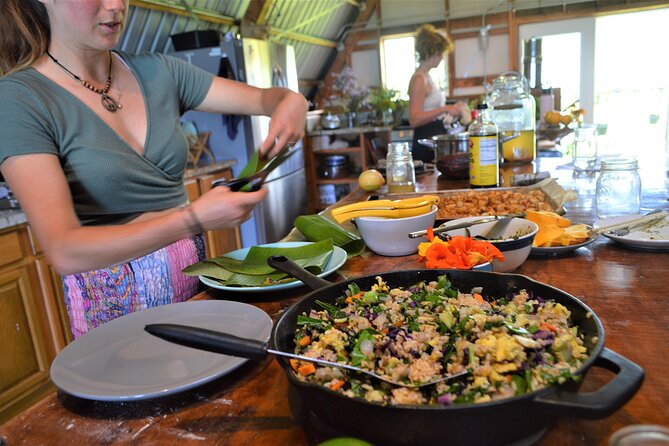
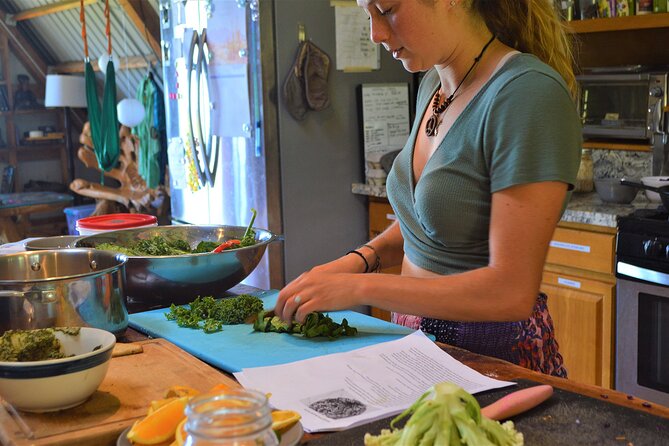
After the farm walk, you prepare lunch in a refurbished barn. The kitchen is on the second floor, with views toward the ocean, Hilo Bay, and Mauna Kea. The setting gives the cooking session a strong sense of place, and it is a pleasant contrast to the muddy or uneven ground outside.
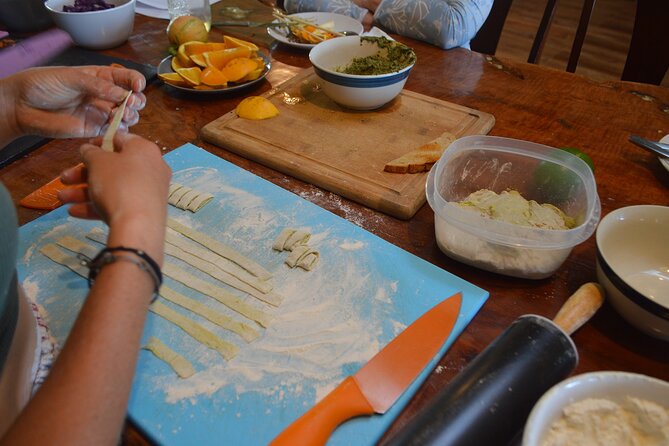
You will receive the equipment needed to harvest and prepare the meal. The class is designed as a shared effort, so you can expect to wash, cut, season, and assemble ingredients with the group. Hosts explain the produce and guide the preparation, with the final meal served for everyone to enjoy together.
Here is the important distinction: this is not always a fully hands-on chef lesson. One past participant found that the volunteer staff handled the actual cooking after the group prepared the vegetables. That person still enjoyed the food and the farm visit but wanted more time at the stove. If your main goal is to practice cooking techniques under close supervision, ask about the format when booking or arrive with modest expectations.
Other sessions have offered more direct instruction. Davey was praised for his cooking guidance, even by someone who already cooked often at home. That suggests the experience can depend quite a bit on who leads your date.
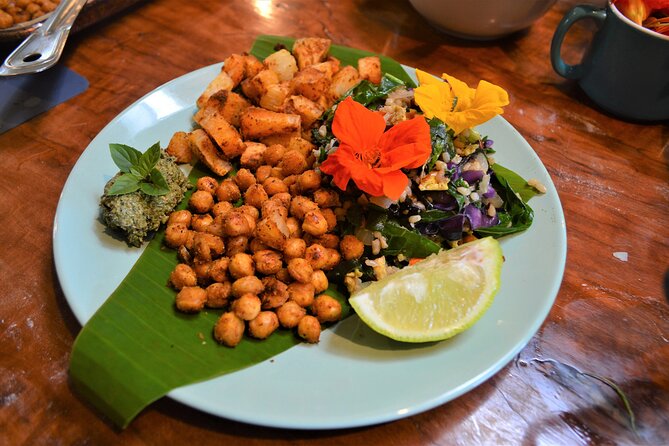
The food itself is a major strength. The meal is fresh, plant-based, and tied closely to the morning’s harvest. You do not just eat a dish in an attractive setting. You know where much of it came from and had a hand in bringing it to the table.
More Farm Visits in Big Island:
- Farm-to-Table Chef’s Dinner at Kulaniapia Falls
★ 4.5 · 42 reviews - Isafjordur: Dynjandi Waterfall Tour and Icelandic Farm Visit
★ 4.7 · 1,245 reviews - Dynjandi Waterfall & Iceland Farm Visit Tour
★ 4.5 · 1,056 reviews - Big Island: Volcanoes, Waterfalls, & Coffee Farm Day-Trip
★ 4.9 · 414 reviews
Views, waterfall, and the extra walk
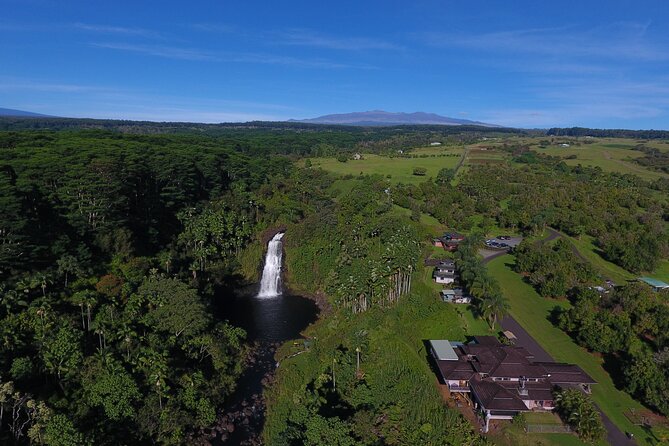
The farm setting gives you more than a kitchen. You can see the waterfall at Kulaniapia Falls and walk through the property’s bamboo gardens. A short walk down to the river has also been part of the morning for some groups.
The waterfall and river add a welcome outdoor element, but this is not primarily a waterfall tour. The food and farm work remain the focus. Think of the scenery as part of the setting rather than the entire reason to book.
The second-floor barn is particularly appealing for the views. You can prepare lunch while looking toward the ocean, Hilo Bay, and Mauna Kea. On a clear day, that should be one of the most memorable parts of the experience. Weather and visibility can affect what you see, so the views should be treated as a bonus rather than a guarantee.
The property can also make the morning feel longer than a standard four-hour class. You are moving between gardens, kitchen, and outdoor areas, with time to eat and talk. That relaxed pace suits people who want a gentle Hilo outing. It may not suit someone trying to pack several major sightseeing stops into the same morning.
How the small group changes the class
The maximum group size is eight, and a smaller party can make a real difference. With four to six people, you have more room to ask questions, share tasks, and hear the guide without competing with a large crowd.
A small group also helps the social side of the experience. You are preparing one meal together, so the class naturally involves conversation and cooperation. Couples, friends, and families can all fit the format, although young children would need to manage uneven ground and a food-preparation setting.
The small size does not guarantee one-on-one cooking instruction. There may still be shared jobs, and the host may take over parts of the meal. But it does make the farm walk feel more personal and gives you a better chance to learn about the property.
The atmosphere is casual rather than formal. That is good news if you want a friendly morning with room for mistakes. It is less ideal if you expect a polished culinary school with a strict lesson plan.
Is $169 a fair price?
At $169 per person, this is not a cheap lunch. The value comes from the combination of several elements: a guided farm visit, hands-on harvesting, use of the kitchen and equipment, a fresh meal, and access to a scenic property near Hilo.
You are also paying for a small group rather than a large food demonstration. If you would otherwise book a farm tour and a separate cooking class, this activity combines both in one morning. The meal itself is part of the experience, not just a snack at the end.
Still, the price makes the format important. If your priority is eating a gourmet meal, the cost may feel high. If your priority is learning where food comes from, working with seasonal produce, and spending time in a beautiful farm setting, the value is easier to see.
Gratuity is not included. About $20 per guest is typical for this activity, so include that in your budget. The class is offered in English and includes a mobile ticket, which keeps the practical side simple.
Because it averages 46 days of advance booking, popular dates can fill well ahead of time. Booking early makes sense if your Hilo schedule is fixed, especially since the group is limited to eight.
Who will enjoy this most
I would choose this class if you like food, gardens, and a relaxed pace. It suits couples looking for something more personal than a restaurant meal, friends who want a shared activity, and families interested in seeing how food grows.
It is also a good match for home cooks. You may pick up ideas for using vegetables more simply, and you can take home plant-based recipes. The class does not require advanced cooking skills, and the shared format means you do not need to arrive as a chef.
This is less suitable if you dislike walking on uneven ground, want a strictly vegan menu with every ingredient specified in advance, or need a tightly timed itinerary. The information provided confirms a plant-based lunch, but it does not provide a fixed menu or detail every ingredient.
People who want full control of the cooking should also think carefully. Some sessions appear to offer plenty of participation, while others may have staff complete the cooking after the group handles preparation. The class is best viewed as a farm-and-food experience with cooking included, not as a technical chef course.
Practical details for a smoother morning
The meeting point is 100 Kulaniapia Drive in Hilo, and the activity returns there after roughly four hours. The start time is 9:30 a.m., so plan your morning around that fixed departure.
Wear sturdy, closed-toe shoes with flat soles. The farm walk can include uneven ground and weedy areas. Comfortable clothing is sensible because you will be outside, handling produce, and moving between the garden and kitchen.
The activity includes lunch and the tools and supplies needed to harvest and prepare it. It does not include gratuity. The maximum is eight people, and confirmation arrives at booking.
Free cancellation is available if you cancel at least 24 hours before the start time. Changes or cancellations made inside that window are not accepted for a refund. The activity also requires a minimum number of participants, so if the provider cancels for that reason, you can choose another date or experience, or receive a full refund.
Should you book the Kulaniapia farm class?
Book it if you want to connect a meal with the place where its ingredients grow. The waterfall, bamboo gardens, ocean views, and small group make the setting special, but the real value is the harvest itself. You pick much of the produce, prepare lunch, and leave with plant-based recipes you can use at home.
I would book early because the class is limited to eight and often reserved well in advance. Wear proper shoes, budget for the suggested $20 gratuity, and expect a relaxed class rather than a formal cooking school. If that sounds like your kind of morning, this is one of the more distinctive food experiences to add to a Hilo stay.
FAQ
Where does the cooking class take place?
It takes place at Kulaniapia Farms, located at 100 Kulaniapia Drive, Hilo, Hawaii 96720. The activity ends back at the same meeting point.
What time does the experience start?
The class starts at 9:30 a.m.
How long does the activity last?
The experience lasts approximately four hours.
What kind of meal will I prepare?
You will prepare a fresh, plant-based lunch using seasonal produce from the farm. At least 90 percent of the meal comes from produce grown there.
Is lunch included?
Yes. Lunch is included, and you make it together using ingredients you help harvest.
Is the class offered in English?
Yes. The activity is offered in English.
How many people can join the class?
The maximum group size is eight people.
What should I wear?
Wear tennis shoes or other closed-toe, flat shoes. You will walk over uneven ground and through some weedy areas while visiting the farm.
Is gratuity included?
No. About $20 per guest is typical for gratuity for this activity.
Can I cancel for a refund?
Yes, if you cancel at least 24 hours before the experience begins. Cancellations or changes made less than 24 hours before the start time are not refunded or accepted.
Just added around Big Island
- Volcano Adventure Tour & Waterfall – Shore Excursion from Hilo Harbor★ 4.0 · 10 reviews
- Waterfall Rappelling at Kulaniapia Falls: 120 Foot Drop, 15 Minutes from Hilo★ 5.0 · 80 reviews
- Umauma Falls 4-Line Zipline Experience★ 4.5 · 52 reviews
- Hilo-6 Hour Private Tour-Volcanoes NP, Rainbow Falls and more.★ 5.0 · 16 reviews
- Volcano, Chocolate and Waterfalls of the Big Island★ 5.0 · 238 reviews
- Private Hilo Shore Excursion to Volcano Waterfall and Black Sand★ 5.0 · 9 reviews
- Hawaii Big Island Circle Small Group Tour: Waterfalls – Hilo – Volcano – Black Sand Beach★ 5.0 · 93 reviews
- Kulaniapia Falls Daypass with Activity Discount★ 4.5 · 167 reviews
Big Island Waterfall Tours, compared.
Hilo Shore Excursion: Volcanoes National Park & Black Sand Beach
Read our review →
Big Island Zipline Tour Near Akaka Falls (250-ft Waterfall!)
Read our review →
Big Island: 9-Line Waterfall Zipline Experience
Read our review →
Big Island Highlights: Coffee, Volcano, Black Sands & Waterfall
Read our review →
Big Island Waterfalls Tour with Swimming and Botanical Garden
Read our review →
Hawaii Volcanoes, Waterfalls, Beaches & Hilo Highlights Day Tour
Read our review →
Hilo Shore Excursion: Volcano Safari Lava Caves & Black Sand
Read our review →
Browse the lists this tour appears in