
REVIEW · BIG ISLAND
Hilo Shore Excursion: Volcano Safari Lava Caves & Black Sand
Kilauea’s power is easiest to grasp where it has changed ordinary places. This tour takes you past roads, homes, beaches, and forests reshaped by lava, then down into Kaumana Caves and out to black sand formed by a fresh eruption. It is less about viewing a volcano from a distance and more about seeing what molten rock does to a community.
I like the small groups of up to 14 and the mix of stops. You get a cave, waterfall, lava-tree forest, geothermal coast, and recent eruption zones in one day. Guides including Ellen, Troy, Dave, and Lori have earned strong praise for their island history and flexible route planning. The main caution is uneven ground, steep cave steps, and changing beach or volcano access.
Key points to know before booking
- Kaumana Caves requires careful footing: You enter through a skylight on steep, uneven steps, with a flashlight useful inside.
- Recent lava flows are the main story: Pahoa, Leilani Estates, Kaimu, and the lower Puna coast show how Kilauea has altered homes, roads, forests, and shorelines.
- The group is capped at 14 people: That usually makes the van easier to manage than a large coach, though seating comfort can vary.
- The route can change: Rainbow Falls is scheduled to be removed starting June 1, 2026, while the Pohoiki black-sand stop is being replaced during harbor work.
- Lunch is purchased, not included: You stop at a local market or vendor, so bring room in your budget for food.
- Plan for rain and rough ground: Good walking shoes, a light rain layer, and a willingness to skip the cave if needed will make the day easier.
Why the lower Puna coast is the real star
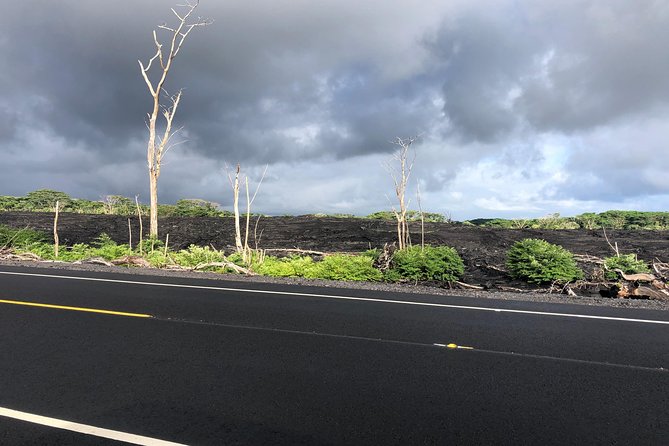
The most useful way to understand this excursion is as a tour of change. Kilauea’s eruptions did not simply create a new lava field. They forced evacuations, buried roads, altered shorelines, erased a freshwater lake, and left homes and businesses in the path of slow-moving fire.
From Hilo, you head toward the Puna district on smaller roads and through old mango groves. The drive matters because it gives you a sense of the transition from settled Hilo to a more rural part of the island. Your guide explains what happened in the affected communities rather than treating the lava as a pretty photo backdrop.
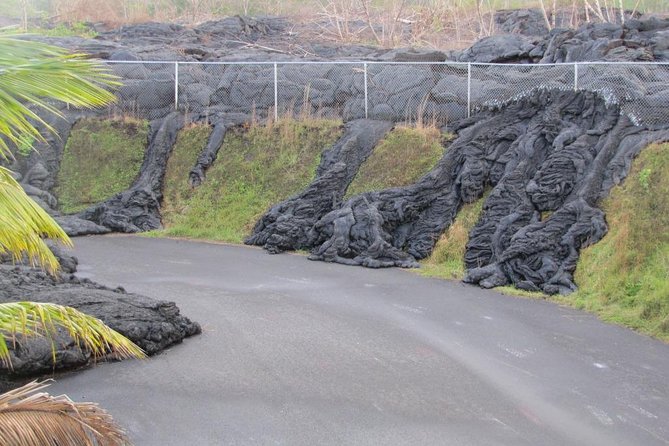
In Pahoa, you see a town that came close to being cut off during the 2018 eruption. The town has an old plantation-era feel, with wooden walkways and a relaxed local character. You may also see areas affected by the lava flow that forced residents to leave.
At Leilani Estates, the focus turns to the force beneath the ground. Earthquakes cracked roads, lava fountains rose hundreds of feet, and nearly 2,000 people were evacuated. The eruption also destroyed Green Lake, once Hawaii’s largest natural freshwater lake. This section can feel less polished than a standard sightseeing stop, but that is part of its value. You are seeing a lived-in community changed by geology.
A short visit to this area means you should not expect a long walk through every affected road. The vehicle does much of the work, with about 10 minutes listed for the stop. The quality of the experience depends heavily on the guide’s explanations, and this is where guides such as Ellen, Dave, Troy, and Lori have been praised for making the science and local story easier to follow.
More Shore Excursions in Big Island:
- Hilo Shore Excursion: Volcanoes National Park & Black Sand Beach
★ 4.5 · 2,338 reviews - Hilo Shore Excursion: Visit Volcano, Waterfall, Beach with Lunch
★ 5.0 · 80 reviews - Volcano Adventure Tour & Waterfall – Shore Excursion from Hilo Harbor
★ 4.0 · 10 reviews
Kaumana Caves: the tour’s most physical stop
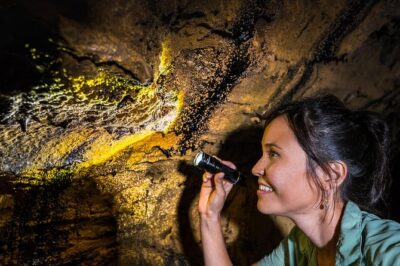
Kaumana Caves is one of the day’s most memorable stops. You descend through a natural opening, or skylight, into a lava tube formed by Mauna Loa. When molten lava moves through a tube, the outer surface cools while hotter material continues flowing below. Once the eruption ends, the empty passage remains.
The cave is dark, damp, and uneven. The steps into it are steep, and the rock can be slippery. Wear sneakers or sturdy walking shoes, not sandals. A flashlight or headlamp is useful, though guides have supplied neck lights and flashlights on some departures.
You do not have to enter the tube if the footing feels unsafe. You can still appreciate the opening and hear the geological explanation without making the descent. This flexibility is important because the tour is described as moderate, not easy.
The listed visit lasts about 20 minutes. That is enough for a look inside and a short explanation, but not enough for a long underground walk. If you want a relaxed cave experience, you may find the time brief. If you prefer a varied day with several stops, the short visit keeps the route moving.
Rainbow Falls, then a change after June 2026
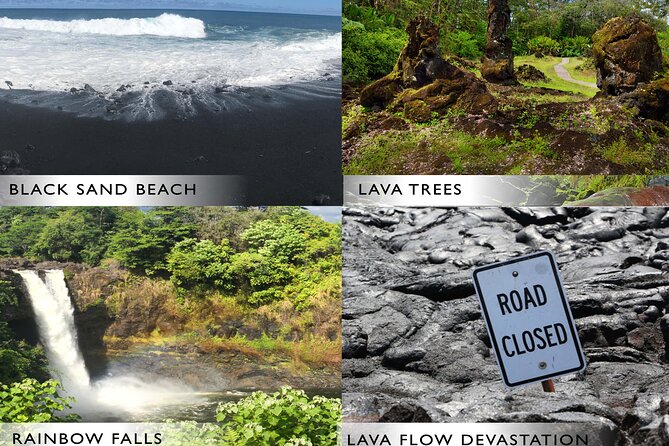
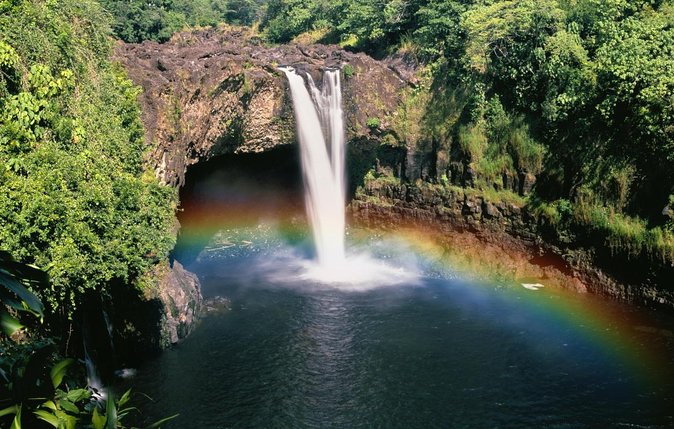
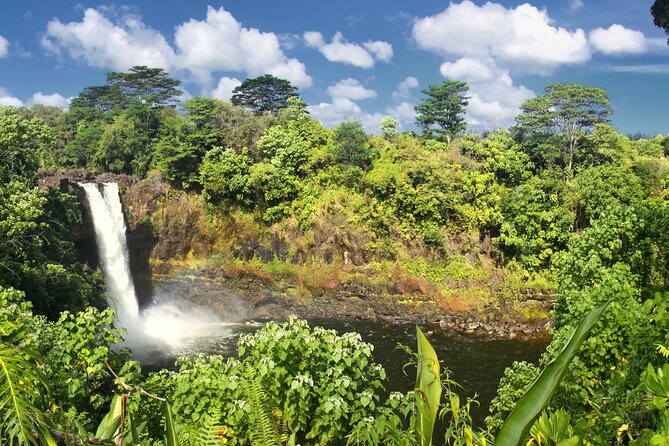
Before June 1, 2026, the tour includes Rainbow Falls, an 80-foot waterfall near Hilo. Mist often produces a rainbow as the water drops over the rocks, and the stop takes about 20 minutes.
This is an easy contrast to the rough lava sites. You get a quick scenic view without a demanding walk, making it a good early stop while you are still getting settled. It also gives the tour some variety. The day is not only about destruction and geology.
Starting June 1, 2026, Rainbow Falls is scheduled to be removed. The replacement is Liliuokalani Japanese Garden, created with a donation from Queen Liliuokalani in 1917. The garden includes stone lanterns, gazebos, and torii gates, and recalls the Japanese immigrant community in Hawaii.
That change is worth checking before you book because the two stops offer very different experiences. Rainbow Falls is a brief nature view. The Japanese garden is more cultural and reflective. A short drive through historic downtown Hilo, with discussion of past tsunamis, is also part of the urban introduction.
Lava Tree State Park shows what fire leaves behind
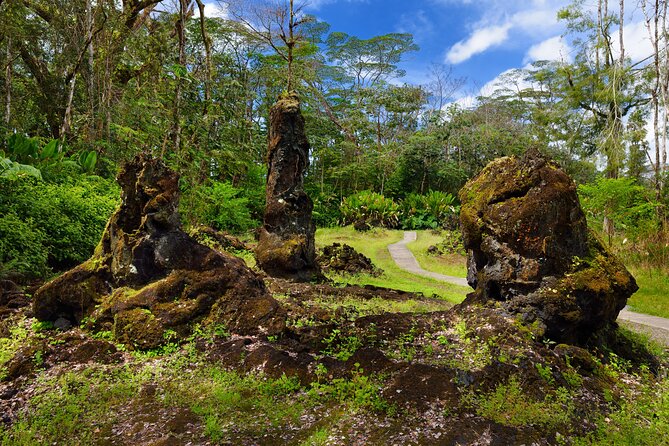
At Lava Tree State Park, lava once rushed through the forest and coated the trunks of ohia trees. The trees burned or decayed, leaving hollow molds in the hardened lava. The result looks a little like a forest made of stone, although the process is different from ordinary petrification.
You follow a short trail and may look down into a deep fissure. The listed stop lasts around 25 minutes, enough to see the main formations without turning the visit into a long hike.
This is one of the better stops for understanding how fast-moving lava interacts with a living forest. The trees were not simply swept away. Their shapes were recorded in the lava, leaving a strange outline of the forest that once grew there.
The trail is still uneven, and rain can make footing harder. If you need a perfectly smooth path, this is not the right excursion. If you like short walks with unusual geology, it earns its place.
More Safaris in Big Island:
- Kauai Deluxe Waterfall Safari: Helicopter Tour
★ 5.0 · 900 reviews - Side: Green Canyon and Waterfall Jeep Safari with Lunch
★ 4.9 · 747 reviews - Rainforest Hike and Waterfall Safari
★ 5.0 · 567 reviews - Lihue: Deluxe Waterfall Safari Helicopter Tour
★ 4.8 · 422 reviews
Black sand and warm water at Pohoiki
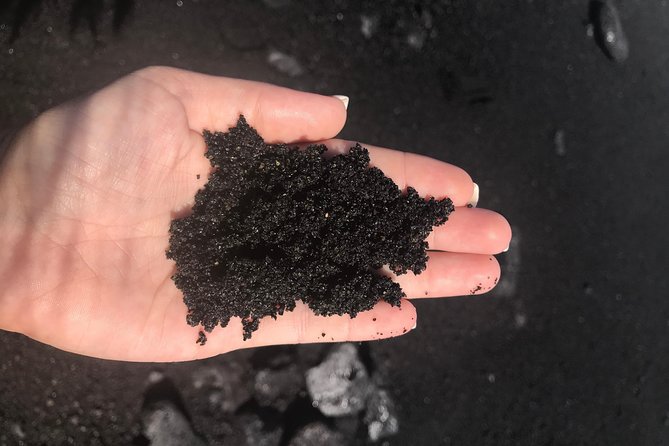
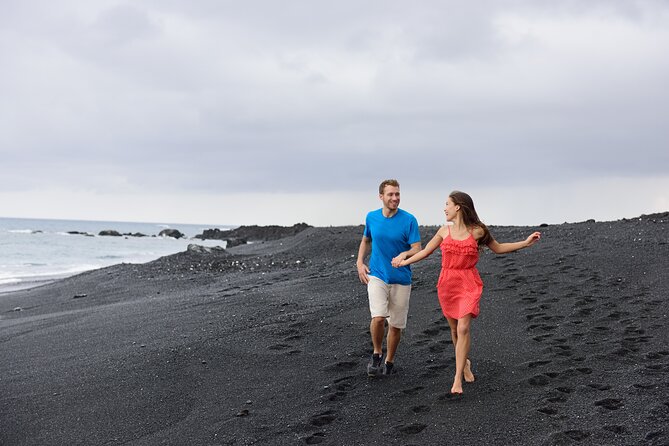
Pohoiki Bay is where the volcanic story reaches the ocean. Lava met the cool, salty sea and created new shoreline. At the newer black-sand beach, you can see how volcanic rock breaks down into dark grains over time.
The stop is about 20 minutes, and swimming is not allowed at this location. Treat it as a place for a short walk, photos, and a close look at the altered coast, not as a beach day.
The tour information warns that harbor work began June 12, 2025, including dredging around the lava-covered area and restoration of the boat ramp. Because of this, the black-sand beach stop is being replaced with an alternate location. Confirm the current beach stop before departure. This is one part of the experience that can change for practical reasons, not because the tour operator has changed its focus.
The earlier Kaimu section adds more context. A former Queen bath and town were destroyed by a 1990 lava flow, and rainforest is now reclaiming the area. A local exhibit shows what the place looked like before the eruption. You may also photograph a volcanic vent in the distance and walk roughly 15 minutes across old lava to reach a black-sand beach.
A coastal overlook and the old Kings Trails
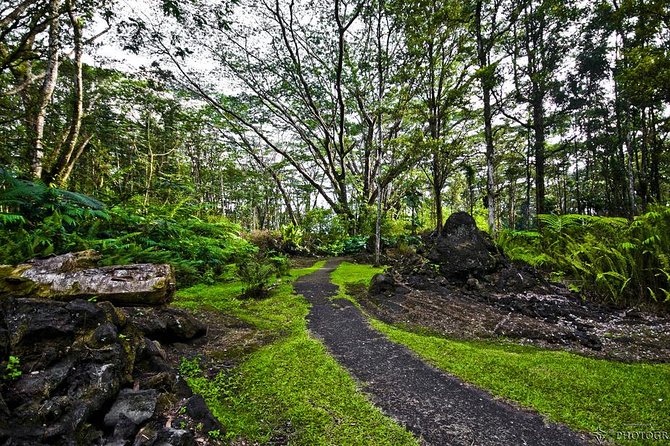
The route includes a dramatic overlook near salt cedar pine trees and the old Kings Trails. From here, you can watch waves strike high sea cliffs.
This is a useful pause after the more demanding volcanic stops. It lets you see the coast as a natural boundary rather than only as the endpoint of lava flows. The old trails also add a human layer, showing that these routes were used long before the modern road system.
The exact order can shift. A guide may place this stop earlier or later to avoid crowds, manage weather, or keep the return to the ship on schedule. That flexibility has worked well on some departures, with guides adding a nearby lava field or adjusting the route around volcanic activity. It can also mean that the day does not match every stop in the advertised order.
Small van, local commentary, and the value of the price
At $154 per person, this is not the cheapest way to see Hilo. The price makes more sense if you value port pickup, ship return, a professional guide, bottled water, and a small group that reaches places a large coach may not handle easily.
The group limit is 14 people. That is a strong middle ground: more personal than a full-size bus, but less costly than a private vehicle. Some departures use a 14-passenger Mercedes Sprinter, while other experiences have used a clean SUV for a smaller party. Vehicle comfort may depend on the group and the assigned driver, so do not book this expecting luxury seating.
The strongest part of the value is the guide. Ellen has been praised for timing stops around larger tour groups and for sharing volcano history. Troy has been singled out for explaining Hilo’s geography, history, and current life. Dave has handled extra explanations and occasional route changes, while Lori has been praised for making an eruption-focused day feel personal and well organized.
That does not guarantee the same style on every departure. One poor experience involved a rushed-feeling route, missed scheduled stops, cramped seating, and too much time spent on unplanned diversions. Another departure had a pickup delay caused by port traffic. I would treat those as reminders to confirm the meeting point, listen for the guide’s timing instructions, and tell the guide before leaving early.
Lunch is not included. The vehicle stops at a local market or vendor for about 15 minutes, depending on the day. You can buy a hot deli item, poke, salad, or another local meal, but the short stop is more practical than leisurely. Bring a card or cash for food and do not expect a hosted lunch.
What to pack for the six-hour day
You need less gear than you might think, but the right basics matter.
- Wear closed-toe shoes with a good grip.
- Bring a light rain jacket or poncho.
- Carry a small amount of money for lunch and souvenirs.
- Bring a phone or camera with enough battery for repeated short stops.
- If you are sensitive to darkness, consider bringing a small personal flashlight for the cave.
- Leave room for a snack, since the lunch stop is brief and food is not included.
The tour runs in rain and other ordinary weather conditions. A wet day can make lava and cave surfaces slick, so walking ability matters more than the weather forecast alone.
This is not suitable for anyone who cannot manage uneven ground, gravel, lava rock, or steep steps. Walkers and wheelchairs cannot be accommodated. You can skip the cave, but the rest of the day still includes rough outdoor surfaces.
Who will enjoy this tour most
I would choose this excursion if you want a broad introduction to Hilo’s volcanic side in one port day. It suits people who like geology, local stories, short walks, and views that show how eruptions affect real communities.
It is also a good fit if you are staying at a Hilo hotel and want round-trip transport without renting a car. Cruise passengers get the added comfort of a shore-excursion guarantee: the operator plans to return you to the Hilo pier on time, and if the ship is delayed, the departure time can be adjusted. If the ship does not call at the port, a refund is available under the stated terms.
I would hesitate if your main goal is Hawaii Volcanoes National Park. The standard route described here does not center on the national park, although some departures have changed course when park access or special conditions allowed it. Ask before booking if the park is essential to your day.
I would also skip it if you want a slow beach afternoon, a sit-down meal, or a smooth sightseeing bus. This is an active sampler with several short stops and a fair amount of driving.
Should you book the Volcano Safari?
Book it if you want to see the Big Island through the marks left by Kilauea: lava tubes, tree molds, new black sand, altered neighborhoods, and shorelines remade by fire. The combination is stronger than any single waterfall or beach stop, and the small group can make the day feel more personal.
Before paying, check two details: which stop replaces Rainbow Falls after June 1, 2026, and which location replaces Pohoiki during harbor work. If you can handle uneven ground and you value a guide who explains what you are seeing, the $154 price is reasonable for a six-hour port excursion. If you need easy walking or a guaranteed national park visit, choose another Hilo plan.
FAQ
How long does the Hilo Volcano Safari tour last?
The experience lasts approximately six hours, including transportation, sightseeing stops, a lunch purchase stop, and return to your original pickup point.
Where can pickup and drop-off take place?
Pickup and drop-off are offered at the Hilo cruise port or at a Hilo hotel. Exact departure time may vary with the cruise ship’s disembarkation schedule.
Is lunch included?
No. The tour stops at a local market or vendor so you can purchase food. Souvenirs and other personal purchases are also not included.
Can I enter Kaumana Caves?
Yes, if you are comfortable with steep steps and uneven, potentially slippery ground. You do not have to enter the lava tube if it feels too difficult.
Is the black-sand beach stop guaranteed?
No. The Pohoiki area is affected by harbor dredging and boat-ramp restoration work, so the black-sand beach stop is being replaced with an alternate location during the project.
What happens if bad weather cancels the tour?
If the experience is canceled because of poor weather or because the minimum number of participants is not reached, you can choose another date or experience, or receive a full refund. You can also cancel for a full refund up to 24 hours before the start time.
Just added around Big Island
- Volcano Adventure Tour & Waterfall – Shore Excursion from Hilo Harbor★ 4.0 · 10 reviews
- Waterfall Rappelling at Kulaniapia Falls: 120 Foot Drop, 15 Minutes from Hilo★ 5.0 · 80 reviews
- Umauma Falls 4-Line Zipline Experience★ 4.5 · 52 reviews
- Hilo-6 Hour Private Tour-Volcanoes NP, Rainbow Falls and more.★ 5.0 · 16 reviews
- Volcano, Chocolate and Waterfalls of the Big Island★ 5.0 · 238 reviews
- Private Hilo Shore Excursion to Volcano Waterfall and Black Sand★ 5.0 · 9 reviews
- Hawaii Big Island Circle Small Group Tour: Waterfalls – Hilo – Volcano – Black Sand Beach★ 5.0 · 93 reviews
- Kulaniapia Falls Daypass with Activity Discount★ 4.5 · 167 reviews
Big Island Waterfall Tours, compared.
Hilo Shore Excursion: Volcanoes National Park & Black Sand Beach
Read our review →
Big Island Zipline Tour Near Akaka Falls (250-ft Waterfall!)
Read our review →
Big Island: 9-Line Waterfall Zipline Experience
Read our review →
Big Island Highlights: Coffee, Volcano, Black Sands & Waterfall
Read our review →
Big Island Waterfalls Tour with Swimming and Botanical Garden
Read our review →
Hawaii Volcanoes, Waterfalls, Beaches & Hilo Highlights Day Tour
Read our review →
Volcano, Chocolate and Waterfalls of the Big Island
Read our review →Browse the lists this tour appears in