
REVIEW · BIG ISLAND
Private – All Inclusive Big Island Volcano & Waterfalls Tour
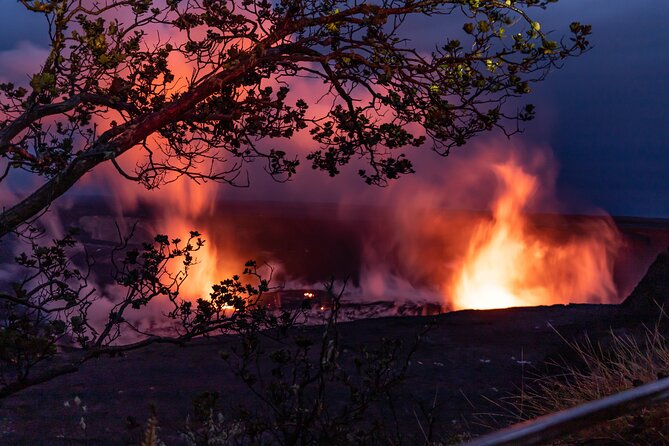
Kilauea is the headline here. This private Big Island outing takes you from Rainbow Falls to Akaka Falls, then into Hawaii Volcanoes National Park for steam vents, a lava tube, crater views, and a sunset attempt at seeing active lava. The day can end with a Hawaiian-style dinner in Volcano.
I like the private format, since your guide can adjust the pace for your group of up to two. I also like the thoughtful extras: lunch and dinner, trail snacks, rain jackets, warm layers, hiking poles, binoculars, and 20 to 25 edited photos.
The main drawback is the length. At about 12 and a half hours, this is a serious full-day outing, with a great deal of driving and walking. Lava, clear crater views, and good weather are never guaranteed, so book this for the full volcanic experience rather than for one promised sight.
Key points to know before booking
- Sunset at Halema‘uma‘u Crater: The day builds toward an evening walk to a lava-viewing location along the crater rim, when conditions allow.
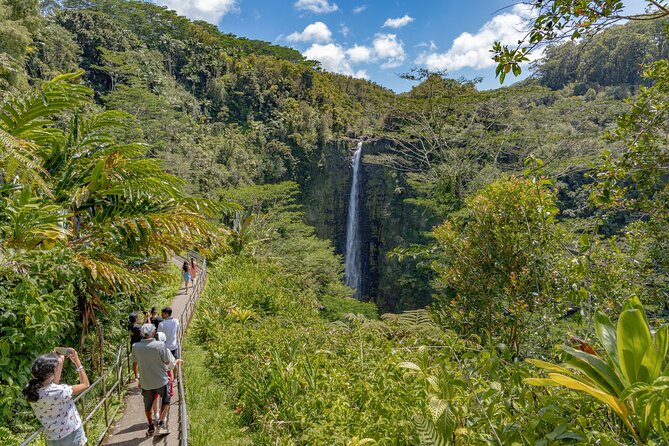
- Two major waterfalls: Rainbow Falls and 442-foot Akaka Falls give the tour a strong water-and-rainforest opening.
- Private transportation for two: The $1,660 group price covers up to two people, not two separate per-person fares.
- Meals and outdoor gear included: Lunch, dinner, drinks, snacks, rain jackets, warm layers, binoculars, and hiking poles are supplied.
- A full Big Island cross-section: You travel from the dry high saddle between Mauna Kea and Mauna Loa to the wet Hilo side and volcanic south.
- Walking is manageable but real: Plan on at least 0.5 to 1 mile of walking, with steps and uneven, rocky, wet, or muddy ground.
Why the sunset volcano finish matters
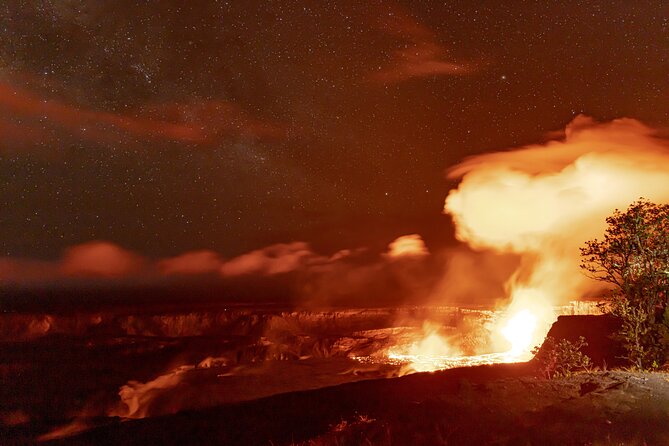
Many Big Island tours visit Hawaii Volcanoes National Park in the middle of the day, then turn around. This one keeps going into the evening, giving you a chance to see Halema‘uma‘u Crater as daylight fades.
That timing matters. Steam, crater walls, and any visible lava can look very different at sunset and after dark. The plan includes a hike to what is described as the best lava-viewing location along the rim. Volcanic activity and visibility change, so you should treat this as an opportunity, not a guarantee.
The park sits within a UNESCO World Heritage Site and International Biosphere Reserve. It reaches from sea level to the summit of Mauna Loa at 13,677 feet, though this tour focuses on selected accessible areas rather than a summit climb. Your guide can explain the volcanic forces, native plants, endangered wildlife, and Hawaiian connections tied to the park.
The cultural side matters here. Halema‘uma‘u is traditionally connected with Pele, the Hawaiian goddess of fire and volcanoes. A good visit is not only about whether you can see glowing lava. It is also about understanding why this crater has such weight in Hawaiian culture and why the ground beneath you remains active.
More Private Waterfall Tours in the USA
- Private Big Island Tour: Coffee, Beaches, Volcanos, Waterfalls
★ 5.0 · 54 reviews - Hilo-6 Hour Private Tour-Volcanoes NP, Rainbow Falls and more.
★ 5.0 · 16 reviews - Private Magical Waterfall Tour
★ 5.0 · 12 reviews
Crossing the Saddle Road between two giants
The morning drive heads over Saddle Road, between Mauna Kea and Mauna Loa. These are two of the largest volcanoes on Earth, and the crossing gives you a sense of how unusually large the Big Island is.
This section is mainly about transition. You leave the drier high country and travel toward the lush east coast. The changing scenery helps explain the island’s sharp climate differences, which are easy to miss if you stay near one resort area.
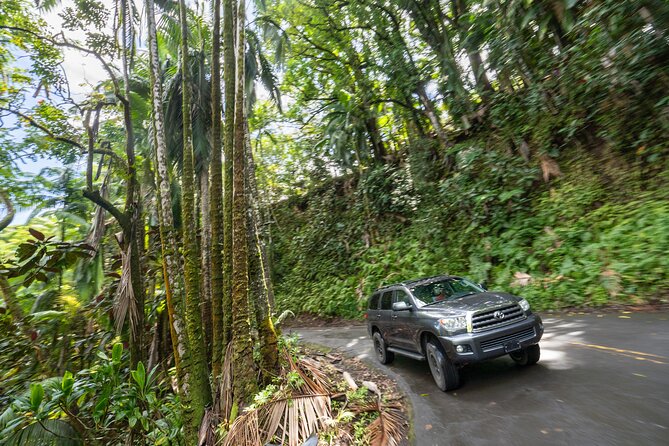
The vehicle is private, and pickup is offered. After booking, the guide contacts you to confirm the pickup place, review the plan, and answer questions. That personal contact is useful because this is a long day with several moving parts.
Bring a light personal layer even though warm clothing is supplied. The tour includes a Patagonia rain jacket and Nano Puff jacket, but temperatures and weather can shift during a day that moves between high ground, rainforest, and the volcano.
Rainbow Falls and the Wailuku River
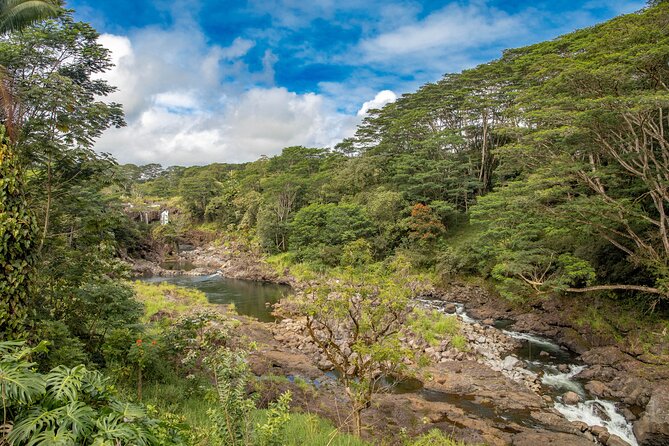
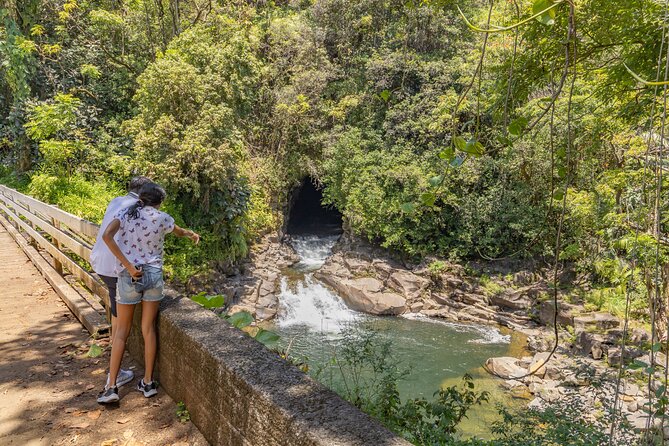
Your first major stop is Rainbow Falls in Wailuku River State Park. Water drops over a cave, and sunlight through the mist can create the rainbow that gives the falls their name.
This is an easy, attractive first stop after the drive. You can walk out for a clear look at the waterfall and hear your guide explain the local setting. The stop is scheduled for about two hours, including a visit to Boiling Pots roughly one mile from the falls.
Boiling Pots is not a series of bubbling hot springs. It is a water feature shaped by old lava formations in the river. Take care around any wet or uneven viewing areas, and follow your guide’s directions. The area gives you an early look at how volcanic rock continues to shape the island long after an eruption ends.
The two-hour allocation is generous compared with a quick roadside photo stop. It allows room for both sites, though the actual walking pace depends on your group and conditions.
Akaka Falls, rainforest, and native plants
Akaka Falls State Park changes the mood completely. The walk passes through native rainforest before reaching Akaka Falls, which drops 442 feet down a near-vertical cliff covered in green plant life.
Your naturalist guide interprets the plants along the route rather than simply leading you to a viewpoint. That makes this stop more rewarding if you want to understand how the wet east side supports such dense growth.
The walk lasts about an hour. It is not a long trek, but the path includes steps and can be wet or muddy. Wear shoes you trust on uneven ground. You do not need to carry a large supply of food or water because trail snacks and non-alcoholic drinks are provided, but a small personal bag is still useful.
This waterfall stop balances the volcano portion nicely. If Kilauea is dramatic and raw, Akaka Falls is cool, shaded, and full of plant life. You get two very different versions of the island before lunch.
More Private Waterfall Tours in Big Island:
- Private Hilo Shore Excursion to Volcano Waterfall and Black Sand
★ 5.0 · 9 reviews - Ubud: Waterfalls, Water Temple & Rice Terraces Private Tour
★ 5.0 · 5,484 reviews - Ubud: Waterfall, Rice Terraces & Monkey Forest Private Tour
★ 4.9 · 4,894 reviews - Mostar and Kravice Waterfalls Tour from Dubrovnik (Semi-Private)
★ 5.0 · 3,125 reviews
A local lunch stop in Hilo
After the morning’s walks, the tour pauses in Hilo for lunch at a local restaurant along the coast. The meal is included and uses locally sourced food.
The practical benefit is obvious: you do not need to spend time choosing a restaurant during a tightly packed day. More important, a sit-down meal gives you a chance to rest before the longer afternoon and evening in the national park.
The supplied information does not name the restaurant or provide a fixed menu, so do not book this expecting a particular dish. The emphasis is on local ingredients and a proper meal rather than a packaged lunch eaten in the vehicle.
Hilo also marks a natural midpoint in the day. You have already seen waterfalls and rainforest, and the next section turns to craters, lava, steam, and open volcanic ground.
Entering Hawaii Volcanoes National Park
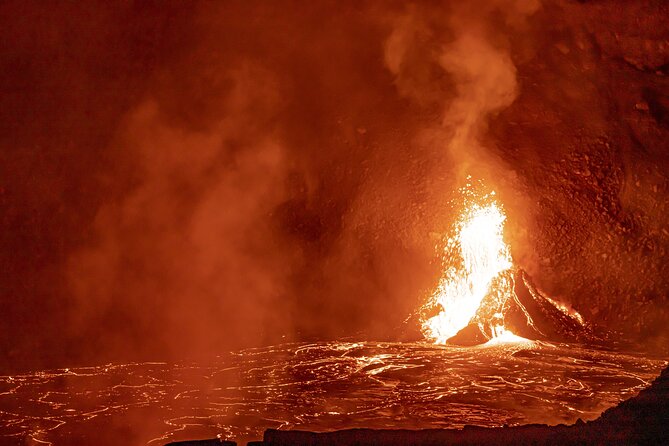
The afternoon centers on Hawaii Volcanoes National Park, home to the summits of two active volcanoes and a remarkable range of ground shaped by volcanic forces. The main planned crater walk follows the rim of Halema‘uma‘u, with views toward the area associated with the current eruption.
Conditions at the volcano can change quickly. Visibility, closures, volcanic activity, and weather can affect what your guide can show you. The itinerary allows time for the guide to adapt, which is one of the strongest reasons to choose a private tour instead of a rigid group schedule.
The park also protects rare wildlife and unusual plant communities. Your guide can connect the geology with the living world around it, including the way plants reclaim old lava. That context helps turn black rock and steaming cracks into something more than photo stops.
You will spend about an hour and a half on the first main park visit, then continue to several other areas. The total park time is substantial, which is important because the park is too large to understand from one overlook.
Steaming Bluff and the heat below your feet
At Wahinekapu Steaming Bluff, groundwater heated by the volcanic system escapes through cracks as steam. The sight is quieter than a lava flow, but it gives you a direct reminder that the volcano remains active below the surface.
This stop lasts about 30 minutes. It is a short pause, but a useful one. You can watch the steam rise, feel the cooler air around the rim, and listen as the guide explains what is happening beneath the ground.
Do not expect a dramatic explosion or a large geyser. The appeal is the plain evidence of heat moving through the earth. In a day built around waterfalls and lava, this is one of the clearest links between surface scenery and underground volcanic activity.
Walking through Thurston Lava Tube
The Nahuku, or Thurston Lava Tube, is one of the more memorable walking stops. You pass through native rainforest and enter a lava tube that runs about 600 feet and reaches more than 20 feet high in places.
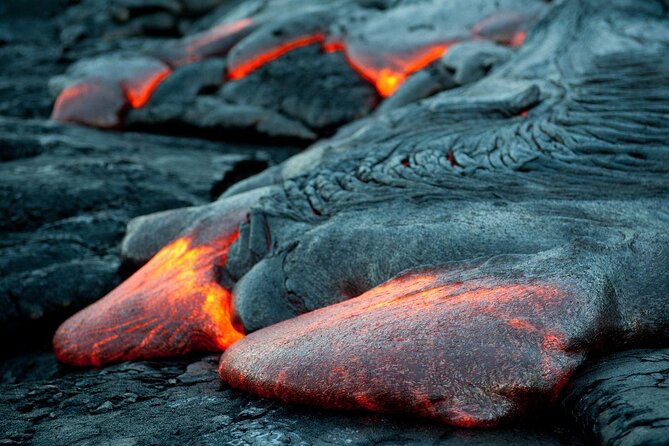
A lava tube forms when the outside of a lava flow cools while hotter lava continues moving inside. When the flow drains, it leaves a hollow passage. Walking through one makes volcanic geology feel immediate and physical.
The guided walk lasts about 45 minutes. The tube itself is not a long expedition, but the ground may be uneven, and the surrounding rainforest can be wet. Hiking poles are included, which may help if you are cautious on steps or slick sections.
This is also where the provided rain gear can earn its keep. The Big Island’s east side is known for wet conditions, and the tour specifically warns that you may encounter cool, wet, or muddy ground.
Extra park stops and the evening crater walk
The later park block lasts about two hours and five minutes. Depending on conditions, your guide may add places such as Ha‘akulamanu Sulphur Banks, the Maunaulu lava field, Pauahi Crater, Holei Sea Arch, or the Pu‘uloa petroglyph field.
That list gives you a sense of the tour’s range. Sulphur Banks focuses on volcanic gases and mineral deposits. A lava field shows how quickly a flow can reshape the ground. Craters reveal the collapse and movement of volcanic rock. The sea arch shows where lava meets the ocean, while the petroglyph field connects the park with Hawaiian cultural history.
You should not assume every extra stop will happen. The actual choices depend on time, weather, access, and volcanic conditions. That flexibility is useful, but it also means the exact afternoon will not be identical for every departure.
Near sunset, the guide takes you toward a lava-viewing location along the Halema‘uma‘u rim. This is the moment most likely to define the day. The fading light can make any glow more visible, but cloud, rain, park rules, and eruption changes can limit the view.
The strongest praise for this experience centers on seeing Kilauea lava, learning about the island, and having a guide who puts in extra effort throughout the day. Those are fair reasons to choose it, but keep expectations grounded. A careful guide can improve your chances and your understanding, not control the volcano.
Dinner in Volcano before the drive back
The tour ends its sightseeing with dinner in the town of Volcano, just outside the national park. The meal uses locally sourced ingredients and Hawaiian-influenced cooking, and it is included in the price.
The timing is practical. After a long day outside, you can sit down, eat, and warm up before returning to your lodging. The dinner is scheduled within a three-and-a-half-hour closing block that also includes the departure from the park and the return drive.
Alcohol is not included, but you may purchase alcoholic drinks separately at dinner. All non-alcoholic drinks are included throughout the tour, including water, juice, soda, hot tea, coffee, and hot chocolate.
Do not underestimate the length of the return portion. You start at 9 a.m. and may finish late, depending on your lodging location and road conditions. The reward is a full day that combines the Big Island’s best-known natural features without requiring you to drive after an evening of hiking.
What the $1,660 price really covers
At $1,660 per group of up to two, this is an expensive day if you compare it with a standard bus excursion. It becomes more reasonable when you count the private vehicle, guide time, park and venue entrance fees, two meals, drinks, snacks, outdoor equipment, and professional photos.
The price also buys flexibility. With only your own group, you can ask more questions, adjust the walking pace, and discuss specific interests with the guide. That matters on a 12-and-a-half-hour day, especially if one person wants more geology while the other prefers plants, culture, or photography.
The included gear reduces the amount you need to pack. Patagonia rain jackets and Nano Puff jackets cover wet or cool conditions. Nikon ProStaff binoculars can help with distant views, and Black Diamond hiking poles offer extra support on uneven paths.
The photo package is another meaningful extra. You receive 20 to 25 edited photos through Adobe Cloud, giving you a record of the day without asking you to photograph every stop yourself.
For two people who value privacy, meals, equipment, and a guide-led day, the cost can make sense. For solo visitors or a larger family, the per-person value changes because the quoted rate covers only up to two people. Ask for the current price if your group is larger.
Who should book this private volcano tour?
I would choose this tour if you want one carefully organized day covering waterfalls, rainforest, Hilo, and Kilauea. It suits couples or two-person groups who prefer a private guide and want the best chance of staying in the park through sunset.
It also works well if you do not want to rent a car or plan meals and park stops yourself. The included transportation, food, gear, and drinks remove much of the day’s practical work.
You should think twice if you dislike long drives, need a relaxed schedule, or want a guaranteed lava sighting. You will walk on uneven ground and may deal with rain, mud, steps, and cool temperatures. Most people can participate, and the tour can be adapted for different ages and abilities, but you should discuss specific needs at booking.
Strollers can be accommodated, but you must provide a child car seat if one is needed. The basic version of the tour expects at least 0.5 to 1 mile of walking, with some steps.
Should you book the Big Island Volcano and Waterfalls Tour?
Book it if you want the Big Island in one ambitious day and value a private guide more than a low price. The waterfalls, lava tube, steaming bluff, included meals, supplied gear, and sunset crater plan create a well-rounded outing, not just a quick park visit.
The best reason to book is the chance to connect the island’s scenery with its geology and culture while staying out late enough for changing volcanic views. The best reason to skip it is the same day’s length and uncertainty. If you need a guaranteed lava view or a short, easy excursion, choose something simpler.
You can cancel for a full refund up to 24 hours before the start time. The tour requires good weather, and if poor weather forces cancellation, you are offered another date or a full refund.
FAQ
How long does the tour last?
The tour lasts approximately 12 hours and 30 minutes. Pickup begins at 9 a.m., and the final timing depends partly on your lodging location and the return drive.
How many people can join the private tour?
The listed price of $1,660 covers one private group of up to two people. Only your group participates in the activity.
Are meals included?
Yes. Lunch at a local restaurant in Hilo and dinner in Volcano are included. The meals use locally sourced ingredients, and dinner features Hawaiian-influenced cuisine.
Is lava guaranteed to be visible?
No. The tour includes an evening walk to a lava-viewing location along the Halema‘uma‘u crater rim, but volcanic activity, weather, visibility, and park conditions can change.
What equipment and drinks are provided?
The tour provides trail snacks, water, juice, soda, hot tea, coffee, hot chocolate, a Patagonia rain jacket, a Nano Puff jacket, Nikon ProStaff binoculars, and Black Diamond hiking poles.
Can the tour accommodate different ages and abilities?
The tour can be adapted for all ages and abilities if you share your needs when booking. You should generally be able to walk at least 0.5 to 1 mile, with steps, uneven or rocky terrain, and possible cool, wet, or muddy conditions.
Just added around Big Island
- Volcano Adventure Tour & Waterfall – Shore Excursion from Hilo Harbor★ 4.0 · 10 reviews
- Waterfall Rappelling at Kulaniapia Falls: 120 Foot Drop, 15 Minutes from Hilo★ 5.0 · 80 reviews
- Umauma Falls 4-Line Zipline Experience★ 4.5 · 52 reviews
- Hilo-6 Hour Private Tour-Volcanoes NP, Rainbow Falls and more.★ 5.0 · 16 reviews
- Volcano, Chocolate and Waterfalls of the Big Island★ 5.0 · 238 reviews
- Private Hilo Shore Excursion to Volcano Waterfall and Black Sand★ 5.0 · 9 reviews
- Hawaii Big Island Circle Small Group Tour: Waterfalls – Hilo – Volcano – Black Sand Beach★ 5.0 · 93 reviews
- Kulaniapia Falls Daypass with Activity Discount★ 4.5 · 167 reviews
Big Island Waterfall Tours, compared.
Hilo Shore Excursion: Volcanoes National Park & Black Sand Beach
Read our review →
Big Island Zipline Tour Near Akaka Falls (250-ft Waterfall!)
Read our review →
Big Island: 9-Line Waterfall Zipline Experience
Read our review →
Big Island Highlights: Coffee, Volcano, Black Sands & Waterfall
Read our review →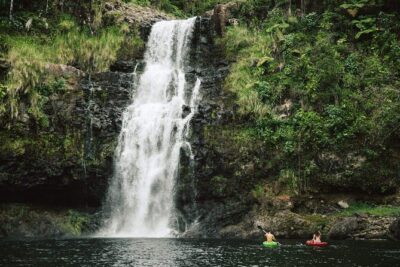
Big Island Waterfalls Tour with Swimming and Botanical Garden
Read our review →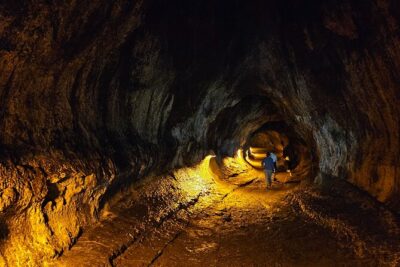
Hawaii Volcanoes, Waterfalls, Beaches & Hilo Highlights Day Tour
Read our review →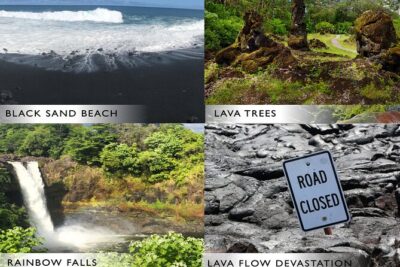
Hilo Shore Excursion: Volcano Safari Lava Caves & Black Sand
Read our review →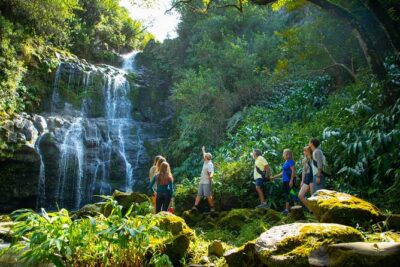
Browse the lists this tour appears in