
REVIEW · JAPAN
Tokyo: Spring Hitachi Seaside & Ashikaga Flower Park Tour
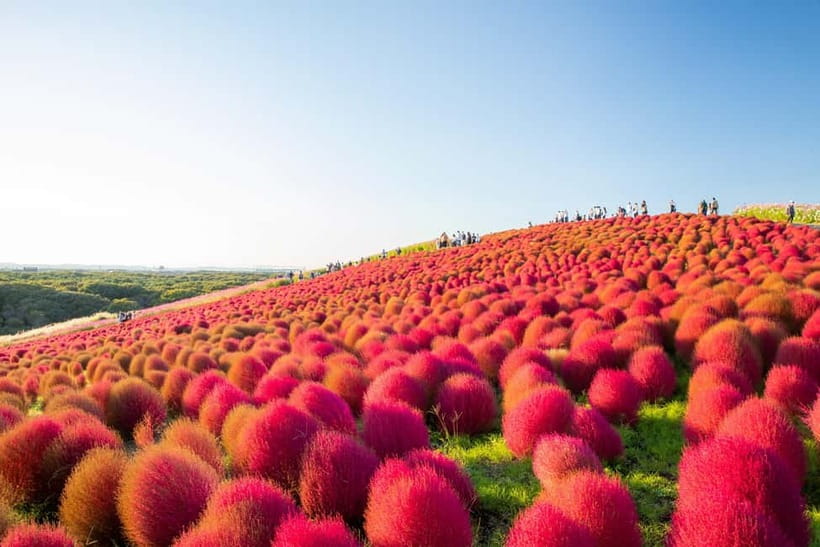
The headline sight is Miharashi Hill, where about 5.3 million blue nemophila turn Hitachi Seaside Park into a sweeping field of color. Later, Ashikaga Flower Park brings a different kind of spring spectacle: enormous purple wisteria hanging from trellises and an 80-meter white wisteria tunnel.
I like the easy bus connection from Tokyo, and I like having admission included at both parks. Guides such as Gilbert, Miss Park, and Miss Kim have been praised for keeping the day organized and helpful. The main drawback is time: two and a half hours on the first bus ride and a long return make this a very full day, while 110 minutes at Ashikaga may feel short.
Key points at a glance
- 5.3 million nemophila at Hitachi: Walk Miharashi Hill for blue flowers backed by open sky and the distant ocean.
- Great Wisteria at Ashikaga: See the park’s famous purple cascades and an elegant white wisteria tunnel.
- A practical Tokyo escape: Depart from Shinjuku or Tokyo Station and leave the driving to the bus.
- A short local-food stop: Mibu Michi no Eki offers lunch choices, desserts, and Bandai character displays.
- A full seasonal day: Expect roughly 11 hours and 30 minutes to 12 hours and 30 minutes, depending on the departure time.
- Best for spring timing: The tour depends heavily on flower conditions, traffic, and weather.
Why this spring day trip earns your time
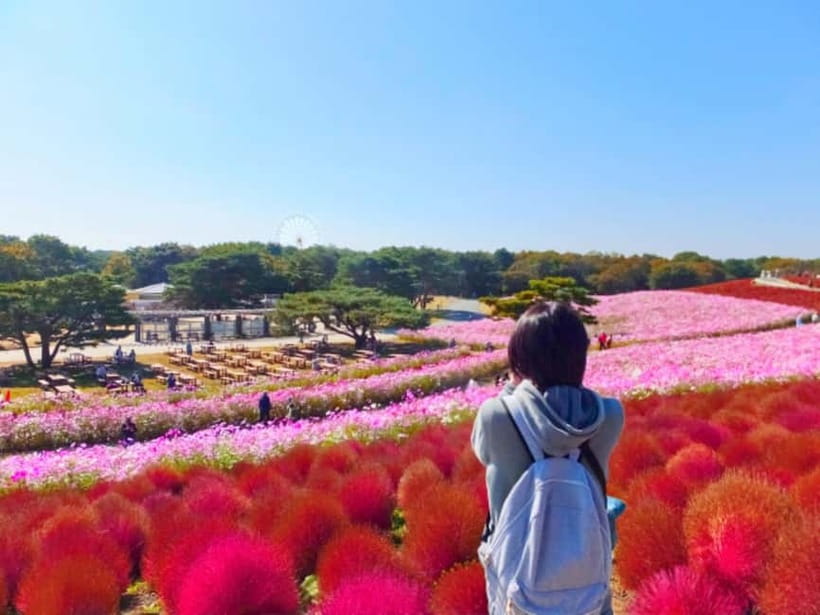
This is a flower tour first and a sightseeing tour second. You are not visiting a string of unrelated attractions. The day is built around two major spring displays that look completely different: blue nemophila spread across an open hill in the morning, then hanging wisteria forming shaded floral corridors in the afternoon.
That contrast gives the day its appeal. At Hitachi Seaside Park, you get broad views and sky. At Ashikaga, you look upward at flowers dropping from old trees and overhead supports. I like that the tour gives you both a wide outdoor scene and a more enclosed, almost theatrical garden setting.
The $98 price is reasonable if you value convenience. It covers bus transportation, an English or Korean speaking guide, and admission tickets. You still pay for your own meals and personal purchases, but arranging transport to two parks in separate prefectures would take time and careful planning. For a visitor based in Tokyo, the tour trades independence for simplicity.
There is a cost in time. The total day lasts between 690 and 750 minutes, with about five hours of bus travel spread across the route. During peak flower season, traffic can delay the return to Tokyo. I would not book this on a day when you have an important evening reservation.
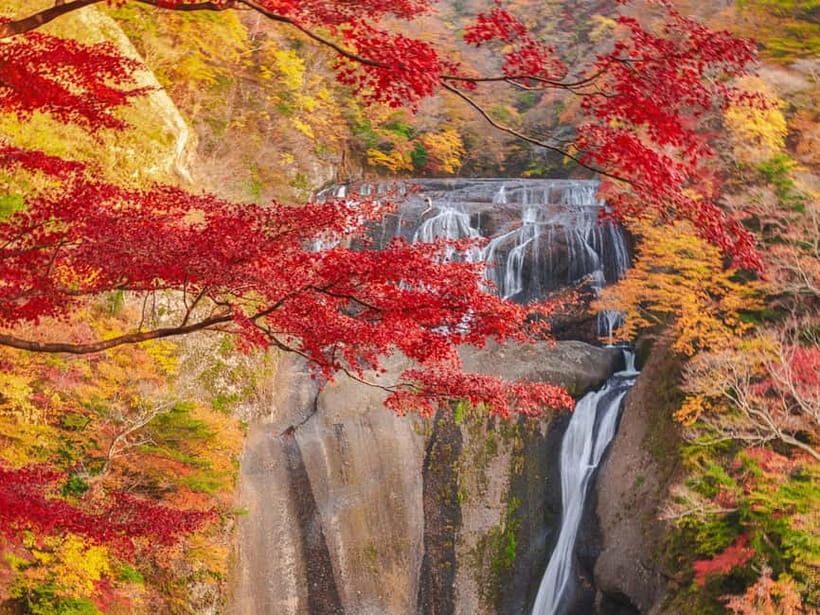
Other falls people chase around Japan:
- Nikko: Kegon Falls, Lake Chuzenji & Toshogu Temple
★ 4.6 · 1,577 reviews - Tokyo: Nikko Toshogu Shrine and Kegon Waterfall Tour
★ 4.5 · 1,266 reviews - Nikko, Kegon Waterfall & Chuzenji Lake from Tokyo
★ 5.0 · 1,240 reviews
Leaving Tokyo from Shinjuku or Tokyo Station
You can choose between two departure points: Starbucks Coffee at Shinjuku L Tower or Tokyo Station. The exact meeting details depend on the option you book, so check your confirmation carefully before departure.
The bus is the main reason to choose this outing instead of planning the parks alone. Hitachi Seaside Park is about two and a half hours away by coach on the scheduled route. After the park, the ride to Mibu takes about an hour, followed by another hour to Ashikaga. The trip back to Tokyo takes about 110 minutes under the planned schedule.
That is a lot of sitting, but it also removes the need to manage connections, parking, and rural transport. I see this as a strong choice for a first visit to Japan, families who want a fixed plan, and anyone who would rather look out the window than study train timetables.
The guide is part of the practical value. Gilbert has been specifically praised for clear organization and for keeping the group moving on time during a busy national holiday. Miss Park and Miss Kim have also been singled out as helpful guides. The tour is offered in English and Korean.
Hitachi Seaside Park and the blue hill
The morning stop lasts about two hours at Hitachi Seaside Park. The main target is Miharashi Hill, covered in roughly 5.3 million nemophila during the spring bloom.
Nemophila are small blue flowers, but the sheer number changes their effect. From the hill, the flowers appear to run toward the horizon, with open sky and the distant ocean adding to the blue. This is the kind of view that works best from a little distance, so do not spend the entire stop photographing individual blossoms. Walk up the hill and give yourself time to see the full sweep.
This stop is especially strong for photography. The flowers create a clean foreground, while the sky and sea provide a simple background. On a clear day, the scene can feel almost unreal. On a cloudy day, the colors may look softer, but the flower cover still provides the main attraction.
Two hours gives you enough time for the central view and a reasonable walk, but it is not a full park exploration. The grounds are broad, and you may want to see more than the famous hill. One person who enjoyed the stop still wished for more time to explore the gardens. That is useful advice: treat Hitachi as a focused flower visit, not an attempt to cover every corner.
Bloom timing matters. A May visit once caught the final nemophila flowers, which means the display can be past its best late in the season. If the blue flowers are your main reason for booking, choose dates close to the expected peak and accept that weather and seasonal conditions can shift the result.
Mibu Michi no Eki for food and a quick break
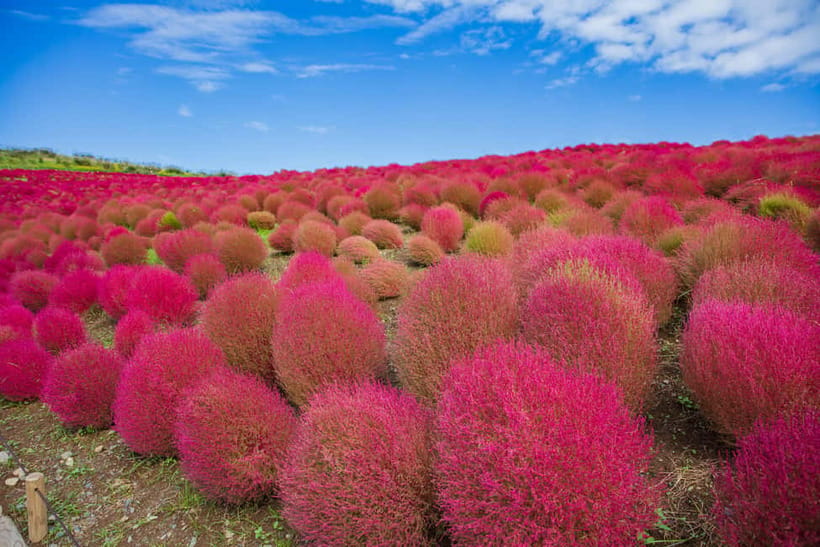
After Hitachi, the bus stops at Road Station Mibu for about 40 minutes. This is a short stop, designed for lunch, a stretch, and a quick look around rather than a major sightseeing visit.
You will find different dishes and desserts, giving you more choice than a fixed group meal. Meals are not included in the $98 price, so budget separately for lunch. The stop also features well-known Bandai characters, which adds a playful touch, especially for families and fans of Japanese character culture.
The short timing is both useful and limiting. It gives you a chance to eat without adding a long restaurant visit to an already packed schedule. At the same time, 40 minutes can disappear quickly if you need to choose food, order, eat, and use the facilities.
The schedule also lists a local restaurant lunch stop, but meals remain at your own expense. Treat Mibu as a flexible food break rather than a carefully planned culinary experience. If you need a particular meal, check what is available when you arrive instead of expecting a set menu.
Same stretch of river, a different day out:
- Osaka: Minoh, Katsuoji Temple, & Minoh Falls Full-day Tour
★ 4.9 · 172 reviews - From Osaka/Kyoto:Mount Koya, Wakayama & Nachi Waterfall Trip
★ 4.2 · 30 reviews - Osaka: Minoh Waterfall & Katsuo-ji Temple Half-Day Tour
★ 4.7 · 27 reviews - Tokyo: Nikko Day Tour Shrines, Lake Chūzenji & Kegon Falls
★ 4.9 · 26 reviews
Ashikaga Flower Park and the Great Wisteria
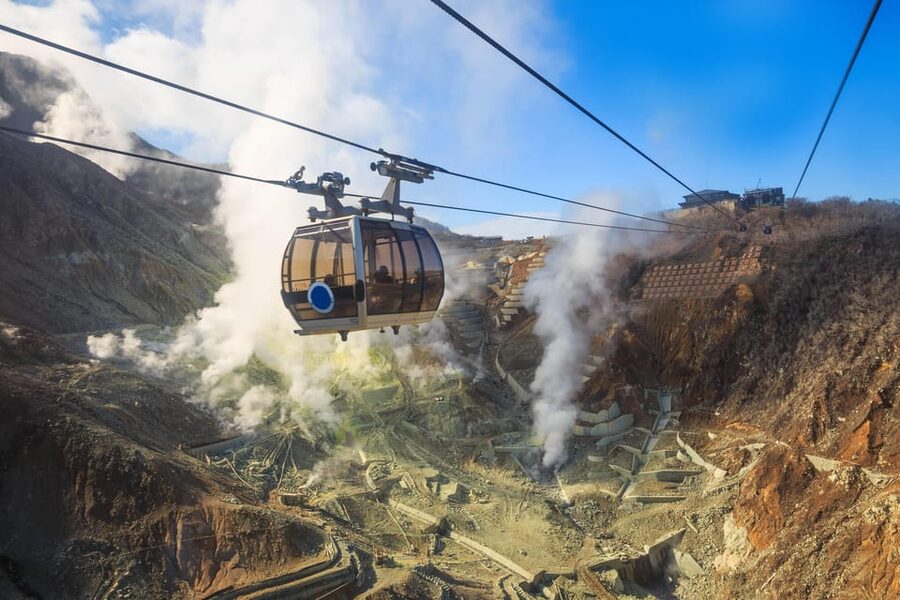
The afternoon highlight is Ashikaga Flower Park, with about 110 minutes to explore. The park is internationally known for its wisteria and was selected by CNN as one of the world’s dream destinations.
The Great Wisteria is the star. Its purple flowers hang in long clusters from overhead supports, creating curtains of color that change as you walk below them. The scale is what makes this different from seeing a few wisteria plants in a city garden. Here, the blossoms form the architecture of the visit.
You should also make time for the white wisteria tunnel, which stretches about 80 meters. Its pale flowers create a calmer, more enclosed view than the purple displays. Walk slowly through it if you can, then step back to photograph the tunnel as a whole.
This is where the time limit matters most. One person could have spent an entire day at Ashikaga and would have preferred giving up some other stops for more garden time. I understand that reaction. The park is the tour’s most visually elaborate stop, and 110 minutes asks you to choose between lingering under the wisteria, photographing the main trees, and seeing other parts of the grounds.
You can make the most of the visit by heading first toward the Great Wisteria and white tunnel. Take your broad photos early, then return to details if time remains. Do not assume you can casually wander the entire park and still see the main sights. The exact route and available time can change with crowd levels and seasonal conditions.
The tour’s strongest practical advantage
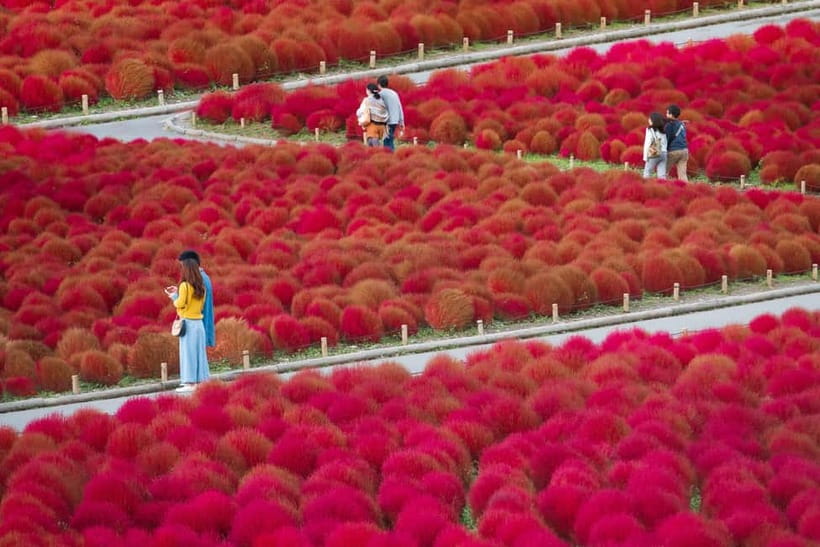
The best feature here is not just the flowers. It is the way the bus connects two destinations that are awkward to combine without private transport.
You get:
- Round-trip transportation from Tokyo or Shinjuku
- Admission to the two flower parks
- An English or Korean speaking guide
- A planned route through the Kanto region
- Free time at each major stop
- Flexibility to buy your own lunch and dessert
That arrangement is useful during peak bloom, when roads can be crowded and popular parks can be difficult to fit into a self-guided day. The organized approach worked particularly well during Golden Week, when traffic was heavy but the group still stayed on schedule.
The guide may adjust the itinerary because Japanese law limits vehicles to 10 hours of operation. Traffic, weather, flower conditions, and the situation at each site can change the length of a stop. You should think of the listed times as a plan, not a guarantee.
Where the tour may frustrate you
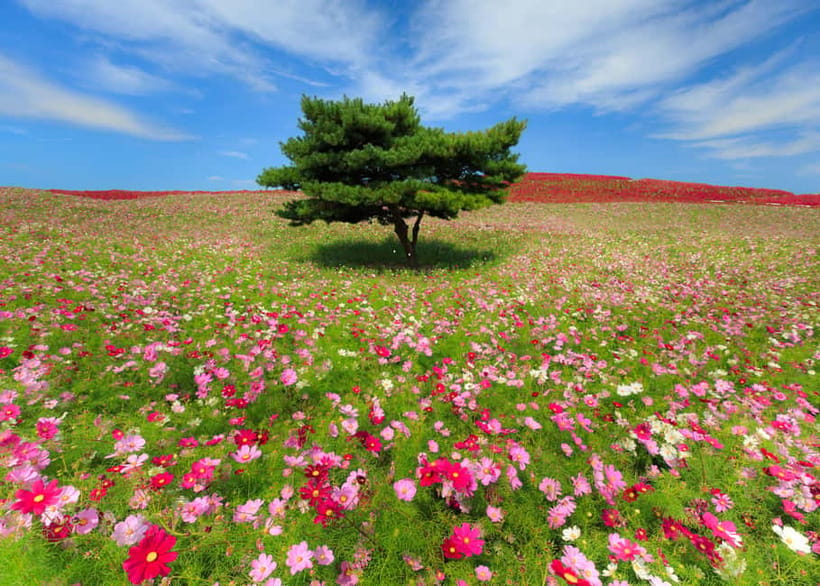
The day is long. The first bus leg takes about two and a half hours, and the return takes about 110 minutes. Add the two intermediate one-hour rides and you spend much of the day seated.
This is not a quiet, slow garden tour. It is a high-value flower run that covers a lot of ground in one day. If you prefer to sit at a cafe, sketch, or study one park in detail, the schedule may feel rushed.
The other issue is seasonal uncertainty. The tour is at its best when both the nemophila and wisteria are near their peak. If you book too early or too late, one display may be less impressive. The tour provider can adjust timing based on conditions, but no schedule can guarantee perfect blooms.
Drop-off may also be late during peak periods. Keep your evening open, especially if you plan to connect to another activity. I would avoid booking a theater ticket, airport transfer, or expensive dinner with a tight start time after the tour.
If you bring a baby stroller or wheelchair, notify the provider in advance. Infants can join free of charge, but no seat is provided for an infant.
How to prepare for the flower parks
Wear comfortable shoes. Both major stops involve walking and sightseeing outdoors, and the main views are not reached simply by stepping off the bus.
Bring water and keep your phone charged. The parks are highly photogenic, and you will likely take more pictures than expected. A small bag is easier to manage than bulky luggage during the short Mibu stop and the garden walks.
Plan your lunch budget in advance. Food is not included, and the Mibu stop is brief. You can choose from different dishes and desserts, but you will not have unlimited time to compare every option.
Check your pickup details closely. The meeting point may be Shinjuku or Tokyo Station depending on your booking. One day before departure, the operator sends a reminder email between 3:00 PM and 5:00 PM with a group-chat link for contacting the tour staff. If it does not appear, check your spam folder.
Who should book this $98 tour?
I would recommend it to you if spring flowers are high on your Tokyo wish list and you want to see two major displays without arranging regional transport yourself.
It suits:
- First-time visitors who want a simple day outside Tokyo
- Photographers seeking large-scale flower scenes
- Families who appreciate a fixed bus route and flexible lunch
- Visitors traveling during the spring bloom period
- Anyone comfortable with a long day and limited time at each park
I would hesitate if you want a relaxed pace, dislike long bus rides, or care more about one detailed garden visit than two famous sites. Ashikaga alone may reward a slower outing, especially if wisteria is your main goal.
The cancellation policy helps with seasonal planning: you can cancel up to 24 hours before departure for a full refund, and you can reserve now and pay later. That flexibility is useful when you are watching the forecast and trying to choose the best flower day.
Should you book the Hitachi and Ashikaga tour?
Book it if you want the broad blue view at Hitachi and the hanging purple and white wisteria at Ashikaga in one organized day. The $98 cost makes sense when you count transportation, admissions, and the convenience of a guide handling the route.
Go in with realistic expectations. You will spend many hours on the road, lunch is extra, and the parks may receive less time than you would choose on an independent visit. Still, the combination is hard to arrange smoothly from Tokyo, and the flower displays offer two very different versions of Japanese spring.
For the best chance of a satisfying day, book near the expected bloom period, keep your evening free, and make Ashikaga’s Great Wisteria your first target once you arrive. If you can accept the long schedule, this is a practical way to reach two of the Kanto region’s most memorable spring gardens.
FAQ
Where does the tour depart from?
You can choose a departure point at Starbucks Coffee in Shinjuku L Tower or Tokyo Station. The meeting point depends on the option booked.
How long does the tour last?
The tour lasts between 690 and 750 minutes, or about 11 hours and 30 minutes to 12 hours and 30 minutes. Starting times vary, so check availability when booking.
What languages are available?
The live guide service is available in English and Korean.
Are meals included in the price?
No. Meals are not included. The tour stops at Mibu Michi no Eki, where you can choose from different dishes and desserts, and lunch is purchased separately.
What is included in the $98 price?
Transportation, an English or Korean speaking guide, and admission tickets are included. Traveler’s insurance and personal expenses are not included.
Can I cancel the booking?
Yes. You can cancel up to 24 hours before departure for a full refund. The reserve-now, pay-later option is also available.
Just added around Japan
- Tokyo: Nikko Day Tour Shrines, Lake Chūzenji & Kegon Falls★ 4.9 · 26 reviews
- Tokyo: Nikko Kegon Falls Lake Chuzenji Toshogu Temple & More★ 4.9 · 12 reviews
- Osaka: Minoh Waterfall & Katsuo-ji Temple Half-Day Tour★ 4.7 · 27 reviews
- Osaka: Mino Forest Walk and Giant Waterfall with Local Lunch★ 5.0 · 22 reviews
- Kobe: Guided Tour of Nunobiki Waterfalls and Herb Garden★ 5.0 · 11 reviews
- Get to know Minoo from Osaka. Katsuoji Temple, Ryuanji Waterfall and Ryuanji Temple★ 5.0 · 16 reviews
- From Tokyo: Nikko Customize private Tour With English Driver★ 4.9 · 11 reviews
- From Osaka/Kyoto:Mount Koya, Wakayama & Nachi Waterfall Trip★ 4.2 · 30 reviews
Japan Waterfall Tours, compared.
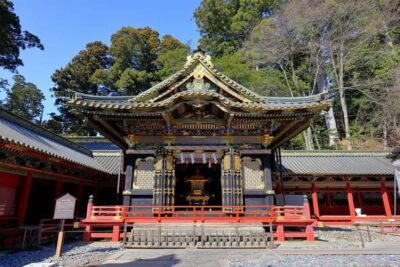
Nikko: Kegon Falls, Lake Chuzenji & Toshogu Temple
Read our review →
Tokyo: Nikko Toshogu Shrine and Kegon Waterfall Tour
Read our review →
Nikko, Kegon Waterfall & Chuzenji Lake from Tokyo
Read our review →
Osaka: Minoh, Katsuoji Temple, & Minoh Falls Full-day Tour
Read our review →
From Osaka/Kyoto:Mount Koya, Wakayama & Nachi Waterfall Trip
Read our review →
Osaka: Minoh Waterfall & Katsuo-ji Temple Half-Day Tour
Read our review →
Tokyo: Nikko Day Tour Shrines, Lake Chūzenji & Kegon Falls
Read our review →
Osaka: Mino Forest Walk and Giant Waterfall with Local Lunch
Read our review →Browse the lists this tour appears in