
REVIEW · ERAWAN FALLS TOURS
Samut Prakan: The Erawan Museum Admission Ticket (NON THAI)
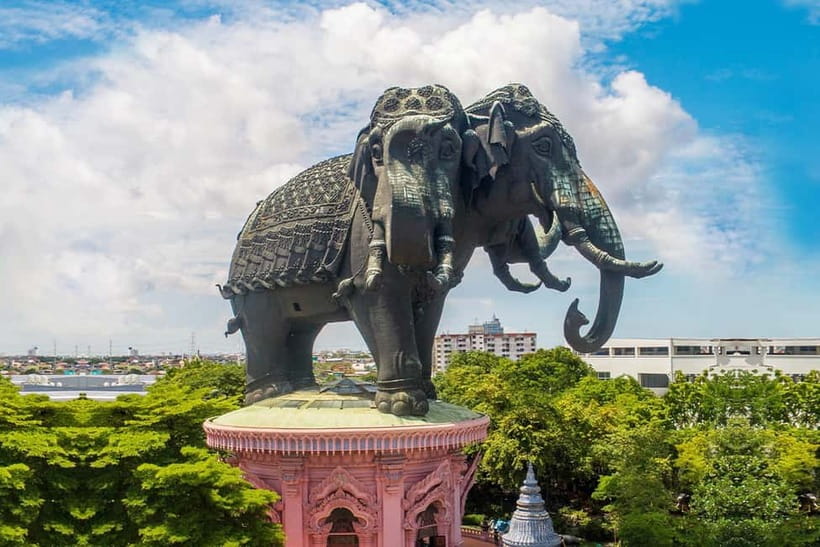
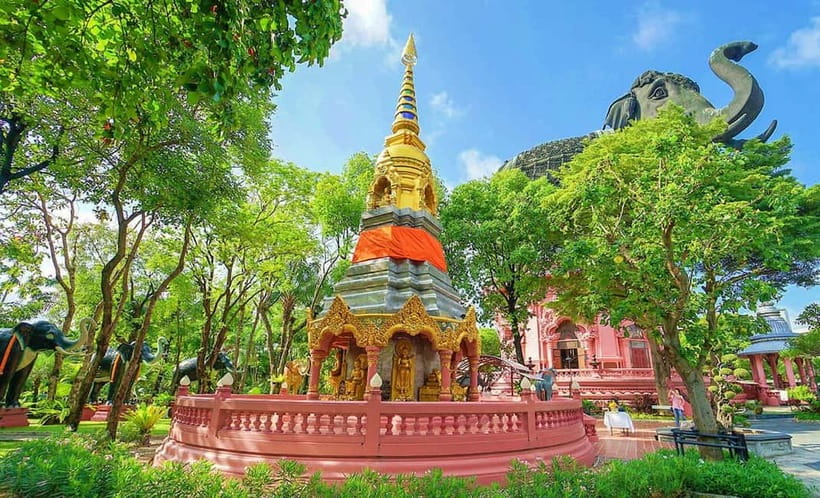
The first thing to know about the Erawan Museum is that the building itself is the main event. A giant three-headed bronze elephant rises above a globe-like base, making the museum easy to spot and giving your visit a clear sense of place before you even walk inside. The design refers to Airavata, the elephant linked with the Hindu god Indra, and to Thailand’s long connection with elephants as national symbols.
I like two things here in particular. First, the museum gives its collection a memorable setting instead of placing antiques in plain rooms. Second, the layout takes you through Underworld, Earth, and Heaven, so the visit feels like a visual story rather than a simple display of objects. The main consideration is dress: shorts, short skirts, sleeveless shirts, food, and drinks are not allowed.
Key points to know before you go
- The elephant is both building and symbol: The massive sculpture sits on a globe-like sphere and represents protection of the earth and sacred objects.
- Three symbolic sections shape the visit: Underworld, Earth, and Heaven each present a different part of the museum’s idea.
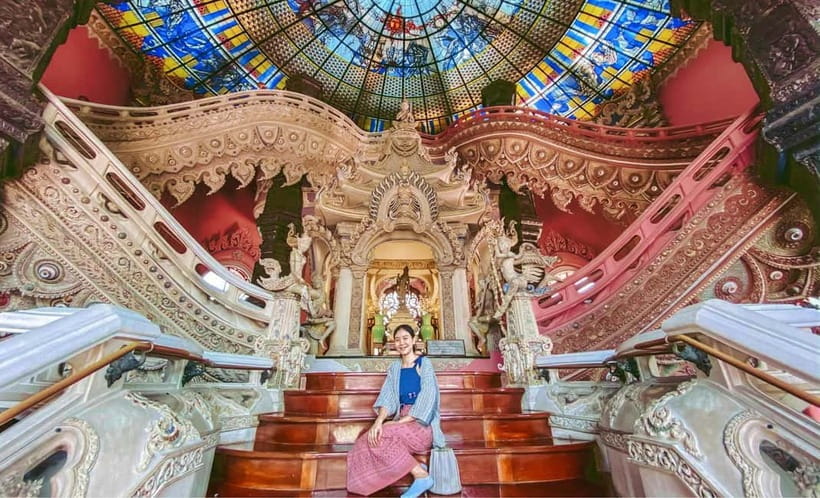
- The interior is as photogenic as the exterior: Look up as well as around you, since the central design is a major part of the experience.
- BTS makes the museum practical to reach: Get off at Chang Erawan Station, E17, Exit 2, then use the free shuttle tuk-tuk.
- The ticket costs about $12: That is a reasonable price if you value unusual architecture, cultural symbolism, and photo opportunities.
- Plan around the dress code: Modest clothing is required, and you need to keep the museum quiet and respectful.
Why the three-headed elephant matters
The Erawan Museum was created by Lek Viriyapant, a well-known collector of antiques. His aim was to protect valuable objects and sacred pieces for future generations, rather than let them be scattered or forgotten.
The final concept became a huge elephant based on Airavata, the mythological three-headed elephant. In Hindu tradition, Airavata serves as the vehicle of Indra. Here, the animal is more than decoration. It carries the museum, the sacred collection, and a message about guarding the earth.
The elephant’s feet rest on a sphere that acts like a globe. That detail is easy to miss in a quick photograph, but it explains the whole design. The building presents the elephant as a protector above the world, with the museum’s collection held inside.
Lek passed the construction plans to his son, Pagpean Viriyapant. Neither father nor son lived to see the building fully completed, but their family continued the project. That gives the museum a personal side. It is not only a place to view old objects. It is also a family effort to preserve Thai culture in memory of Lek’s life.
More Erawan Falls Tours in Thailand:
- From Bangkok: Erawan Park & Kanchanaburi Small-Group Tour
★ 4.5 · 1,582 reviews - Bangkok: Elephant Sanctuary & Erawan Waterfall Tour
★ 4.9 · 820 reviews - Erawan Waterfalls and Bridge Over River Kwai Tour from Bangkok
★ 4.5 · 372 reviews
Arriving from Bangkok by BTS and shuttle tuk-tuk
The simplest route described for this ticket is the BTS Skytrain Green Line. Exit at Chang Erawan Station, E17, Exit 2. From there, a free shuttle tuk-tuk operates every day to the museum.
This is useful because the admission ticket does not include transfers. You need to arrange your own route to the station and allow time for the shuttle connection. The free tuk-tuk keeps the final stretch straightforward, but you should still check the operating details when you arrive at the station.
The booking is tied to a specified date and time. The ticket is valid for an eight-hour period, but that does not mean you should treat it as an eight-hour guided tour. It is better understood as a flexible admission window, with the actual museum visit depending on how long you wish to spend inside and around the grounds.
There is no guide listed for this experience, so you should expect a self-guided visit. That suits people who want to look at the architecture at their own pace. If you prefer a detailed explanation of every object, bring your own background notes or plan to read about the museum before arriving.
The exterior: start with the elephant and the globe
Before entering, take time to look at the whole structure. The elephant is so large that you need some distance to see its shape properly. From close up, the bronze surface and legs dominate your view. From farther away, the relationship between the three heads, the globe-like base, and the building becomes clearer.
This is one of the strongest parts of the visit for photographers. You can take exterior pictures from different angles, and the scale gives even a simple image plenty of drama. The grounds surrounding the museum are included with admission, so you are not limited to the interior galleries.
The exterior also gives you a chance to understand the museum’s purpose before you begin. The elephant represents the country and connects to Hindu mythology, while the globe suggests a duty to protect the earth. Once you know that, the building feels less like a giant novelty sculpture and more like a visual introduction to the collection.
Keep in mind that the museum asks you to be quiet and respectful. This is a cultural site with sacred objects, not just a backdrop for photographs. Pictures and videos for commercial purposes are not allowed inside.
Underworld: the lower part of the museum’s story
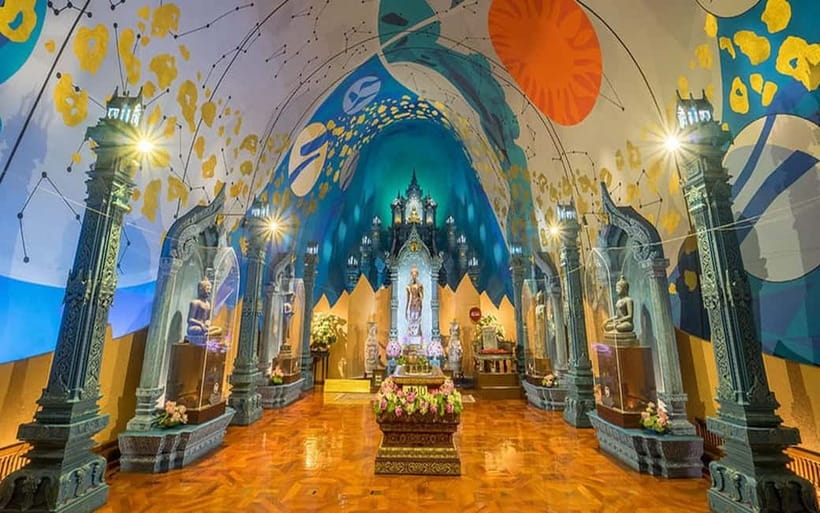
The museum is divided into three symbolic sections: Underworld, Earth, and Heaven. Underworld forms the first part of this vertical idea. It represents the lower realm and helps set up the movement toward the upper galleries.
The exact objects and presentation can matter more to you than the labels if you are interested in how the building works as a whole. Look at the way the lower level relates to the rooms above it. The museum is designed as one connected concept, not three unrelated exhibition halls.
I would take this section slowly rather than rushing toward the famous central interior. Notice how the museum uses architecture to guide your attention. The attraction is not only the age or value of individual pieces. It is the way sacred objects are placed within a building created to honor them.
Since food and drinks are not permitted, this is not a stop for casual snacking. Have anything you need before entering, then give yourself time to focus on the displays and setting.
More Museum Visits in Thailand:
- Bangkok: Ancient City Muang Boran and Erawan Museum Tour
★ 4.7 · 55 reviews - Private Guided Day Tour to Erawan Museum & Ancient City
★ 4.5 · 25 reviews - Samut Prakan: Erawan Museum Discounted Admission Ticket
★ 4.8 · 20 reviews - Ancient City Bangkok and Erawan Museum Tickets
★ 4.5 · 8 reviews
Earth: the collection at human scale
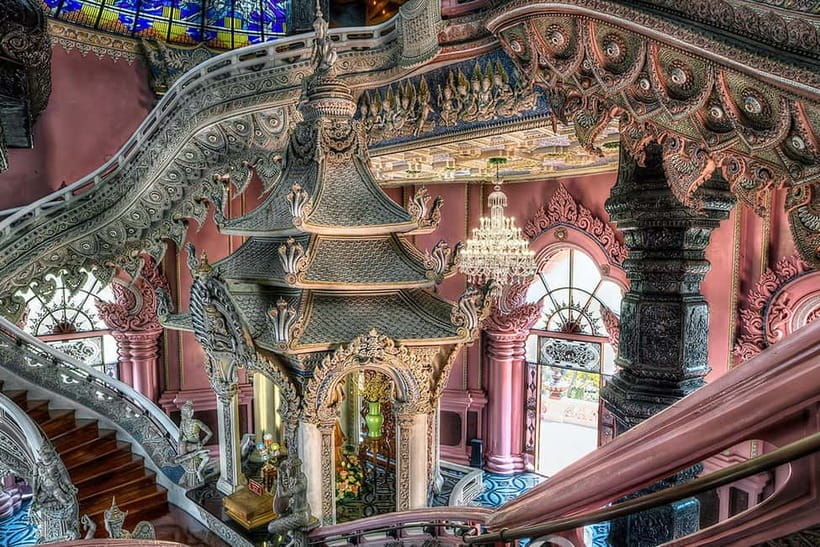
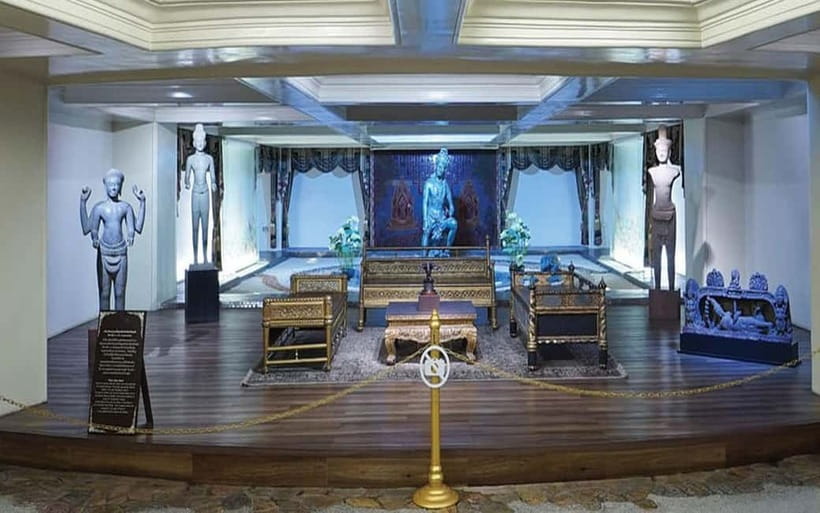
Earth is the middle section, where the museum’s collection becomes easier to relate to as a human-scale exhibition. The museum was built to preserve antique objects, including sacred items that earlier communities believed could bring blessing and prosperity to their land.
That belief is important context. You are not looking at objects chosen only for decoration. Many were valued for spiritual meaning as well as artistic or historical importance. The museum’s design gives them a setting that reflects that respect.
This section may be the easiest place to appreciate the practical reason Lek Viriyapant created the museum. A private collection can be impressive, but it can also be difficult for the public to understand. Here, the collection is gathered into a space that presents Thai culture as something to be protected and passed on.
You can also use this level to pause and take in the scale of the interior. The outside elephant draws the crowds and the camera, but the indoor rooms explain why the museum was built in the first place.
Heaven: look upward inside the elephant
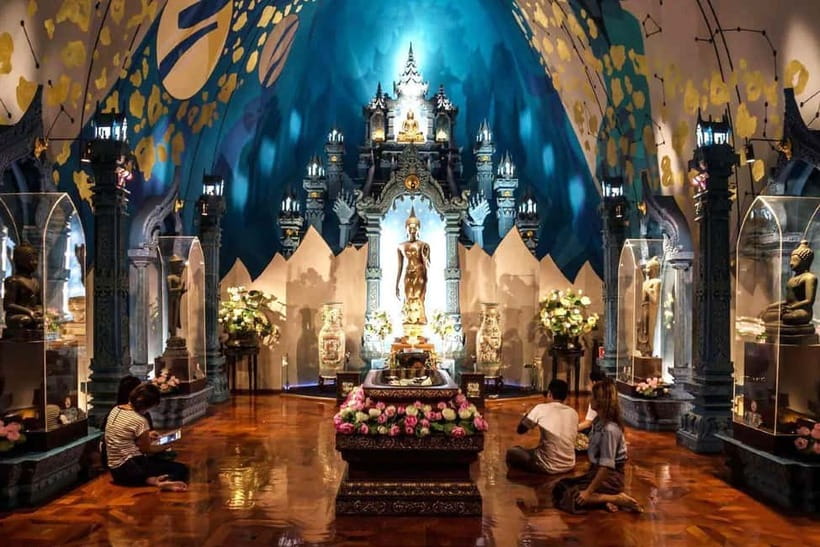
Heaven is the upper section and one of the most memorable parts of the visit. Reaching it brings you into the heart of the elephant, where the museum’s vertical design becomes most apparent.
Look up as you move through the interior. The ceiling, colors, and decorative details are central to the experience. The inside is not a plain container for antiques. It is part of the artwork, with the building itself shaping how you see the collection.
This is where the title of the museum makes sense in a physical way. You move from the lower realm toward the heavens, passing through a building that places sacred objects within the body of a symbolic creature. Even if you are not familiar with Thai or Hindu religious traditions, the sequence is easy to follow through the architecture.
The upper rooms are also a strong reason to visit if you enjoy taking photographs. The best images may come from looking beyond individual objects and framing the ceilings, stairways, and decorative details together. Remember that commercial photography and video are not permitted inside, so keep your pictures for personal use.
What $12 gets you
At about $12 per person, the ticket offers good value for a visitor who wants more than a standard museum room. You get admission to the Erawan Museum, access to the surrounding area, and the flowers, incense, and lotus flower used for an offering.
That offering adds a cultural action to the visit. You are not simply walking through rooms and leaving. You can take part in a small act of respect, provided you do so quietly and follow the museum’s expectations.
The price is less compelling if your only goal is to see one exterior sculpture and leave quickly. The value improves when you allow time for the three sections, the interior decoration, the grounds, and the photo stops outside.
The ticket also includes taxes and fees, which keeps the basic cost clear. Transfers and personal expenses are not included, so factor in your BTS fare and any other costs connected with getting to the station.
A current rating of 4.8 from 89 reviews, along with a verified January 2026 booking that called it a very good experience and strongly recommended it, fits the attraction’s appeal. The praise is easy to understand: the museum has a striking subject, a distinct design, and a simple price.
Dress, conduct, and useful planning
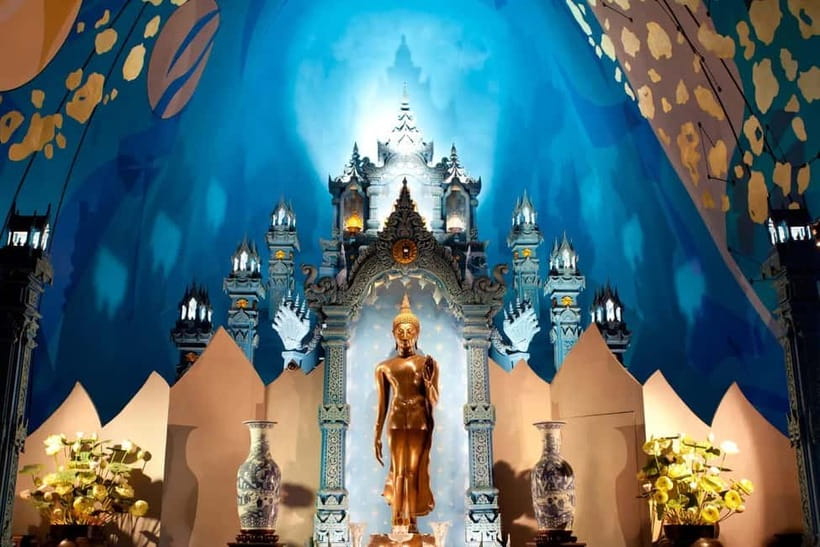
Dress modestly. Shorts, short skirts, and sleeveless shirts are not permitted. This rule is worth taking seriously because it can affect your entry, and suitable clothing is also the right choice for a place containing sacred objects.
You cannot bring pets, food, or drinks into the museum. Alcohol and drugs are prohibited. Plan a meal or coffee break before or after your visit rather than expecting to refresh yourself inside.
The museum asks you to be quiet and respectful. That matters most around sacred items and during any offering. You can enjoy the photography, but the building is not only a photo set.
The ticket is for non-Thai visitors, so check that you select the correct admission category when booking. You can cancel up to 24 hours in advance for a full refund, and the reserve-now, pay-later option helps if your Bangkok plans are still shifting.
Who will enjoy the Erawan Museum most
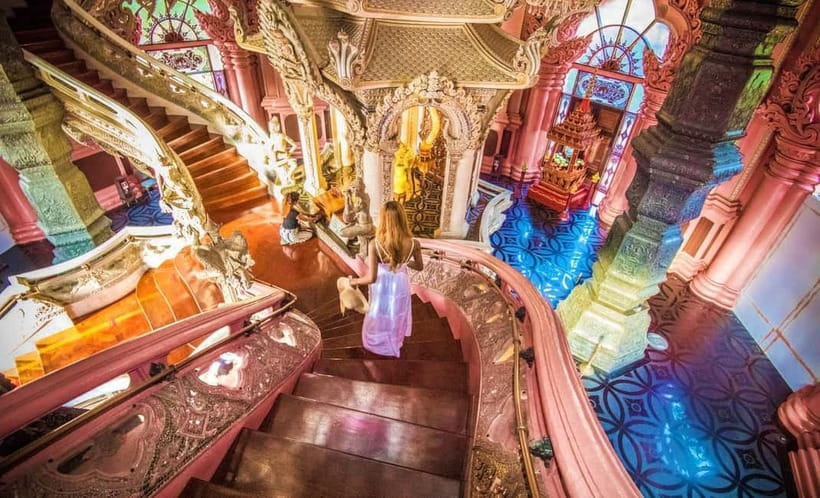
I would recommend this visit to you if you like unusual buildings, symbolic art, antique collections, or places that combine religion, family history, and architecture. It also works well for anyone looking for a stop outside central Bangkok that is easy to reach by BTS.
Photographers will find plenty to work with, especially outside beneath the elephant and inside around the upper decoration. Families may appreciate the clear three-part idea, though children need to follow the quiet and respectful conduct expected inside.
You may want to skip it if you only want a conventional museum with extensive written explanations or a guided lecture. No guide is included, and the available information does not describe a detailed tour in another language. The attraction works best when you are willing to study the building and make sense of the themes for yourself.
The eight-hour validity also makes the ticket useful for a relaxed day plan, but you should not assume that every moment of that period is filled with activities. It is admission to one museum and its surrounding area, not a full-day transport tour.
Should you book the Erawan Museum ticket?
Book it if the sight of a huge three-headed elephant, a symbolic interior, and a carefully designed cultural collection appeals to you. The BTS access and free shuttle tuk-tuk make the outing manageable, while the $12 price is fair for the architecture, grounds, offering materials, and three-section visit.
Before you commit, check your clothing and schedule. If you arrive in shorts or a sleeveless top, or if you want a guided museum lesson, this may not be the right fit. For a self-guided cultural stop with strong photo opportunities and a building you will remember, it is an easy addition to a Bangkok-area itinerary.
FAQ
Where is the Erawan Museum located?
The Erawan Museum is in Samut Prakan, in Central Thailand. You can reach it using the BTS Skytrain Green Line and get off at Chang Erawan Station, E17, Exit 2.
Is there a shuttle from Chang Erawan Station?
Yes. A free shuttle tuk-tuk operates every day from Chang Erawan Station, Exit 2, to the museum.
What does the admission ticket include?
The ticket includes admission to the Erawan Museum, flowers, incense, a lotus flower, access to the surrounding area, and all taxes and fees.
Is the ticket valid all day?
The ticket is valid for eight hours, but you can visit only on the specified date and time selected when booking. Check availability for the available starting times.
What clothing is not allowed?
Shorts, short skirts, and sleeveless shirts are not permitted. Modest clothing is required.
Can I bring food, drinks, or pets?
No. Food, drinks, and pets are not allowed inside the museum. Alcohol and drugs are also prohibited.
Just added around Thailand
- Trek to a Jungle Waterfall★ 5.0 · 14 reviews
- Waterfall Wanderer Doi Inthanon Hiking Tour★ 5.0 · 15 reviews
- Private Tour: Bua Thong Sticky Waterfalls Tour★ 5.0 · 8 reviews
- Sticky Waterfall Cycling Tour★ 5.0 · 68 reviews
- Private tour Chiang Dao cave ,Temples,Sticky waterfall★ 5.0 · 14 reviews
- Sticky Waterfalls Private Half Day Fun Escapades★ 4.5 · 8 reviews
- 7 Hour Sticky Waterfall and ATV Guided Adventures★ 5.0 · 61 reviews
- Sticky Waterfall Chiang Mai and Mae Ngat Boat Tour★ 5.0 · 19 reviews
Erawan Falls Tours, compared.

From Bangkok: Erawan Park & Kanchanaburi Small-Group Tour
Read our review →
Bangkok: Elephant Sanctuary & Erawan Waterfall Tour
Read our review →
Erawan Waterfalls and Bridge Over River Kwai Tour from Bangkok
Read our review →
Erawan Waterfall and Elephant Care: Private Tour to Kanchanabur
Read our review →
Kanchanaburi Full Day Tour: River Kwai and Erawan Falls
Read our review →
From Bangkok: Kanchanaburi, River Kwai and Erawan Waterfall
Read our review →
Bangkok: 2-Day River Kwai & Erawan National Park Tour
Read our review →
Private Tour to Erawan Waterfall and Boat Tour in Kanchanaburi
Read our review →Browse the lists this tour appears in