
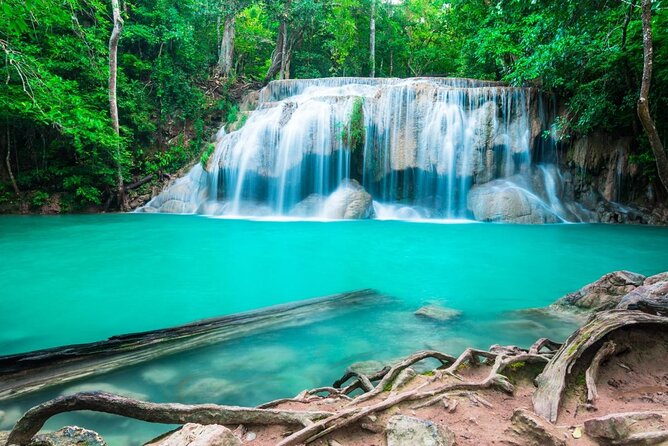
REVIEW · ERAWAN FALLS TOURS
Erawan Waterfall and Elephant Care: Private Tour to Kanchanabur
The best part of this long day is the sharp change of mood. You begin in the cool pools of Erawan Waterfall, walk through places tied to wartime suffering, then spend time feeding and bathing rescued elephants. It is a big day, but it gives you nature, history, and animal care in one trip.
I like the private vehicle and flexible itinerary, since your guide can adjust the pace for your group. I also like that the elephant visit involves preparing food, feeding, and washing the animals rather than riding them. The main drawback is simple: the drive from Bangkok is long, and the full route can feel tiring after a steep walk at the waterfall.
Key points to know before booking
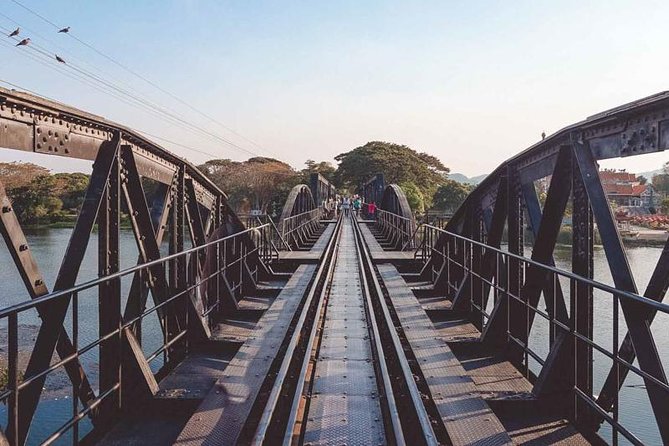
- Seven waterfall levels: You get three hours at Erawan National Park, with swimming in emerald pools and a chance to climb toward the upper falls.
- Hands-on elephant care: The sanctuary visit can include preparing food, feeding, walking with, and bathing the elephants.
- Private touring: Only your group takes part, with hotel pickup and drop-off in an air-conditioned vehicle.
- World War II sites: You walk beside the Death Railway, visit Tham Kra Sae Bridge and its Buddha cave, and finish at the Bridge over the River Kwai.
- A very full schedule: Pickup begins around 6:30 am, and the tour lasts about 12 hours.
- Most costs are covered: Lunch, bottled water, transport, professional guide service, and entrance fees are included.
Erawan’s seven pools are the morning prize
The tour begins early, usually with pickup at 6:30 am from your Bangkok hotel. That early start matters. Kanchanaburi is far enough from Bangkok that the road journey takes a good part of the day, but leaving early gives you useful time at Erawan Waterfall before the schedule fills up.
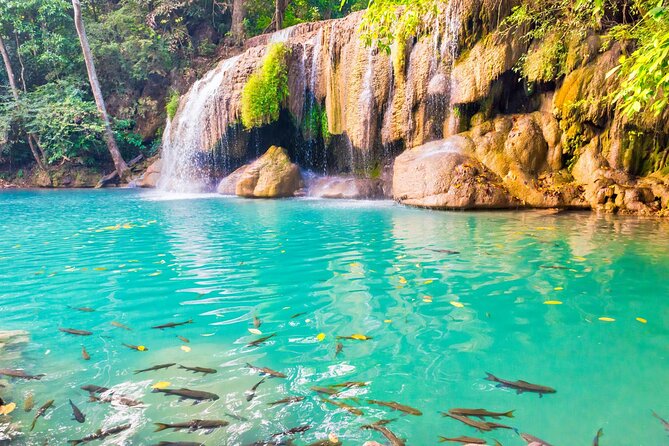
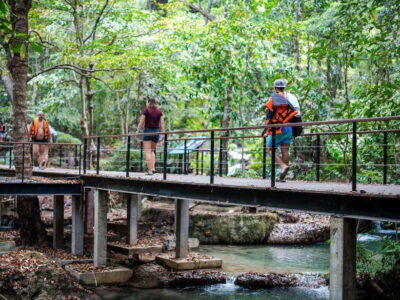
Erawan is not one single cascade beside a parking area. The park has seven levels of pools and falls, and the first three are generally easier to reach. The upper levels require more effort, with steps and uneven sections. If you are in reasonable shape, I would try to reach the seventh level, since the higher falls are often the most rewarding part of the climb.
You have about three hours here. That is enough time for a swim and a serious walk, but not enough for a slow wander with no plan. If swimming matters most, change into your suit before you begin the upper climb, or bring a dry change of clothes. Several people found water shoes useful, and that is sensible advice for wet rocks and pool edges.
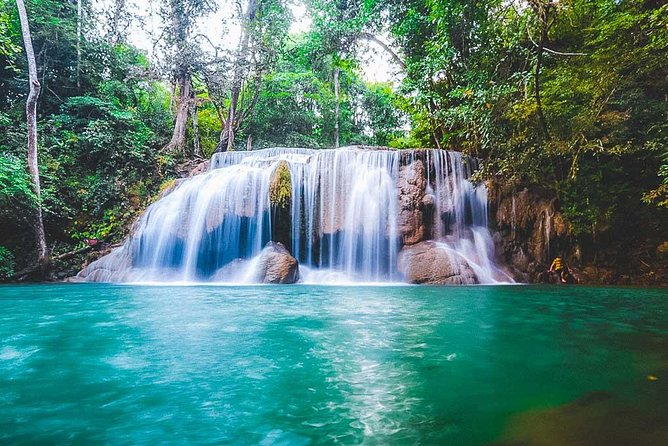
The water is known for its green color and clear pools. Small fish may nibble at your feet when you remain still. It does not hurt, but the sensation can surprise you. Bring a swimsuit, water shoes if you have them, and a towel or dry clothing. You should also keep track of time, because the waterfall is only the first major part of the day.
The climb is the one physical challenge that shapes the whole outing. The tour calls for a moderate fitness level, and that is fair. You do not need to be an athlete, but the upper levels are not ideal if you have trouble with steps or uneven ground. Your private format helps here, since you can discuss how far you want to climb instead of being tied to a large group.
More Private Waterfall Tours in Thailand
- Floating and Railway Market (Optional Waterfall): Private Tour
★ 5.0 · 827 reviews - Private Tour to Erawan Waterfall and Boat Tour in Kanchanaburi
★ 5.0 · 92 reviews - From Bangkok: Erawan Waterfall & Kanchanaburi Private Tour
★ 4.9 · 71 reviews
The Death Railway adds weight to the day
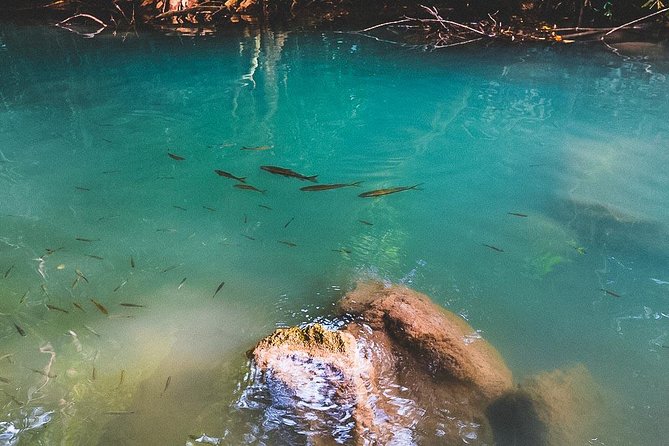
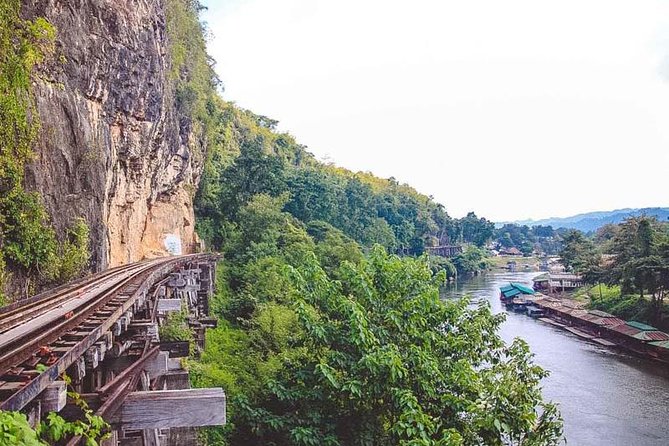
After the waterfall, the tour turns from natural beauty to wartime history. You visit a section of the Thai-Burma Death Railway and walk beside the route while your guide explains how it was built during World War II.
The contrast is powerful. The waterfall is playful and physical, with swimming and climbing. The railway section asks you to slow down and think about the prisoners of war and forced laborers connected with its construction. This is not just a scenic train route. It is a place with a painful past, and the guide’s explanation gives the visit meaning.
The stop at the Death Railway Museum and Research Centre is listed at about 30 minutes, with admission included. The railway portion itself is short, so you should not expect a long museum visit or a full-day study of the conflict. You will get a focused introduction that helps place the bridge, cave, and railway in context.
This part of the trip will appeal most if you want more than pretty photographs. The history is serious, and the tour moves quickly, but it gives you a better understanding of why Kanchanaburi is important in Thailand’s wartime story.
Krasae Cave and the bridge beside the river
Tham Kra Sae, also called the Cave of the Buddha, is a brief but memorable stop. The cave contains a Buddha image and was associated with a prisoner-of-war camp during construction of the railway.
The nearby Tham Kra Sae Bridge gives you a chance to walk along the railway beside the River Kwai. The setting is striking, but the short 15-minute stop means you should keep your expectations measured. This is a quick look at a historic section, not a long cave exploration.
I like this stop because it combines several threads of the day in one place: the river, the railway, the cave, and the human cost of the construction project. It also breaks up the drive without turning into another large attraction that requires hours of walking.
Your guide matters here. Guides such as Peter, Preecha, Ann, Nan, Yokie, Josh, and Bella have been praised for explaining the sites, answering questions, and helping with photographs. The experience can vary by guide, though. A few people found that their guide offered limited narration or did not explain the schedule clearly, so it is worth asking early about timing and what you are seeing.
The elephant visit is the emotional high point
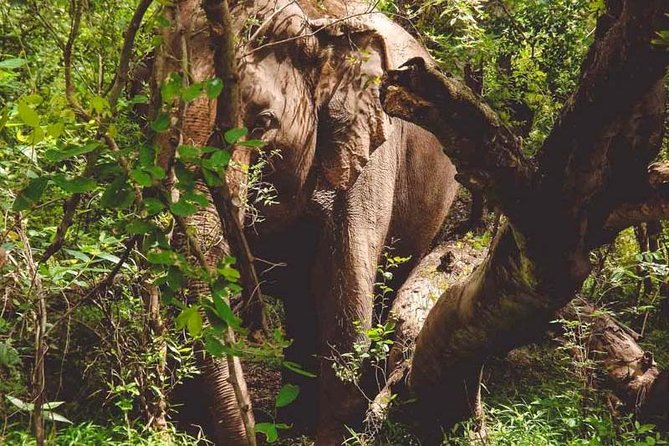
The Kanchanaburi elephant sanctuary usually comes later in the day, when you may already feel tired. For many people, this becomes the favorite stop. The visit is built around care routines rather than performances: making food, preparing fruit, feeding the elephants, walking with them toward the riverside, and helping wash them.
You should expect to get wet. Bring a swimsuit or spare clothing, especially if you plan to take part in bathing. One useful detail is that some people ended up wetter than expected, not only from the water but also from playful splashing. A dry change of clothes can make the ride back to Bangkok much more comfortable.
The sanctuary is presented as a rescue center that does not allow elephant riding or forced labor. That distinction matters. If you are uneasy about animal encounters, the focus on feeding and bathing offers a more responsible shape than a show built around tricks or riding. Still, I would pay attention to how the staff treat the animals on the day and ask your guide questions if you want a clearer explanation of the sanctuary’s work.
The hands-on aspect is what makes the visit feel personal. You are not only looking at elephants from a platform. You may help prepare their meals and join the staff in ordinary care. That said, the exact activities can depend on conditions and the sanctuary’s routine, so treat them as part of the planned experience rather than a guarantee of a particular animal interaction.
Lunch is included and is described as a buffet. It is practical rather than a reason to book the tour by itself. One person found it adequate but not especially appealing, while another praised the meal and noted that dietary requests such as gluten-free food could be arranged. If you have a special diet, mention it when booking.
More Erawan Falls Tours in Bangkok:
- From Bangkok: Erawan Park & Kanchanaburi Small-Group Tour
★ 4.5 · 1,582 reviews - Bangkok: Elephant Sanctuary & Erawan Waterfall Tour
★ 4.9 · 820 reviews - Erawan Waterfalls and Bridge Over River Kwai Tour from Bangkok
★ 4.5 · 372 reviews - Kanchanaburi Full Day Tour: River Kwai and Erawan Falls
★ 5.0 · 327 reviews
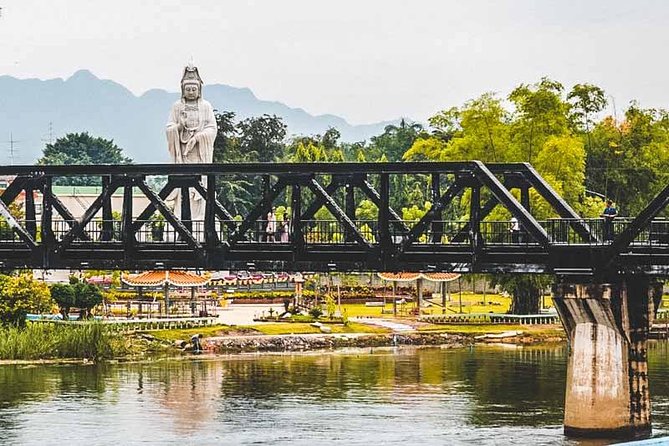
The Bridge over the River Kwai closes the loop
The final major stop is the Bridge over the River Kwai, where you have about an hour to walk across or along the iron bridge and take in the setting.
This is the most famous name on the route, so it can feel familiar even before you arrive. The value comes from seeing it in context, after visiting the railway section and Krasae Cave. By this point, the bridge is no longer just a landmark for a photograph. You have heard about the railway’s construction and can connect the separate sites.
The bridge is also a change of pace after the elephant sanctuary. You can walk, look over the river, and let the day’s history settle before the return drive. It is not a quiet, reflective museum visit, but it is an important final stop and gives the trip a clear ending.
A private car makes a long route easier
The tour uses private transportation in an air-conditioned vehicle, with hotel pickup and drop-off. That is a major part of the value. Kanchanaburi requires substantial road time from Bangkok, and a private car gives you more comfort and control than arranging several separate transfers.
The vehicle quality may vary. Most descriptions praise the car as spacious, clean, and well cooled, but one person reported a vehicle that needed maintenance and transmitted every bump in the road. I would not treat that as the usual experience, but it is a fair reminder that private transport does not always mean luxury transport.
A private tour also means you avoid the usual large-group rhythm. You can ask for a pause, request help with photographs, and discuss how much time to spend at a stop. The itinerary is described as customizable, although the route has many fixed pieces and the day is already packed. In practice, flexibility is most useful for choosing how hard you push at Erawan and how much time you spend around each sight.
The guides are one of the strongest parts of the experience. Peter is repeatedly praised for careful attention and clear explanations. Preecha is noted for stories and local insight, while Ann, Nan, Yokie, Josh, and Bella also receive warm comments for patience, humor, and care. There are a few weaker accounts involving limited English, modest historical detail, or poor schedule communication, so guide quality is not perfectly consistent.
Is the $227.66 price good value?
At $227.66 per person, this is not a cheap Bangkok day trip. It becomes more reasonable when you add up what is included: private transport, a professional guide, lunch, bottled water, entrance fees, hotel pickup, and hotel return.
You are also covering a wide area and several different types of experiences. Booking each part separately could mean arranging transport to Kanchanaburi, paying park admission, finding the waterfall, locating the railway sites, organizing lunch, and choosing an elephant center. The private vehicle is the main value here, especially for a couple, family, or small group that wants one coordinated day.
The price is harder to justify if your priority is only Erawan Waterfall. You would spend less by focusing on the park alone, but you would lose the railway sites and the sanctuary. It is also a poor fit if you dislike long drives or prefer slow travel with one attraction per day.
Group discounts are available, which may improve the price for larger parties. Since this is a private activity, the cost can make more sense when divided among several people. You should compare the total group price rather than judging only the per-person figure.
Who should book this Kanchanaburi day?
I would choose this tour if you want a packed first look at Kanchanaburi and do not have time for an overnight stay. It suits people who want swimming, history, animal care, and scenery in one organized route.
It is particularly good for families with older children and teenagers who can manage the waterfall climb. The elephant activities add a strong hands-on element, while the bridge and railway sites give the day more substance than a simple nature outing.
You should think twice if you need a relaxed pace, have limited mobility, or dislike being in a vehicle for a long stretch. The waterfall requires moderate fitness, and the total day lasts about 12 hours. The schedule rewards energy and curiosity, not idleness.
The tour has a 4.8 rating from 339 ratings and a 98 percent recommendation rate. Those figures point to a consistently strong experience, while the less favorable comments are useful reminders to ask about lunch, vehicle condition, guide language, and the exact schedule before departure.
Final call: book it for variety, not for a slow day
Book this tour if you want the biggest possible day outside Bangkok and like the idea of combining Erawan’s pools with elephant care. The sanctuary, especially the feeding and bathing, is likely to be the emotional highlight, while the waterfall provides the best active outdoor time.
Skip it if the long drive sounds like a deal breaker or if you want to study Kanchanaburi’s wartime history at length. For everyone else, the private format, included costs, and wide mix of stops make this a strong choice for a single day. Bring swimwear, water shoes, dry clothes, and enough energy for the seventh waterfall level.
FAQ
Where does the tour begin?
Pickup begins at about 6:30 am from your Bangkok hotel.
How long does the experience last?
The tour lasts approximately 12 hours, including transportation and the visits in Kanchanaburi.
Is this a private tour?
Yes. Only your group takes part in the private activity.
Is hotel pickup and drop-off included?
Yes. Pickup from your Bangkok hotel and return hotel drop-off are included.
How much time do you spend at Erawan Waterfall?
The planned visit lasts about three hours.
Can I swim at Erawan Waterfall?
Yes. The tour includes time to swim in the emerald pools, subject to conditions at the park.
How many levels does Erawan Waterfall have?
Erawan Waterfall has seven levels, and you can climb between the levels during the visit.
Are entrance fees included?
Yes. All entrance fees are included in the tour price.
Is lunch included?
Yes. Lunch and bottled water are included.
What happens at the elephant sanctuary?
You meet rescued elephants and learn about their care. Activities can include preparing food, feeding, walking with, and bathing the elephants.
Is elephant riding part of the experience?
The sanctuary is described as not allowing elephant riding or forced labor. The planned activities focus on care, feeding, and bathing.
Do I need a high level of fitness?
A moderate level of physical fitness is recommended, mainly because of the walking and climbing at Erawan Waterfall.
Can I cancel for a full refund?
Yes, if you cancel at least 24 hours before the local start time. Cancellations made less than 24 hours ahead are not refunded, and poor weather may lead to a different date or a full refund.
More Private Waterfall Tours in Bangkok
- Erawan Waterfall and Kanchanaburi Private Tour [Optional Luxury]
★ 5.0 · 67 reviews - Private Tour: Death Railway, Hellfire Pass and Erawan Waterfall
★ 5.0 · 55 reviews - Bangkok: Erawan Park & Elephant observation Private Tour
★ 4.7 · 55 reviews - Private Tour to Erawan Waterfall and Boat Tour in Kanchanaburi
★ 5.0 · 41 reviews
Just added around Bangkok
- Erawan Waterfall and Kanchanaburi Private Tour [Optional Luxury]★ 5.0 · 67 reviews
- Floating & Railway Markets and Erawan Waterfall [Optional Luxury]★ 5.0 · 43 reviews
- Private Tour: Kanchanaburi Erawan Waterfall Tour from Bangkok★ 4.5 · 13 reviews
- Private Erawan Waterfall, River Kwai, Death Railway Tour from Bangkok★ 4.5 · 22 reviews
- Private Kanchanaburi Erawan Waterfall&Thai-Burma Death Railway Tour from Bangkok★ 4.5 · 18 reviews
- Private Guided Day Tour to Erawan Museum & Ancient City★ 4.5 · 25 reviews
- Private Tour for Ancient City Bangkok and Erawan Museu(min 2 pax)★ 4.5 · 8 reviews
- Private Tour: Death Railway, Hellfire Pass and Erawan Waterfall★ 5.0 · 55 reviews
Erawan Falls Tours, compared.
From Bangkok: Erawan Park & Kanchanaburi Small-Group Tour
Read our review →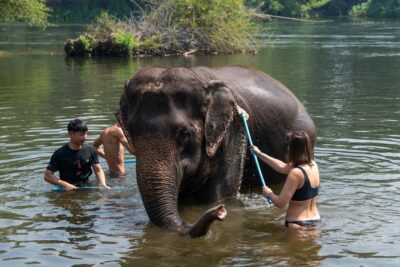
Bangkok: Elephant Sanctuary & Erawan Waterfall Tour
Read our review →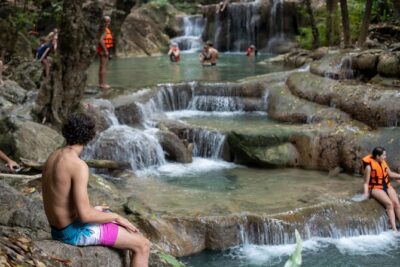
Erawan Waterfalls and Bridge Over River Kwai Tour from Bangkok
Read our review →
Kanchanaburi Full Day Tour: River Kwai and Erawan Falls
Read our review →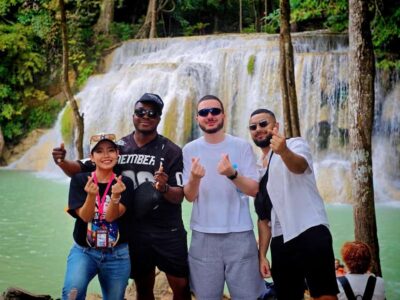
From Bangkok: Kanchanaburi, River Kwai and Erawan Waterfall
Read our review →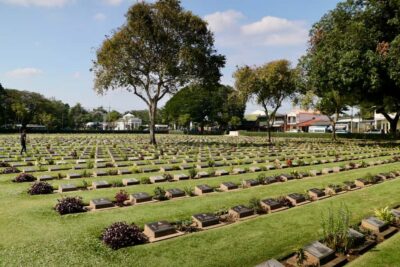
Bangkok: 2-Day River Kwai & Erawan National Park Tour
Read our review →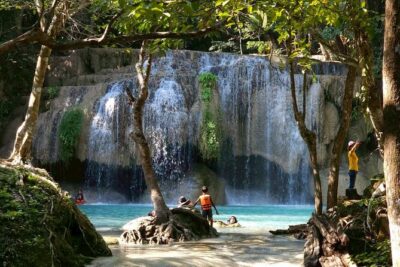
Private Tour to Erawan Waterfall and Boat Tour in Kanchanaburi
Read our review →
Samut Prakan: The Erawan Museum Admission Ticket (NON THAI)
Read our review →Browse the lists this tour appears in