
REVIEW · RICE TERRACE & WATERFALL TOURS
Yogyakarta: Selogriyo Temple, Rice Terraces & Waterfall Tour
Selogriyo Temple is the sort of place that rewards the journey. You leave Yogyakarta’s busy streets behind, walk a quiet route through working rice fields, and reach a small hilltop sanctuary with mountain scenery around it. The walk through the terraces is the real heart of the day, not simply a way to reach the temple.
I like the chance to learn about Java’s farming life from guides such as Haidar, Atok, Kin, Yuni, or Imam, and I like the peaceful setting, where you may share the temple with very few people. Kedung Kayang Waterfall adds a welcome swim at the end. The trade-off is physical effort: muddy farm paths and a steep walk down to the waterfall mean you need decent fitness and shoes with a firm grip.
Key points to know before booking
- The rice-field walk is the star: See paddy, beans, corn, plants, and farming methods while walking the route local farmers use.
- Selogriyo Temple is small and quiet: Its value comes from its remote setting, calm atmosphere, and surrounding views rather than grand scale.
- The waterfall requires effort: Kedung Kayang involves a steep descent and climb back up, with slippery sections possible.
- Guides add real value: Haidar, Atok, Kin, Yuni, and Imam have helped visitors understand local customs, agriculture, religion, and daily life.
- It is a small-group day: The tour accepts up to eight participants, though some departures may feel almost private.
- The price covers the basics: At $65 per person, hotel transport, entrance fees, parking, and an English-speaking guide are included, but food and drinks are extra.
Leaving Yogyakarta for Java’s farming country
The tour lasts about eight hours and includes pickup and return to accommodation in Yogyakarta or the Borobudur area. That transport matters here. Selogriyo Temple is remote, and arranging your own ride to a rural trailhead would add hassle, especially if you do not know the area.
As the city gives way to villages and cultivated hills, the trip changes character. This is not a day of famous monuments lined up one after another. You spend much of it seeing how people live and work beyond the main sightseeing circuit.
The group limit is eight people. That is small enough for questions and a flexible pace, though the actual feel depends on how many people book your departure. One departure was private because only one participant joined. Guides have also made special stops for local food and drinks when time and interest allowed.
Pickup is available in Yogyakarta and around Borobudur. If your accommodation is in the Yogyakarta airport area, an extra IDR300,000 pickup charge applies. Check that detail before paying, since it changes the real cost.
More Rice Terrace and Waterfall Tours in Indonesia:
- Ubud: Waterfalls, Water Temple & Rice Terraces Private Tour
★ 5.0 · 5,484 reviews - Ubud: Waterfall, Rice Terraces & Monkey Forest Private Tour
★ 4.9 · 4,894 reviews - Best of Bali Waterfalls: Tibumana, Tukad Cepung and Tegenungan
★ 5.0 · 3,047 reviews
Walking the terraces toward Selogriyo Temple
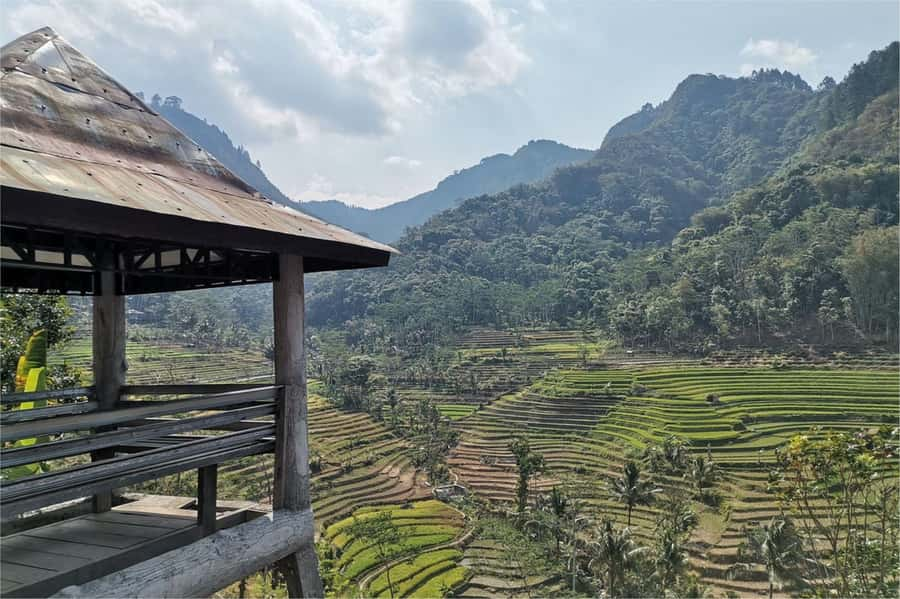
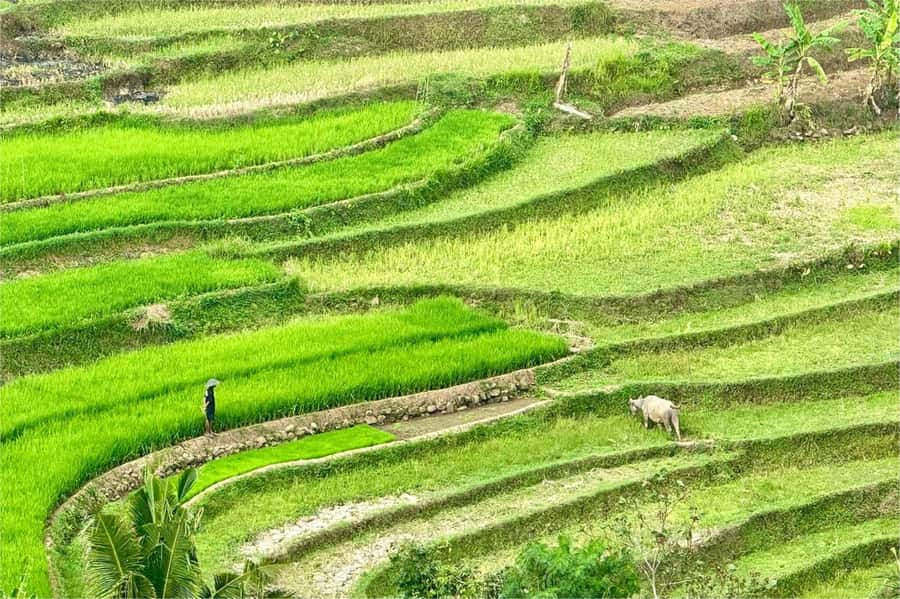
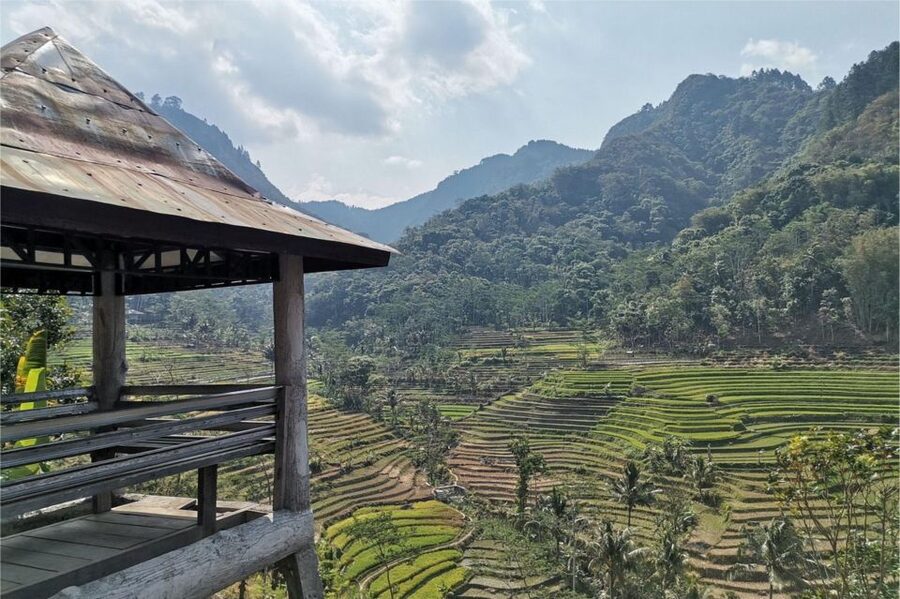
The approach to Selogriyo is gentle in spirit but not entirely effortless underfoot. You walk through rice terraces and village farmland, with paddy, beans, corn, and other crops growing along the route. The scenery is at its best when you slow down and look at the small details rather than rush toward the temple.
This walk gives you a useful window into integrated agriculture. Haidar has explained how farmers combine different plants and methods to manage disease and improve soil nutrients. Guides can also point out plants and insects, explain farming techniques, and answer questions about village life.
That human side makes this more than a countryside photo stop. You may meet local residents and hear about their work and customs. The most useful approach is to stay curious and respectful. Ask questions, listen, and remember that the fields are working farms, not a theme park built for photographs.
The path can become muddy. You should expect uneven ground and bring shoes or sandals with a firm sole. If you dislike walking on rural tracks, this may feel like work. If you enjoy seeing a place at ground level, the route is the main reason to book.
The pace is one of the tour’s strengths. Guides such as Haidar and Kin have been attentive to breaks, water, questions, and photographs. The day is not designed as a race, and that matters in a warm climate where a slower walk is more pleasant than a hurried one.
A small temple with a quiet setting
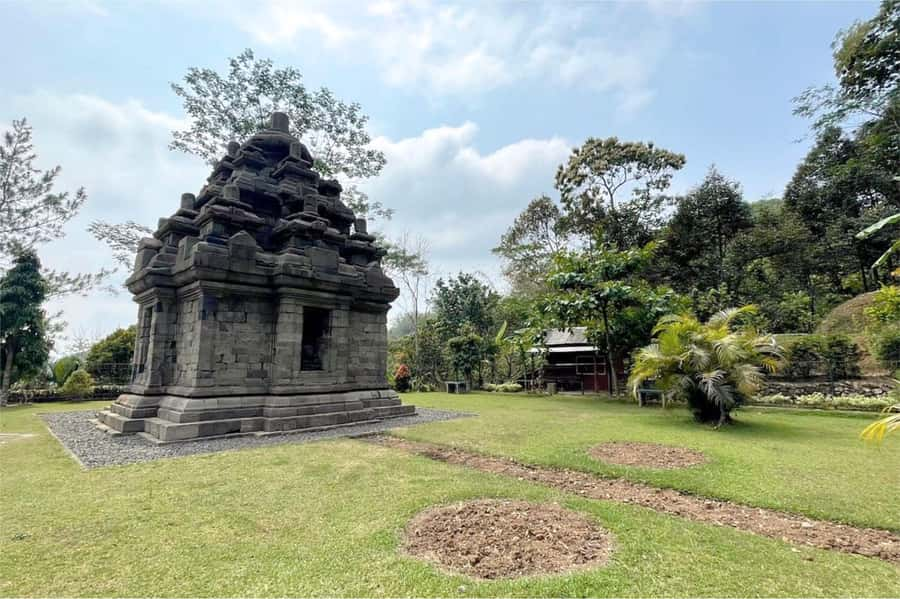
Selogriyo Temple is not a vast complex. It is a modest, remote temple in a hilltop setting, surrounded by fields and open countryside. You should arrive with the right expectation: the appeal is peace, position, and atmosphere, not a long list of monumental structures.
The secluded location gives the temple a calm feel. It is the sort of stop where you can sit quietly for a few minutes, take in the views, and let the countryside do the work. One useful part of the visit is learning about Hindu worship and the temple’s place in the area.
The temple’s modest size may disappoint you if you are comparing it with Borobudur or Prambanan. Those major sites offer far more architectural scale and detail. Selogriyo offers something else: fewer people, a slower visit, and a closer connection between the shrine and the land around it.
Your guide can make a large difference here. Atok has been praised for explaining each stop clearly and speaking good English, while Haidar has helped connect the temple to Indonesian culture and religion. Guides have also shared local language, answered questions, and taken photographs during the day.
A rural coffee stop, when the timing works
The tour can include a stop at a small cafe overlooking the rice fields. The setting is a pleasant break from walking, and the drinks may include local coffee and purple tea. Some departures have included unusual coffee, including kopi luwak, sometimes called cat poo coffee.
This is not presented as a formal tasting program, so you should treat it as a possible refreshment stop rather than a guaranteed feature with a set menu. Food and drinks are not included in the tour price. Bring some spending money and your own water, even though guides have made sure people had water and breaks during the day.
The stop adds local flavor without turning the day into a shopping excursion. You can sit above the fields, enjoy a drink, and watch the countryside. It also breaks up the walking before the waterfall section.
A few more waterfall trips around Indonesia worth a look
- Ubud: Full-Day Rice Terrace, Monkey Forest & Waterfall
★ 5.0 · 2,634 reviews - ATV Quad Bike Through Tunnel and Waterfall in Bali
★ 5.0 · 2,098 reviews - ATV Quad Bike Bali with Waterfall Gorilla Cave and Lunch
★ 5.0 · 1,925 reviews - Bali: Lempuyang Quick Access, Waterfall, Water Palace & More
★ 4.7 · 1,072 reviews
Kedung Kayang Waterfall and the steep part of the day
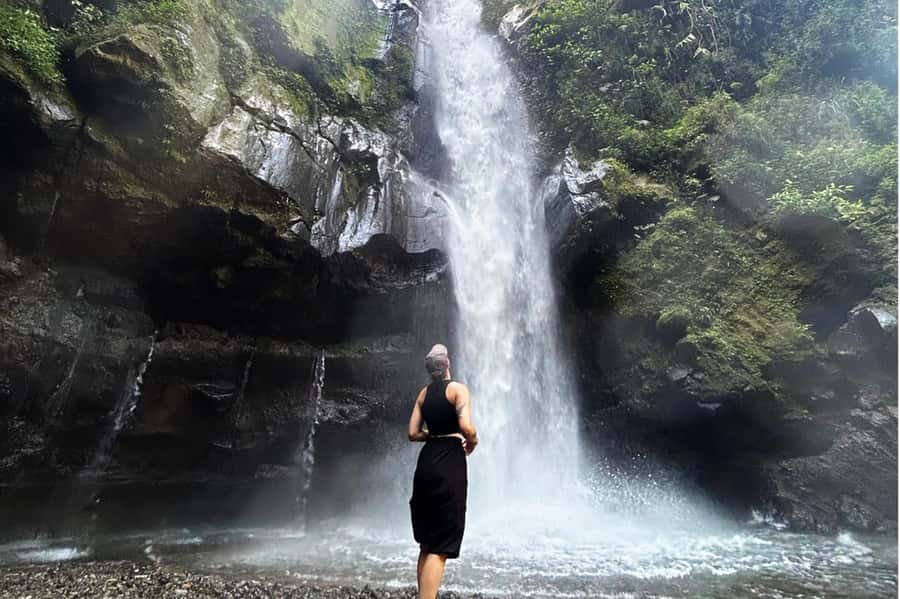
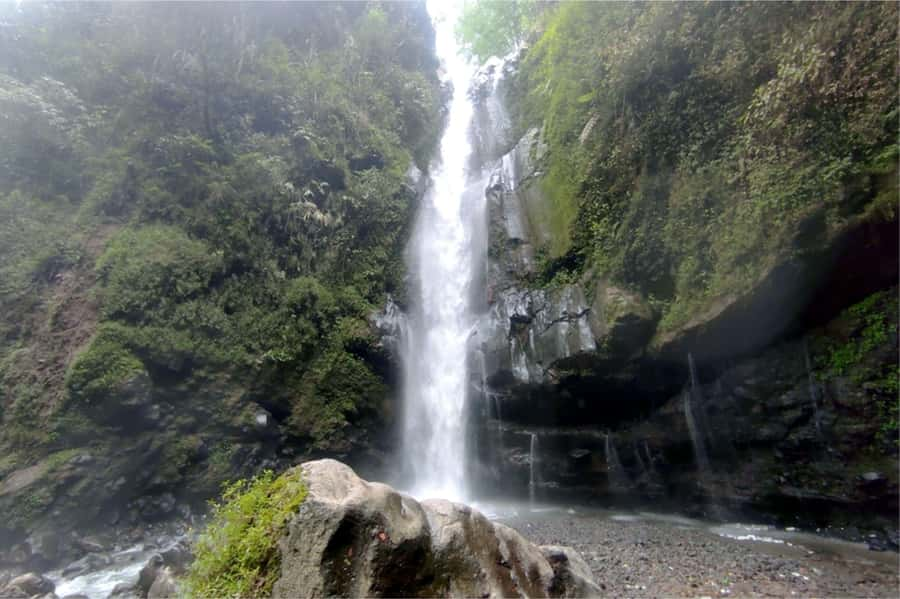
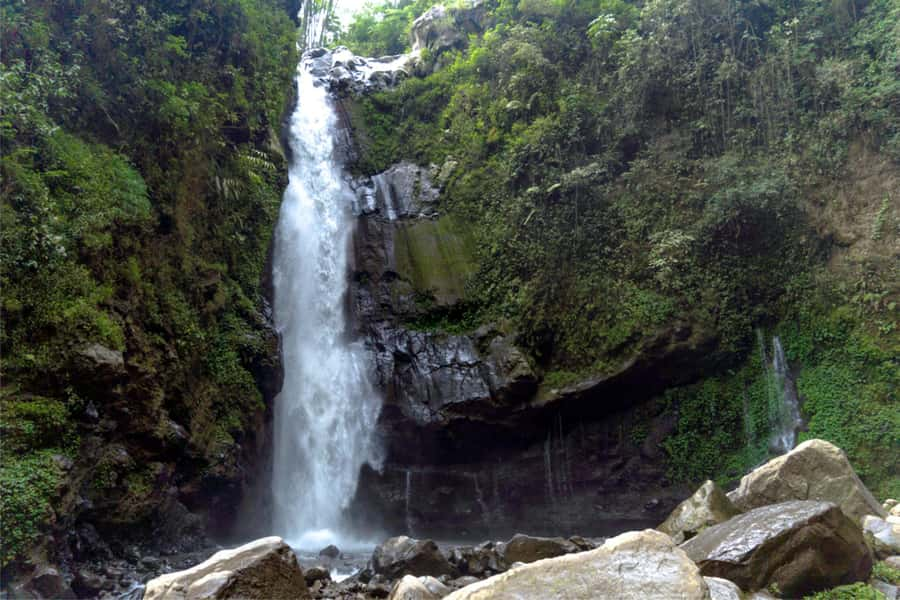
Kedung Kayang Waterfall provides the day’s most active finish. You hike down toward the falls, where you can swim beneath the water and enjoy the natural setting. The water is a welcome reward after the temple walk, especially on a hot day.
Do not underestimate the route. The path down is steep, and you must climb back up to the starting point. Some sections can be slow and awkward, particularly when moving from the path to the base of the falls. Water shoes are useful if you have them, while sturdy sandals or shoes with good grip are a sensible minimum.
The waterfall is also a strong photography stop. Views may include a volcano in the background, adding scale to the scene. Still, conditions can affect how easy the visit feels. Wet surfaces, uneven ground, and the return climb are part of the deal.
You do not have to treat the swim as an obligation. If you would rather stay dry, you can enjoy the scenery and take photographs, but the walk remains. The tour suits you best if you are comfortable with a moderate amount of walking and a short but steep hike.
What the guides bring to the day
The guide is central to the quality of this experience. Haidar has led many highly praised days, with a reputation for explaining agriculture, plants, insects, farming techniques, culture, and religion in clear English. He has also helped with photos, breaks, local food, and conversation during the drive.
Atok is another guide named by participants. He has been appreciated for his English, broad explanations, humor, and attention to the group. Kin has helped make the day comfortable by answering questions, providing water breaks, and stopping for coffee and purple tea. Yuni has been praised for his warmth, driving, humor, and effort to create a memorable day.
You may not receive the same guide on every departure, so it is best to view those names as examples of the guiding style available, not a promise of a specific person. Imam has also led a pleasant day, including the temple and waterfall route.
A good guide matters especially on the rice-field walk. Without explanation, you see attractive terraces. With explanation, you understand crops, soil, insects, worship, village customs, and the work behind the scenery. That turns a pretty walk into a more meaningful one.
Is $65 good value?
At $65 per person, the tour is not the cheapest way to see countryside near Yogyakarta. Some people have considered it expensive, particularly because the temple is small and the waterfall visit is relatively brief compared with the full eight-hour day.
The value improves if you use the included services. Hotel pickup and drop-off, an English-speaking guide, parking, and entrance fees are covered. You also avoid arranging transport to a remote site and get interpretation that would be difficult to find on your own.
For me, the price makes the most sense if you value rural access and personal guiding more than a packed list of major sights. You are paying for transport, time, local knowledge, and a day away from the city. You are not paying for a grand temple complex or a polished adventure park.
Food, drinks, and guide tips are extra. The airport-area pickup surcharge is also extra, at IDR300,000. Add those costs before deciding if the total fits your budget.
Who should book this day?
This tour suits you if you want to see a quieter side of Java, enjoy walking, and like asking questions about local life. Nature lovers will appreciate the terraces, remote temple, waterfall, and mountain views. It also works well for people who have already seen Yogyakarta’s main sights and want a change of pace.
The trip can suit families and older adults if everyone is comfortable with moderate walking, but the steep waterfall route deserves an honest look. The group can take breaks, yet the terrain will not become flat or easy. Anyone with limited mobility should ask the operator for specific advice before booking.
You should also book it if you prefer a small group to a large coach. With no more than eight participants, you have a better chance to talk with the guide and adjust the pace. A private-feeling departure is possible, but it is not guaranteed.
This is less suitable if you want a full day of architecture, a luxury vehicle, or a completely dry and gentle outing. Mud, uneven paths, and the waterfall climb are part of the experience.
Practical preparation for a better day
Wear shoes that can handle mud and uneven ground. For the waterfall, water shoes or secure sandals are helpful, and a spare change of clothes makes sense if you plan to swim.
Bring money for food and drinks, since those are not included. You should also bring water, sun protection, and anything you normally need for an eight-hour outdoor day. The guides have provided water and breaks, but personal supplies remain a sensible precaution.
Keep your schedule reasonably open. The tour is advertised as eight hours, but rural roads, walking pace, weather, and stops can affect the rhythm of the day. A guide may spend extra time explaining a crop, answering questions, or making a local food stop.
The free cancellation policy allows cancellation up to 24 hours before departure for a full refund. You can also reserve now and pay later, which helps if your Yogyakarta plans are still shifting.
Should you book Selogriyo and Kedung Kayang?
Book this tour if you want a quiet, active day that connects a small temple with working farms, local conversation, and a waterfall swim. The rice terraces are the strongest part, and a good guide such as Haidar or Atok can turn the walk into a lesson in Java’s agriculture and culture.
Skip it if you are looking for grand architecture or an easy sightseeing loop. Selogriyo is modest, Kedung Kayang requires a steep walk, and the $65 price is worthwhile mainly when you value the transport and personal guidance.
For the right person, this is a fine way to trade Yogyakarta’s city traffic for open fields, village paths, and a more personal look at central Java.
FAQ
How long does the Selogriyo Temple and waterfall tour last?
The tour lasts eight hours, including pickup, transport, walking, the temple visit, the waterfall stop, and return to your accommodation.
Where does pickup take place?
Pickup and drop-off are included from accommodation in Yogyakarta or the Borobudur area. Pickup from the Yogyakarta airport area costs an additional IDR300,000.
Is an English-speaking guide included?
Yes. An English-speaking guide is included. Guides who have led this experience include Haidar, Atok, Kin, Yuni, and Imam.
How many people can join the tour?
It is a small-group tour limited to eight participants. Some departures may operate with fewer people, depending on bookings.
Is swimming at Kedung Kayang Waterfall required?
No. You can choose whether to swim, but the route to the waterfall still involves a steep hike down and back up.
What costs are not included in the $65 price?
Food, drinks, and a tip for the guide are not included. Entrance fees, parking, hotel pickup, and hotel drop-off are included.
Can I cancel for a refund?
Yes. You can cancel up to 24 hours in advance for a full refund. You can also reserve the tour and pay later.
Just added around Indonesia
- Monkey Forest, Ubud, Waterfall and Rice Terrace★ 4.5 · 53 reviews
- Bali: Tirta Gangga, Taman Ujung and Cepung Waterfall Trip★ 4.8 · 101 reviews
- Tetebatu : Waterfall, Rice Fields & Monkey Forest Full day★ 4.9 · 14 reviews
- Tetebatu: Rice Fields, Waterfall, & Monkey Forest Day Tour★ 4.9 · 170 reviews
- Tetebatu: Waterfalls, Spices, Rice Terrace, Monkey forest★ 4.9 · 55 reviews
- Tanah Lot-Nung Nung Waterfall-Jatiluwih and Bedugul★ 4.7 · 16 reviews
- Surabaya: Tumpak Sewu Waterfall, Bromo and Ijen Shared Tour★ 4.4 · 14 reviews
- Surabaya or Malang: Tumpak Sewu Waterfall Share Guided Tour★ 4.9 · 45 reviews
Rice Terrace & Waterfall Tours, compared.
Ubud: Waterfalls, Water Temple & Rice Terraces Private Tour
Read our review →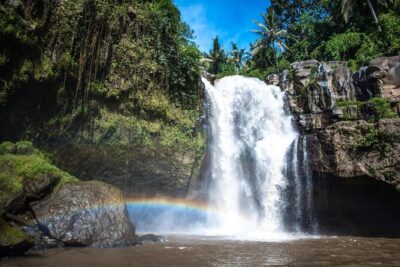
Best of Bali Waterfalls: Tibumana, Tukad Cepung and Tegenungan
Read our review →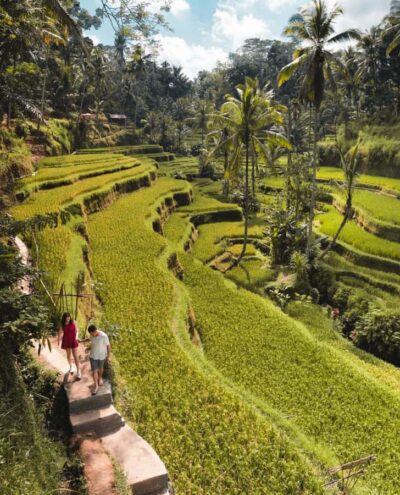
Ubud: Full-Day Rice Terrace, Monkey Forest & Waterfall
Read our review →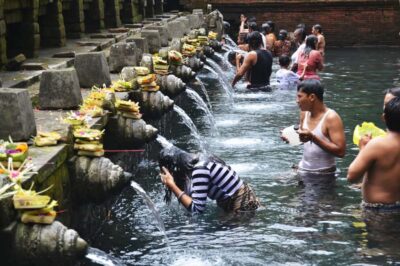

Ubud: Private Scenic Waterfalls and Rice Terraces Tour
Read our review →
Blue Lagoon Snorkeling – Lunch – Kantolampo – Tibumana Waterfall
Read our review →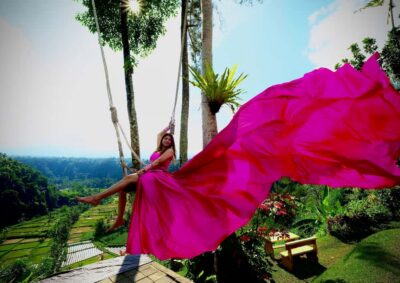
Bali: Swing with Falls, Rice Terrace, & Monkey Forest Option
Read our review →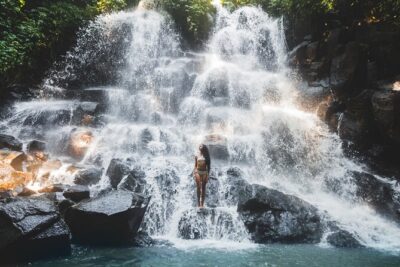
Ubud Top Attractions: Waterfalls, Temples and Rice Terraces
Read our review →Browse the lists this tour appears in