
REVIEW · WATERFALL HELICOPTER FLIGHTS
Kailua-Kona: Kohala, Volcanoes and Waterfall Helicopter Tour
The striking feature here is the sheer range packed into 90 minutes in the air. From Kailua Bay, you sweep past Mauna Loa, Hualālai, Mauna Kea, Kohala’s valleys, major waterfalls, and several beaches. It is a fast, dramatic way to see parts of the Big Island that are difficult or impossible to reach by road.
I like the chance to choose doors on or off, and I like that the pilot provides live commentary instead of leaving you to guess what you are seeing. The main drawback is the price: at $895 per person, this is a major splurge, and a doors-off booking does not guarantee that your seat will be beside the open door.
Key points to know before booking
- Four volcanic regions in one flight: See Mauna Loa, Hualālai, Mauna Kea, and Kohala from the air.
- Waterfall country by helicopter: The route includes Waiʻilikahi Falls and Laupāhoehoe Nui, along with Waimanu, Honopue, Pololū, and Waipiʻo valleys.
- Doors-off limits apply: Passengers must weigh at least 80 pounds in a Robinson R44 or 100 pounds in an Airbus Astar for the doors-off option.
- A calm pilot matters: Jeff is specifically noted for a steady manner and clear explanations, while another pilot was praised for giving plenty of Big Island history during a smooth flight.
- Plan for a full morning or afternoon: You must arrive one hour early for check-in and the required safety briefing, and hotel transportation is not provided.
- This is sightseeing from above: You pass over the main sights rather than landing or stopping at them.
Why this Big Island helicopter route is special
The Big Island is too large and varied to understand from a single scenic drive. One side has black lava fields and giant volcanic slopes. Another has steep green valleys cut by waterfalls. Along the coast, reef-filled bays and pale beaches sit beside darker volcanic shorelines.
This flight connects those pieces in one sweep. You begin at Rainbow Helicopters near Kailua-Kona, then travel north and inland before following the Kohala Coast and returning toward Kailua-Kona. That route gives you both the raw, open scale of the volcanoes and the softer scenery of the island’s wet northern valleys.
I especially like the contrast between Mauna Loa and the Kohala valleys. Mauna Loa is broad, severe, and enormous. The Kohala section is folded, green, and cut by narrow ravines. From ground level, you would need several separate outings to see these settings. From a helicopter, they follow one another quickly.
The live English commentary adds useful context. Jeff is named as one pilot, and he is described as calm and easy to talk with. Another pilot was praised for explaining the island’s history while keeping the flight smooth. You should still think of the narration as a complement to the view, not as a long historical lecture.
More Waterfall Helicopter Flights in the USA:
- Kauai Private Doors-Off Helicopter: Ultimate Waterfalls & Canyons
★ 5.0 · 1,510 reviews - Kauai Deluxe Waterfall Safari: Helicopter Tour
★ 5.0 · 900 reviews - Lihue: Deluxe Waterfall Safari Helicopter Tour
★ 4.8 · 422 reviews
From Kailua Bay to Mauna Loa
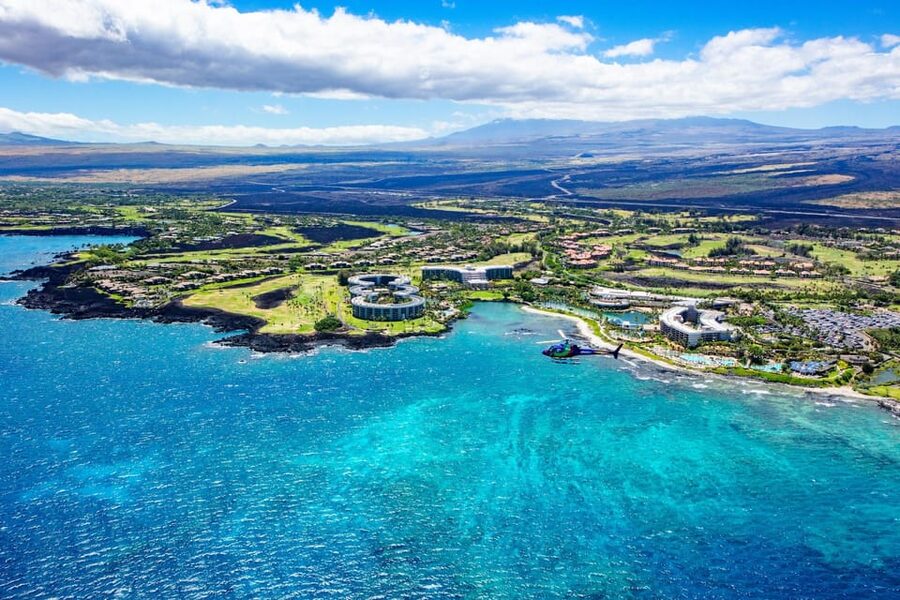
The flight begins over Kailua Bay, where clear water and coral reefs provide an immediate change from the built-up Kailua-Kona shore. This opening gives you a quick sense of the island’s coastal side before the aircraft turns toward the volcanoes.
Mauna Loa is the first major geological star. It is known as the Long Mountain and is described here as the world’s largest active volcano. From the air, its value is scale. A road viewpoint can show you a slope or crater, but a helicopter helps you grasp how far the mountain spreads.
The trade-off is that you do not land on Mauna Loa or spend time examining a single feature. The aircraft passes over the area, so keep your expectations focused on broad views and changing angles. If you want a close look at one volcanic site, a ground tour will give you more time. If you want to understand the size of the island’s volcanic foundations, the flight is far more efficient.
Kaʻūpūlehu Crater and Hualālai
The route then reaches Kaʻūpūlehu Crater and Hualālai. These areas give you a closer look at the volcanic side of the Kailua-Kona region, with hardened lava and crater forms replacing the bright coastal water.
Hualālai is one of the four major volcanic areas featured on the route. Its presence is especially useful for anyone trying to make sense of the Big Island’s geography. You are not simply seeing one isolated volcano. You are moving through a chain of volcanic zones that shaped the island in different ways.
The narration can help here, since crater names and volcanic features are easy to confuse from the ground. Listen closely to the pilot’s commentary, and do not worry if you cannot identify every ridge or depression yourself. The aircraft’s position changes quickly.
Mauna Kea and the Puu Waawaa Forest Reserve
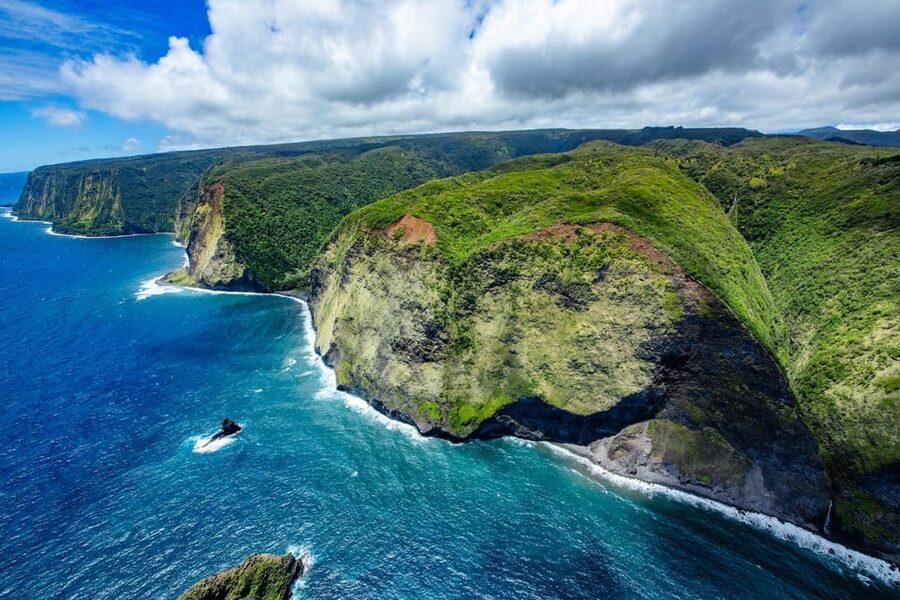
Mauna Kea appears in the distance at 13,796 feet. Its Hawaiian nickname, the White Mountain, reflects the snow that can sometimes cover its summit, though the supplied tour information does not promise snow on your flight.
This is one of the route’s strongest visual contrasts. Mauna Loa is broad and massive, while Mauna Kea rises as a distinct high summit. Seeing both during the same flight helps explain how the island’s mountains relate to one another.
The helicopter then reaches the Puu Waawaa Forest Reserve. The reserve is known for native plants and animals found nowhere else in the world. From above, you can expect a broad aerial view rather than a close encounter with wildlife or a walk through the forest. That distinction matters. This is a scenic flight over protected country, not a forest visit.
The move from volcanic slopes into forest is one of the reasons I think this tour works better than a simple coastline flight. It gives you more than pretty water and beaches. You see how much the Big Island changes over a relatively short distance.
A few more waterfall trips around the USA worth a look
- Niagara Falls in 1 Day: Tour of American and Canadian Sides
★ 5.0 · 8,841 reviews - Best Niagara Falls US Tour W/Boat Ride, Cave & More Wonders!
★ 5.0 · 8,372 reviews - Big Island in a Day: Volcanoes Waterfalls Sightseeing and History
★ 5.0 · 6,569 reviews - Niagara Falls USA: Maid of the Mist & Cave Adventure
★ 5.0 · 3,924 reviews
Kohala, Kawaihae, and the island’s northern edge
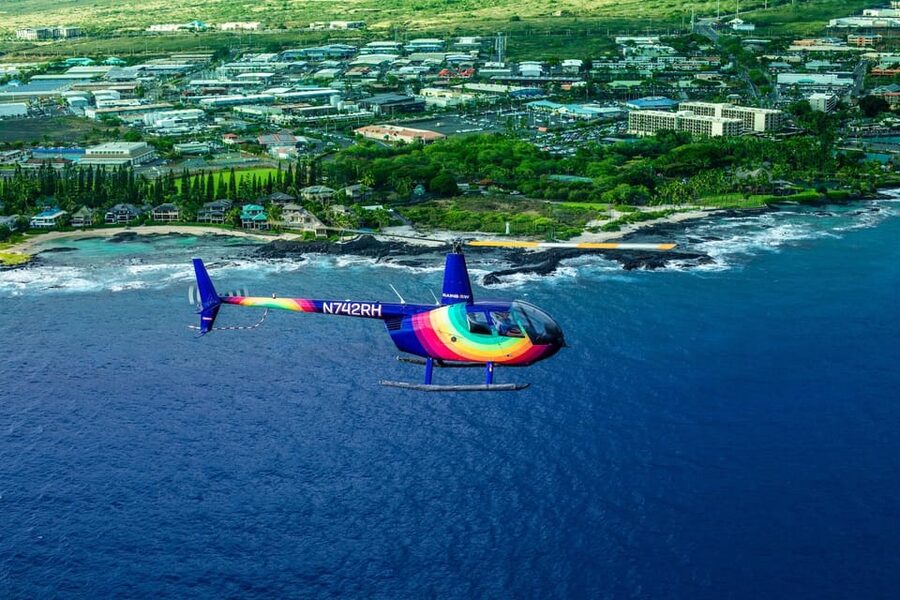
Kohala is described as Mauna Kea’s older brother, and the route brings you over the Kawaihae and Kohala Coasts. These areas also connect with the childhood home of King Kamehameha, giving the flight a cultural and historical layer alongside its geology.
Kawaihae adds another coastal view, while Kohala begins to show the steep valleys and heavy greenery associated with the island’s north. The shift is dramatic. The dry, open volcanic country gives way to sharper ridges and water-cut valleys.
I like this section because it brings together natural and human history without requiring a separate museum stop. The name of King Kamehameha is part of the route’s sense of place, and the pilot’s narration can help explain why this part of the island matters.
Still, remember that the helicopter will not stop in Kawaihae or Kohala. You will not walk through the area or visit a cultural site. The value is in seeing the coast, valleys, and terrain as one connected region.
Waterfalls over Waiʻilikahi and Laupāhoehoe Nui
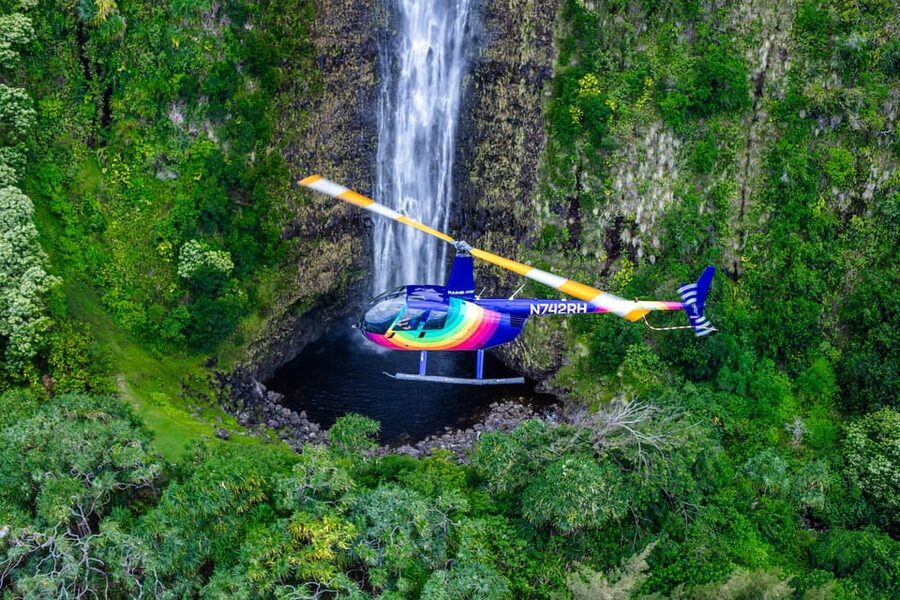
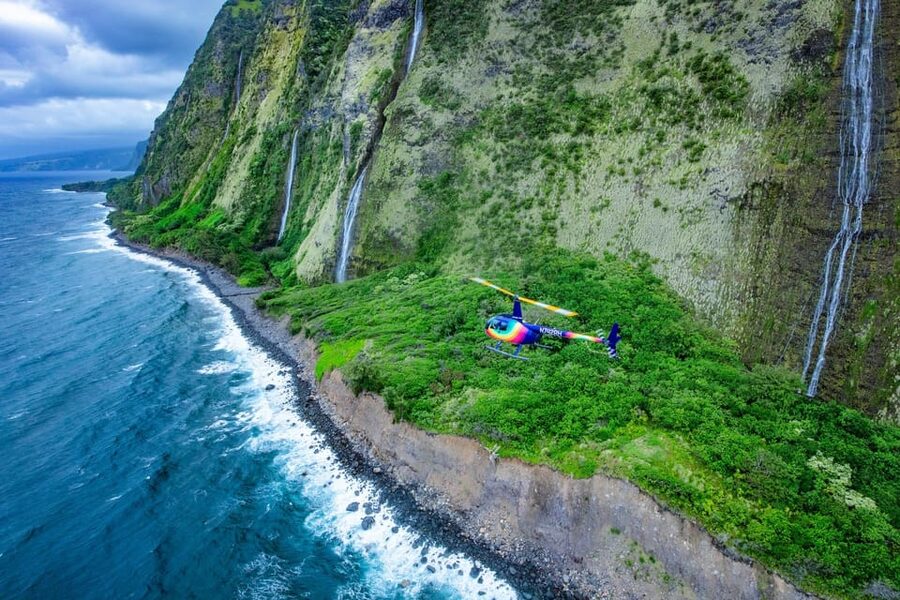
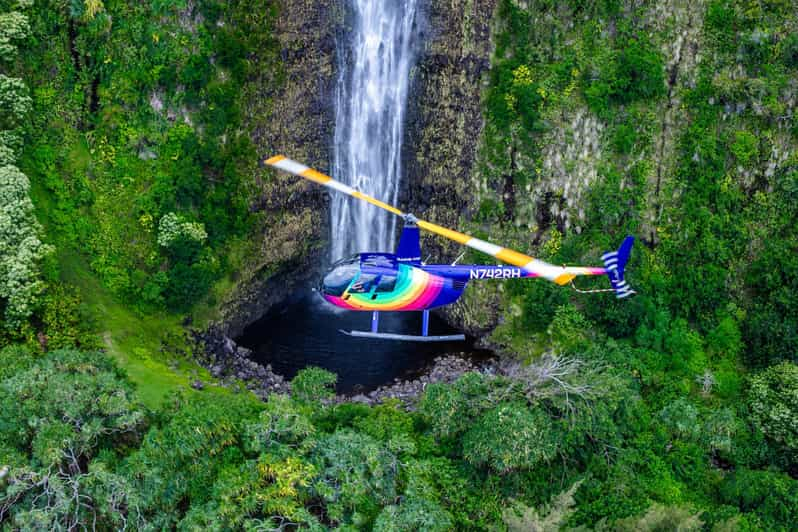
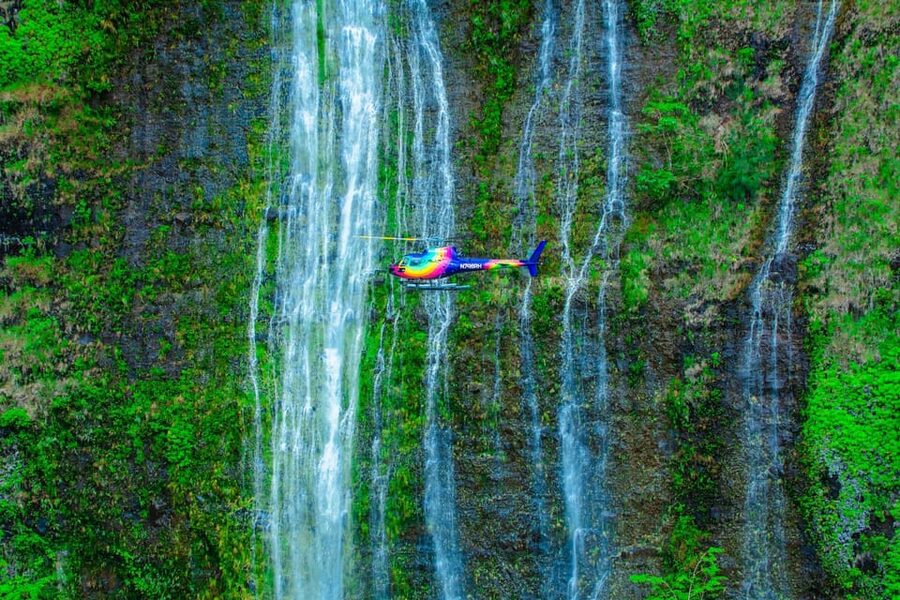
The waterfalls are among the most memorable reasons to choose this route. Waiʻilikahi Falls and Laupāhoehoe Nui appear within the Kohala section, where steep valleys gather water and send it down toward the coast.
A helicopter is particularly useful for waterfalls because many are hidden in ravines. From the road, you may see only a stream or a distant wall of rock. From above, you can understand the full setting: the valley, the cliff lines, and the route the water takes.
The viewing time will be brief. This is a moving flight, not a hovering photo stop with unlimited time. If one waterfall is important to you, ask the pilot for help identifying it and keep your camera ready.
Bring a jacket even if Kailua-Kona feels warm. The flight can be cool, especially with the doors off, and the tour specifically recommends warm clothing, a jacket, sunglasses, a hair tie, and closed-toe shoes.
Waimanu, Honopue, and Pololū Valleys
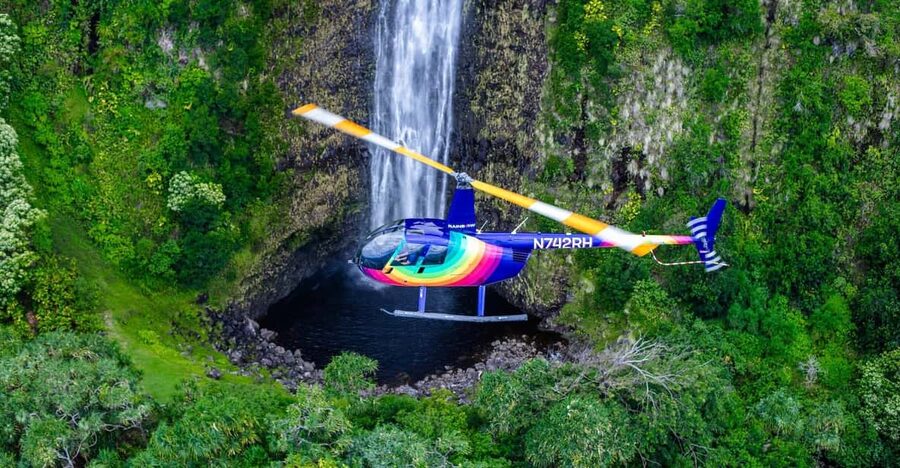
Waimanu Valley and Honopue Valley continue the northern section of the route. These valleys are defined by steep walls, heavy plant growth, and water channels running toward the ocean. The aerial viewpoint lets you see their shape in a way that a coastal road cannot.
Pololū Valley adds another memorable viewpoint. Its deep cut into the coast and dark volcanic shore make it easy to recognize from above. The tour passes over the valley rather than taking you down into it, so the helicopter is best for a broad view of the valley’s connection to the sea.
This part of the trip may be especially useful if you have limited time on the Big Island. You can see several remote valleys without committing to separate road journeys. The drawback is that the route moves quickly, so you should not expect a quiet, extended look at each one.
Waipiʻo Valley and the black-sand coast
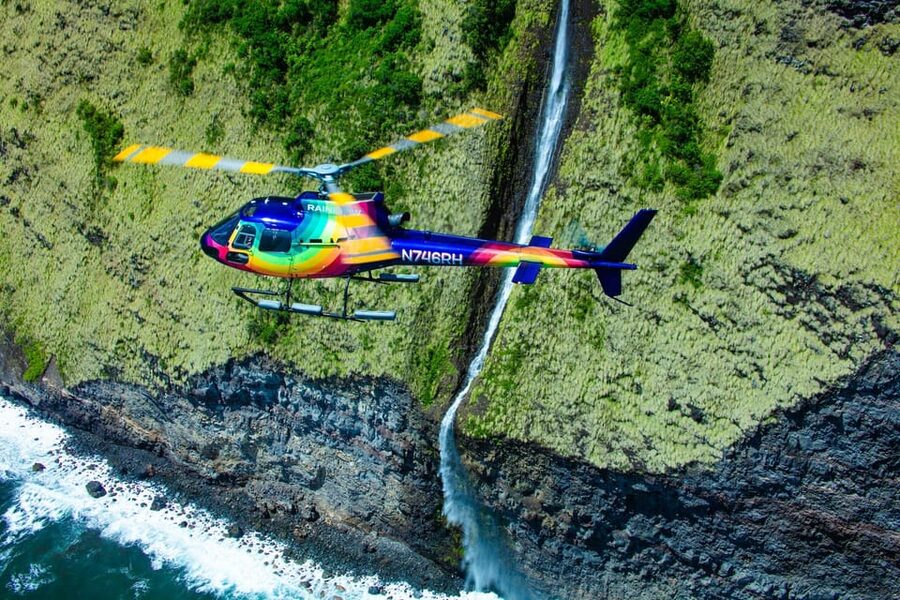
The helicopter circles Waipiʻo Valley and its black-sand beach before following the coast. The dark beach is a reminder that this is volcanic island country, even when the valleys look almost tropical and soft.
Waipiʻo is one of those places where the aerial view gives you context. You can see the valley’s shape, the coast, and the surrounding cliffs in a single frame. From the ground, your view would be more limited.
The route does not include a landing in Waipiʻo, and the tour does not promise beach time. If you want to walk on black sand, swim, or explore a valley on foot, you need a separate ground outing. This flight gives you access to the overall view, not an on-site visit.
Anaehoomalu Bay, Kiholo Bay, and Makalawena Beach
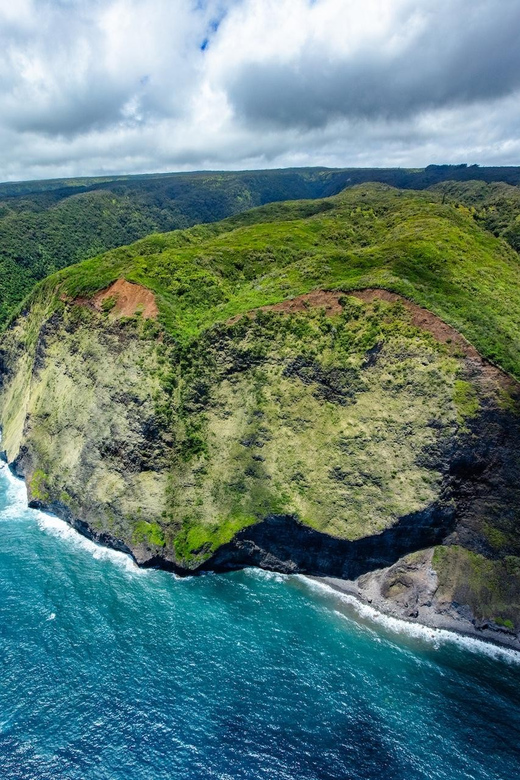
On the return leg, the scenery changes again. Anaehoomalu Bay, Kiholo Bay, and Makalawena Beach bring the flight back to the west coast, where coastal water, reefs, and beaches take center stage.
Anaehoomalu Bay is a fitting contrast to the northern valleys. Kiholo Bay offers another look at the irregular volcanic coast, while Makalawena Beach closes the route with a quieter beach setting before the aircraft returns toward Kailua-Kona.
This final stretch is useful because it completes the island story. You begin over clear water, move across volcanoes and forests, reach waterfall country, and return along beaches and bays. The route is not just a collection of scenic points. It shows how different parts of the Big Island fit together.
Doors on or off, and what the choice really means
The doors-off option is tempting for photographers and anyone who wants a stronger sense of open air. It can also make the flight feel more immediate. But you should read the conditions carefully.
A doors-off booking does not mean you are guaranteed a seat beside an open door. Your position depends on the aircraft and seating arrangement. Passengers must weigh at least 80 pounds for a doors-off flight in a Robinson R44 and at least 100 pounds in an Airbus Astar.
For doors-on flights, you still get wide aerial views and the same general route. The cabin may be a better choice if you prefer a more sheltered ride or if the open-air conditions do not appeal to you. Ask the operator which aircraft is planned if the choice affects your booking.
The operator also requires a weight and balance fee for anyone weighing 250 pounds or more. From 250 to 275 pounds, the fee is 50 percent of the seat price. At 275 pounds or higher, an additional seat purchase is required. These rules are about aircraft balance, so handle them as part of planning rather than as a surprise at check-in.
Price, timing, and practical details
At $895 per person, this is not an inexpensive sightseeing outing. You are paying for access to a large portion of the island in only 90 minutes, plus the aircraft, pilot, safety procedures, and live narration. The value is strongest if your time is limited, if you want to see remote valleys, or if you are celebrating something important.
The value is weaker if you mainly want a short coastal flight or if you are happy to explore by car. A ground-based Big Island trip costs less and gives you time to stop, walk, eat, and linger. This helicopter route earns its price through coverage and access, not through long stops.
Go to the Big Island Jet Center building and park in the large lot south of the brown building. Enter through the front doors. Arrive one hour before your scheduled departure for check-in and the mandatory safety briefing.
Parking is included, but hotel pickup and drop-off are not. Everyone age 24 months and older needs a full-fare seat. You cannot take part if you have been scuba diving within the previous 24 hours, and intoxicated passengers will not fly.
The tour is wheelchair accessible, and a private group option is available. Cell phone straps and cases are supplied, which is helpful in an aircraft where loose items can be a problem. You should still bring sunglasses and tie back long hair.
Who should book this flight
I would recommend this tour to you if you want a broad view of the Big Island and do not mind paying for it. It suits first-time visitors who want geological scale, photographers who understand the limits of a moving aircraft, and anyone who cannot fit remote valleys and waterfalls into a road itinerary.
It also works well for repeat visitors who have already seen the main beaches and want a different angle on the island. The combination of volcanoes, forest reserve, waterfalls, valleys, bays, and beaches gives the flight more range than a short coast-only excursion.
I would hesitate if your budget is tight, if you dislike aircraft travel, or if you need guaranteed time at a specific waterfall or beach. You should also think twice about booking doors off if sitting beside the open door is essential, since that position is not promised.
Final verdict: a costly but wide-ranging view of Hawaiʻi Island
Book this tour if your priority is seeing the Big Island as one enormous volcanic island, not simply collecting stops. The route covers Mauna Loa, Hualālai, Mauna Kea, Kohala, remote valleys, waterfalls, reefs, and beaches in a single 90-minute flight.
Skip it if you would rather spend $895 on several ground outings. But if you value time, scale, and access to places that are hard to reach by road, Rainbow Helicopters offers a powerful overview. Choose your door option carefully, arrive early, dress for cool air, and keep your expectations focused on continuous aerial sightseeing rather than landings.
FAQ
How long is the Kailua-Kona helicopter tour?
The flight lasts 90 minutes, or 1.5 hours.
Where does the helicopter tour meet?
Meet at the Big Island Jet Center building. Park in the large parking lot south of the brown building and enter through the front doors.
How early should I arrive?
Arrive one hour before your scheduled tour for check-in and the mandatory safety briefing.
Is hotel transportation included?
No. Hotel pickup and drop-off are not included, although parking is provided.
Can I choose a doors-on or doors-off flight?
Yes. The tour offers doors-on and doors-off options, depending on the option you select. A doors-off booking does not guarantee that your seat will be directly beside an open door.
Are there weight rules for the doors-off option?
Yes. Passengers must weigh at least 80 pounds in a Robinson R44 or at least 100 pounds in an Airbus Astar to fly with the door off. A weight and balance fee applies to passengers weighing 250 pounds or more.
What should I bring?
Bring warm clothing, a jacket, sunglasses, a hair tie, and closed-toe shoes. Cell phone straps and cases are provided.
Can I fly after scuba diving?
No. You may not take part if you plan to scuba dive within 24 hours of the flight time, or if you have done so during the previous 24 hours.
Just added around the USA
- Buffalo Airport / Canadian destinations (Niagara Falls)★ 5.0 · 52 reviews
- Round-Trip Private-Safe Transfer Between Buffalo Airport & Niagara Falls Canada★ 5.0 · 22 reviews
- Private ROUNDTRIP Transfer Buffalo Airport (BUF)-Niagara Falls★ 5.0 · 36 reviews
- Private Transfer from Buffalo Intl, Airport (BUF) to Niagara Falls Canada★ 5.0 · 24 reviews
- Private Arrival Transfer: Buffalo Niagara Airport to Niagara Falls, Ontario★ 4.5 · 126 reviews
- Private Customizable Niagara Falls Day Tour – Buffalo NY Pickup★ 5.0 · 16 reviews
- 2-Day Niagara Falls USA Tour from Boston★ 4.5 · 42 reviews
- Best of New York, D.C and Niagara Falls US 4-Day Tour from Boston★ 4.5 · 13 reviews
Waterfall Helicopter Flights, compared.
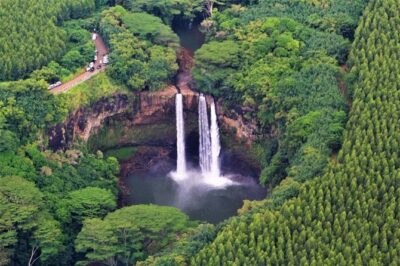
Kauai Private Doors-Off Helicopter: Ultimate Waterfalls & Canyons
Read our review →
Helicopter Scenic Flight over Victoria Falls 12-13 minutes Flight
Read our review →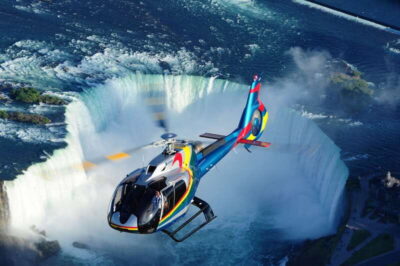
Niagara Falls, Canada: Scenic Helicopter Flight
Read our review →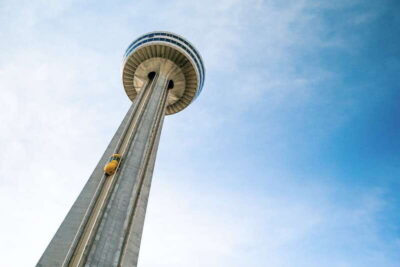
Niagara Falls, ON: Helicopter Ride with Boat & Skylon Lunch
Read our review →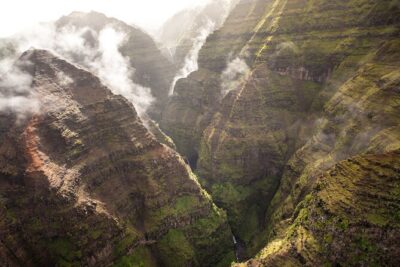
Kauai Deluxe Waterfall Safari: Helicopter Tour
Read our review →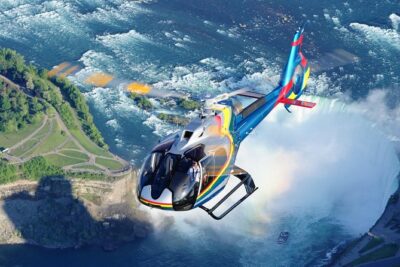

Niagara Falls Canada Tour: Helicopter, Boat, Behind Falls & Lunch
Read our review →Browse the lists this tour appears in