
REVIEW · WATERFALL SWIMMING & NATURAL POOLS
Hilo: Waterfall Hike and Swim with Native Hawaiian
Hilo’s waterfalls are more than pretty places to stop for a photo. With Christian of Kalaninuimehameha, you follow forest trails, hear Hawaiian language, learn how water shapes local life, and finish with a swim at Waiāle Falls. The small group keeps the experience personal and gives the cultural side room to breathe.
I especially like the Hawaiian-language instruction and the way Christian connects plants, water, ancestry, and daily life. I also like the chance to visit several falls, including Waiānuenue, Peʻepeʻe, Waiāle, and Waiālima, rather than spending the whole outing at one viewpoint.
The main caution is physical: the trails can be steep, wet, and technical, with rocks, deep water, and sections through trees. This is not a gentle sightseeing walk, and anyone with back or knee trouble should think carefully before booking.
Key points to know before you go
- A four-hour cultural hike: The waterfalls are only part of the outing. You also learn Hawaiian history, language, plants, food, and cultural practice.
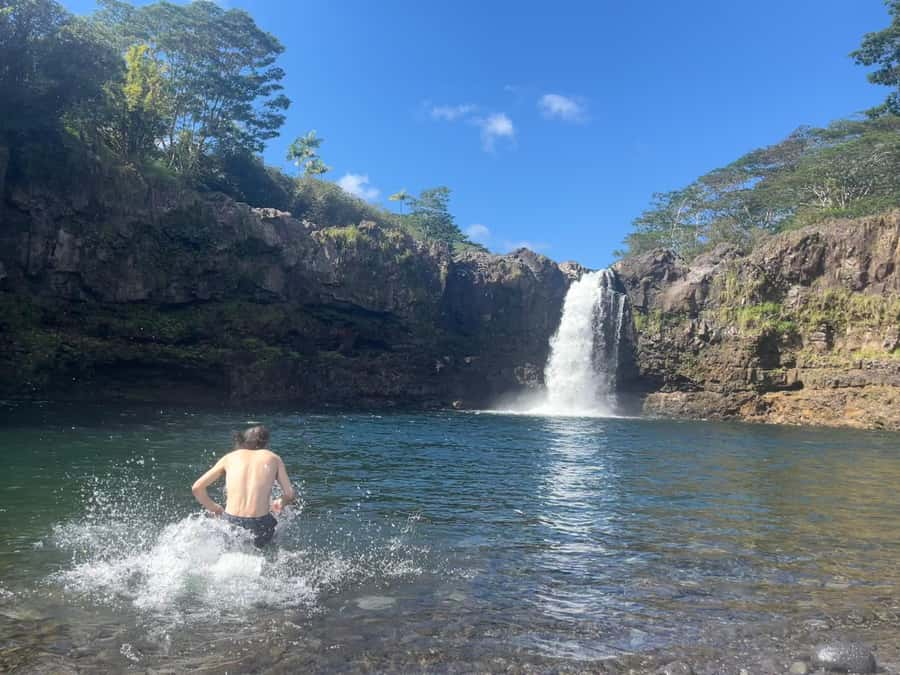
- Four waterfall areas: The route includes Waiānuenue, Peʻepeʻe, Waiāle, and Waiālima Falls.
- Swimming at Waiāle Falls: Bring swimwear and a towel, and expect wet conditions around the falls.
- A very small group: Only six participants can join, which suits people who prefer conversation over a large tour crowd.
- A real physical challenge: Sturdy waterproof shoes, balance, and comfort around rocks and deeper water matter.
- No hotel pickup: You meet at the Statue of King Kamehameha in Hilo and arrange your own way there.
A waterfall outing with a strong Hawaiian voice
Many Hilo waterfall trips focus on scenery. This one uses the waterfalls as a doorway into Hawaiian culture. Christian leads you through the area while explaining the meaning of wai, or water, and the plants and animals tied to the river systems.
That difference matters. You are not simply moving from one photo stop to the next. You are asked to pay attention to the forest, the flow of water, the Hawaiian language, and the customs connected to the place. The experience includes wai, hua ‘ai, or fruit, and lei, bringing a small cultural and sensory element to the day.
Christian’s fluency in Hawaiian is one of the strongest reasons to choose this outing. You hear the language as part of the experience, not just a few place names repeated for effect. He also discusses local history and the meaning of mana, a spiritual force or power that is important in Hawaiian thought.
I like this approach because it gives the scenery context. Waterfalls can blur together after a while, but learning how a river system supports plants, animals, food, and community makes each stop easier to remember.
More Waterfall Hikes in the USA
- Multnomah Falls and Columbia River Gorge Half-Day Hiking Tour
★ 5.0 · 2,108 reviews - Small Group Waterfall and Rainforest Hiking Adventure on Maui
★ 5.0 · 1,417 reviews - Kauai: Secret Falls Kayak and Hike
★ 5.0 · 1,403 reviews
Starting at the King Kamehameha statue
The meeting point is the Statue of King Kamehameha. Since hotel pickup and drop-off are not included, you need to handle your own transportation to this central Hilo meeting point.
Plan to arrive ready for the outdoors. You should already be wearing comfortable clothing and sturdy footwear, with swimwear, a towel, and a waterproof bag for your phone or camera. The tour lasts four hours, but wet trails and time spent listening and swimming mean you should not treat it like a rushed city walk.
The group is limited to six participants. That is a useful size for this kind of outing. A guide can speak with everyone, explain cultural details without shouting, and adjust the pace more easily than on a large bus tour.
Smoking, littering, and touching plants are not allowed. Those rules are especially important here because the activity is built around respect for the forest and the water. You are visiting a living place, not an outdoor playground.
Waiānuenue and Peʻepeʻe: Hilo’s waterfall introduction
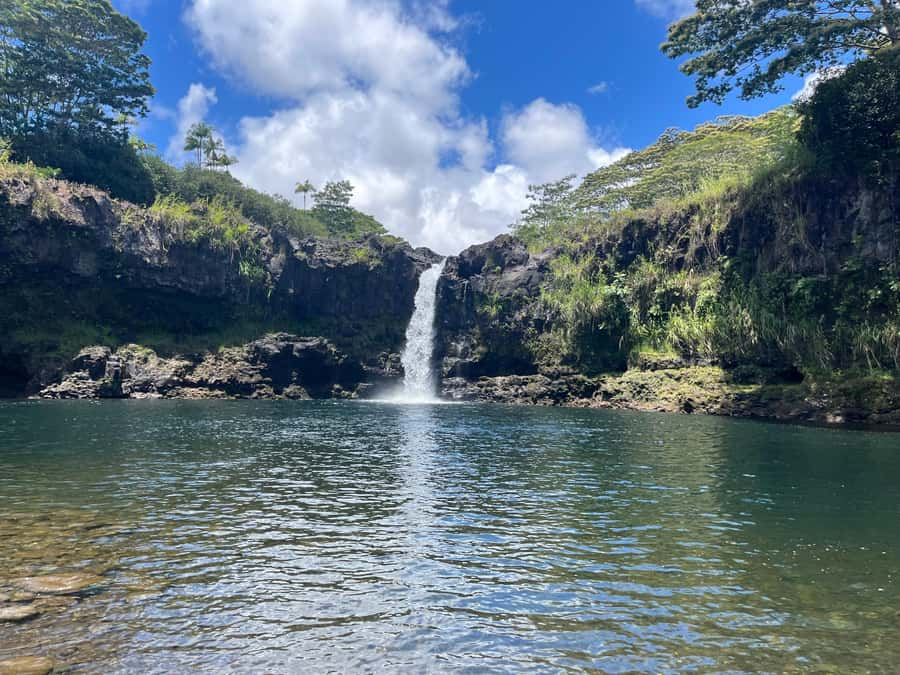
The outing includes Waiānuenue and Peʻepeʻe Falls, two well-known Hilo-area waterfall stops. These visits help set the scene before the more active part of the route.
Waiānuenue is often associated with Rainbow Falls, one of Hilo’s familiar natural sights. Peʻepeʻe is connected with the same broad waterfall area. The exact amount of time at each stop can vary, so think of them as part of a guided sequence rather than separate, long sightseeing visits.
This is where Christian’s storytelling adds value. He explains the history tied to the region and the role of water in Hawaiian life. Instead of treating the falls as isolated attractions, he places them within the wider river system.
You may find this portion easier than the forest route that follows. It also gives you time to settle into the pace, listen to the Hawaiian names, and understand that the day is about more than reaching a swimming hole.
Two trails near Waiāle Falls
The central portion of the outing visits Waiāle Falls through two alawai trails. An alawai is a water channel or waterway, and the route reflects that connection between the forest and flowing water.
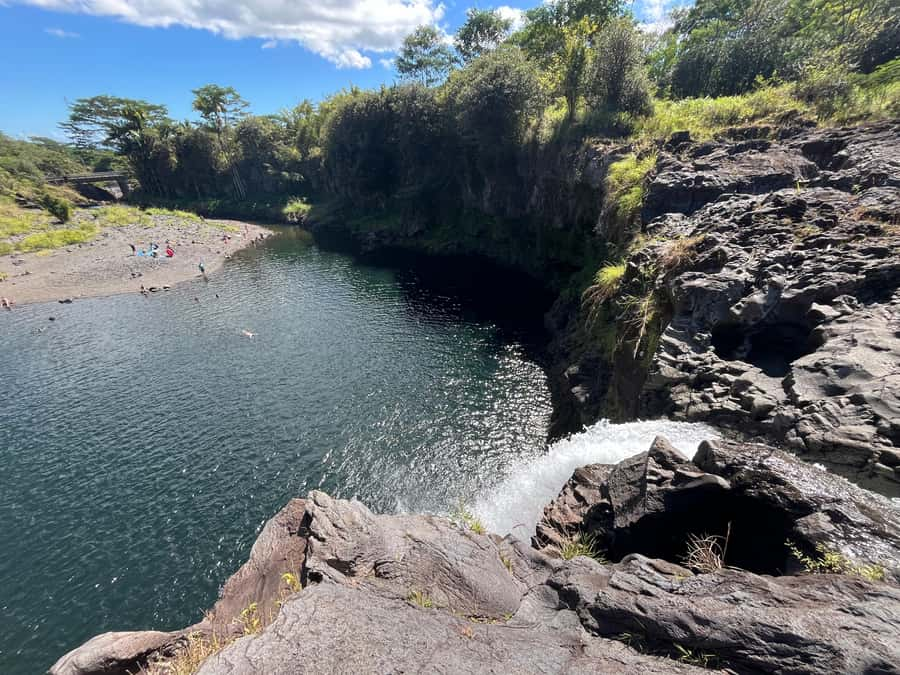
One trail leads to the base of Waiāle Falls. The description includes a stone-beached island near the base, giving the area a distinctive feature beyond the falling water itself. This is also where you have the opportunity to swim.
The second route passes through a forested ridge above the falls and continues toward Waiālima Falls. Seeing the water from different levels changes the experience. At the base, you feel close to the pool and rocks. From the ridge, you gain another view of how water moves through the forest.
This is also the part of the outing that calls for the most care. One participant found the path through the trees more technical than expected, with steep sections, rocks, and deeper water near the waterfall. You may need to step carefully, climb over rocks, and keep your balance on wet ground.
The guide can help you manage the route, but he cannot remove the physical demands. Waterproof hiking shoes with a firm grip are a better choice than casual sneakers. Keep glasses, phones, and other loose items secure. Water around the falls can be deeper than it looks, and one participant lost a pair of glasses during the swim.
More Waterfall Swimming and Natural Pools in the USA
- Big Island Waterfalls Tour with Swimming and Botanical Garden
★ 5.0 · 513 reviews - Maui: Guided Rainforest and Waterfall Walk & Swim
★ 4.8 · 226 reviews - Umauma Falls Deluxe ATV Waterfall and Swim Experience
★ 4.5 · 198 reviews - Oahu: Complete Island Tour with Tropical Waterfall Swimming
★ 4.9 · 154 reviews
Swimming at Waiāle Falls
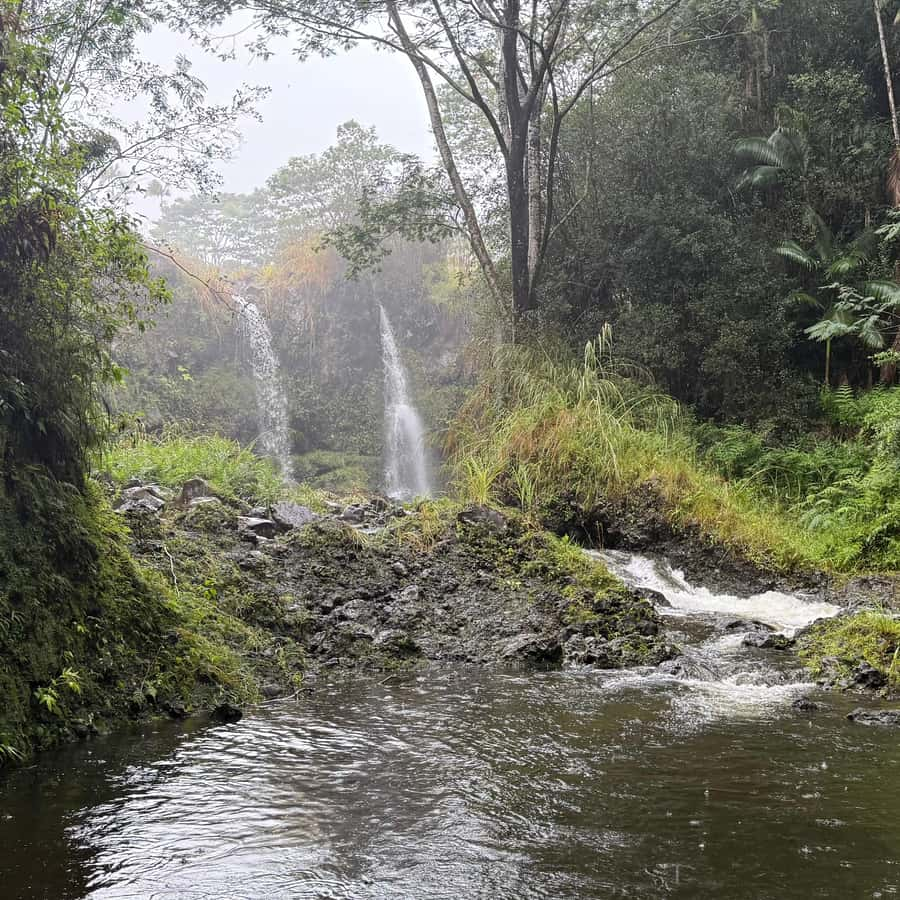
The swim is the most active and playful part of the outing. Waiāle offers a chance to get into the water rather than simply view it from shore.
You should bring swimwear and a towel, and expect to get wet even if you decide not to swim. Spray, damp rocks, and the forest route all make dry conditions unlikely. A waterproof bag is a smart way to protect electronics.
The swimming area is not presented as a supervised pool. You need to be comfortable with natural water, rocks, changing depth, and the physical effort of getting in and out. If you have concerns about balance, mobility, or swimming in deeper water, this is worth discussing before booking.
I like that the swim is tied to the cultural and natural lessons rather than offered as a separate thrill. You learn about water, see the falls from nearby, and then experience the coolness of the stream for yourself. That makes the subject more immediate.
Still, do not book this solely for a casual dip. The route to the water is part of the challenge, and the combination of hiking, rocks, wet conditions, and swimming may be tiring.
Hawaiian language, food, and cultural practice
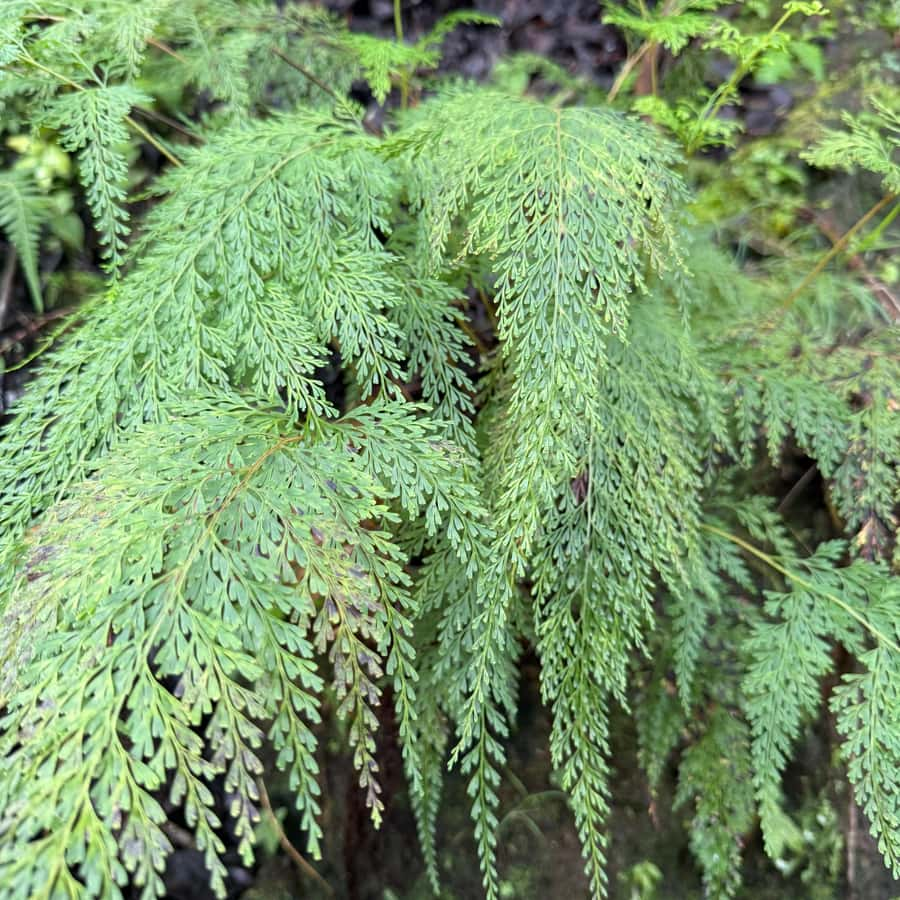
The strongest feature of this outing is its cultural focus. Christian explains Hawaiian history connected to the Hilo region, points out endemic plants and animals, and discusses the relationship between people and river systems.
You also hear Hawaiian spoken by someone who is fluent in the language. That is a rare and valuable part of the experience. Place names become more than sounds on a map, and the forest gains a cultural setting that a standard waterfall stop may not provide.
The tour includes hua ‘ai, or fruit, along with wai and lei. The supplied information does not promise a meal, so you should eat beforehand and bring any food or drinks you need. Food and drinks are not included beyond the listed fruit element.
Cultural practice is included as part of the visit. The details can vary, but you should expect to observe and learn rather than treat the activity as a performance. The rules about not touching plants and not littering reinforce that approach.
Christian’s style, based on the feedback associated with the experience, is enthusiastic and personal. He has been praised for explaining Hawaiian history and culture in a way that makes people want to learn more. He also shares from his garden, adding a personal connection to the discussion of food and plants.
How difficult is the four-hour hike?
The tour is described as moderate physical activity, but that phrase should not lead you to expect a flat trail. The route may include steep ground, wet surfaces, rocks, tree-covered sections, and water that is deeper than expected.
A participant specifically noted that the walk was not suitable for people whose back or knee problems limit mobility. The same feedback points to technical sections through trees and the need to climb over rocks near the swimming area.
You do not need to be an expert hiker, but you should be steady on your feet and willing to move slowly. The right footwear is important:
- Choose sturdy shoes with good grip.
- Waterproof footwear is recommended.
- Avoid smooth-soled sandals.
- Bring a waterproof bag for electronics.
- Secure glasses and other loose items before entering the water.
Children under five are not permitted, and the activity is not suitable for people with mobility impairments. Those limits make sense given the terrain.
The guide’s help is a real advantage. Christian has been described as attentive and willing to assist when something goes wrong. Still, a friendly guide cannot turn a rocky waterfall route into an accessible path. Be honest with yourself about your knees, back, balance, and comfort in natural water.
Is $150 a fair price?
At $150 per person, this is not the cheapest way to see a Hilo waterfall. You are paying for four hours with a live guide, a group limited to six, several waterfall areas, cultural interpretation, Hawaiian-language instruction, and the chance to swim at Waiāle.
The value is strongest if you want personal attention and cultural depth. A large sightseeing outing may cost less, but it is unlikely to offer the same amount of conversation or the same focus on Hawaiian language, plants, food, and local practice.
The price is less compelling if you only want a quick photograph of a waterfall. In that case, you may not use the guide’s historical and cultural skills enough to justify the cost.
I see this as a good price for a specialized half-day experience, especially for visitors who want more than scenery. The small group is important. With up to six people, the guide can answer questions and keep the cultural conversation from becoming a scripted speech.
There are also practical savings in what is included: the guided visits, lei, wai, fruit, and swimming opportunity are part of the booking. You still need to provide your own transportation, food and drinks, clothing, footwear, and towel.
Who will enjoy this Hilo experience most?
This tour suits you if you want:
- A small-group outing rather than a large organized tour
- A physical walk through forest and waterfall areas
- Swimming in natural water
- Hawaiian history and language from a local guide
- Explanations of plants, animals, food, and cultural practice
- A more personal connection to Hilo’s waterways
It is a particularly good match for curious adults and older children who can handle moderate activity. People who enjoy asking questions should get more from it than those who prefer a quiet walk with little explanation.
It is not a good fit if you need an accessible route, dislike wet conditions, have serious back or knee limitations, or want a simple roadside waterfall stop. The swimming section also requires comfort with uneven ground and changing water depth.
Booking, cancellation, and useful planning notes
The tour is offered in English with a live guide. Starting times vary, so check availability when you book. You can reserve now and pay later, which helps if you are still arranging your Hilo plans.
Free cancellation is available up to 24 hours before the activity for a full refund. That flexibility is useful in Hawaii, where weather can affect outdoor plans, though the supplied information does not promise that every weather-related change will be handled in the same way.
You should arrive at the Statue of King Kamehameha with your own transportation arranged. Since hotel pickup is not included, this is an important detail for anyone staying outside central Hilo.
Pack light, but do not skip the basics. Comfortable waterproof shoes, swimwear, a towel, and protection for electronics will make the day easier. You should also expect wet conditions from the start and follow the guide’s instructions around plants, rocks, and water.
Should you book the Waiāle Falls hike?
Book it if you want Hilo’s waterfalls explained through Hawaiian language, culture, and local knowledge, and if you are ready for a genuine outdoor workout. The combination of Waiānuenue, Peʻepeʻe, Waiāle, and Waiālima Falls gives you variety, while the small group and Christian’s personal teaching make the day feel more like a guided exchange than a standard sightseeing stop.
Skip it if your priority is easy access, dry clothing, or a short visit with no demanding trail sections. The steep and technical parts are not minor details.
For the right person, $150 buys more than a waterfall swim. It buys time with a guide who treats water, plants, language, and ancestry as part of one story. Bring the right shoes, protect your glasses and electronics, and arrive ready to listen as carefully as you walk.
FAQ
How long does the Hilo waterfall hike and swim last?
The activity lasts four hours.
Where does the tour meet?
You meet at the Statue of King Kamehameha in Hilo.
Which waterfalls are included?
The experience includes visits to Waiānuenue, Peʻepeʻe, Waiāle, and Waiālima Falls.
Can I swim during the tour?
Yes. You have an opportunity to swim at Waiāle Falls.
What should I bring?
Bring comfortable shoes, sturdy waterproof footwear, swimwear, a towel, and a waterproof bag for electronics.
Is hotel pickup included?
No. Hotel pickup and drop-off are not included.
Is the tour suitable for children?
Children under five are not permitted. The activity also requires moderate physical activity, so older children must be comfortable with wet, steep, and rocky trails.
Is the tour suitable for people with mobility impairments?
No. The activity is not suitable for people with mobility impairments, and it may be difficult for anyone with back or knee problems that limit mobility.
Can I cancel the booking?
Yes. You can cancel up to 24 hours in advance for a full refund. You can also reserve now and pay later.
Just added around the USA
- Buffalo Airport / Canadian destinations (Niagara Falls)★ 5.0 · 52 reviews
- Round-Trip Private-Safe Transfer Between Buffalo Airport & Niagara Falls Canada★ 5.0 · 22 reviews
- Private ROUNDTRIP Transfer Buffalo Airport (BUF)-Niagara Falls★ 5.0 · 36 reviews
- Private Transfer from Buffalo Intl, Airport (BUF) to Niagara Falls Canada★ 5.0 · 24 reviews
- Private Arrival Transfer: Buffalo Niagara Airport to Niagara Falls, Ontario★ 4.5 · 126 reviews
- Private Customizable Niagara Falls Day Tour – Buffalo NY Pickup★ 5.0 · 16 reviews
- 2-Day Niagara Falls USA Tour from Boston★ 4.5 · 42 reviews
- Best of New York, D.C and Niagara Falls US 4-Day Tour from Boston★ 4.5 · 13 reviews
Waterfall Swimming & Natural Pools, compared.

Split: Krka Waterfalls Trip with Boat Cruise and Swimming
Read our review →
From Split: Krka Waterfalls Tour, Boat Cruise & Swimming
Read our review →
From Split: Krka Waterfalls Tour with Boat Cruise & Swimming
Read our review →
Krka Waterfalls Tour from Split with Boat Ride & Swimming
Read our review →
From Split: Krka Waterfalls Trip with Boat Cruise and Swimming
Read our review →
Krka Waterfalls tour with Boat Ride and Swimming in Skradin town
Read our review →
Valencia: Epic Waterfalls and Montanejos Swimming Experience
Read our review →
Cebu City: Whale Shark Swimming & Kawasan Falls Canyoneering
Read our review →Browse the lists this tour appears in