
REVIEW · BALI
Bali: Hidden Canyon, Waterfall & Temples Small Group Tour
Beji Guwang Hidden Canyon is the main event here. You wade, swim, scramble over rocks, and squeeze through narrow stretches of water with a local canyon guide helping you find safe footing. It is active, wet, and far more hands-on than a typical sightseeing stop. Water shoes are close to essential, and you should be a confident swimmer.
I like the clever mix of nature and culture: you get a proper adventure in the morning, then visit Goa Gajah and Gunung Kawi with time to understand what you are seeing. I also like the five-person maximum, which gives the guide room to adjust the pace and help with photographs.
The drawback is the physical demand and the long road time from Bali’s southern beach areas. Tegenungan Waterfall can also be crowded, and heavy rain may make the water too dirty for swimming. Standard tour pricing does not include lunch or entrance fees, so carry cash.
Key points to know before booking
- The canyon requires swimming and climbing: Expect slippery rocks, moving water, and sections where you may need to paddle or swim.
- Small means genuinely small: The group is limited to five people, and some departures may have only one or two participants.
- Water shoes matter: Several rocky sections are sharp or slippery, so sturdy footwear made for water will make the canyon much easier.
- The temples add real cultural balance: Goa Gajah and Gunung Kawi provide carvings, sacred spaces, rice terraces, and stories after the active canyon stop.
- Budget for extra cash: Standard tours exclude lunch and entrance fees. The listed charges add up to about IDR 420,000 when the canyon, waterfall, and two temples are all paid separately.
- The day runs long: At 510 minutes, or about eight and a half hours, this is a full day rather than a quick Ubud outing.
Why the hidden canyon deserves the first part of your day
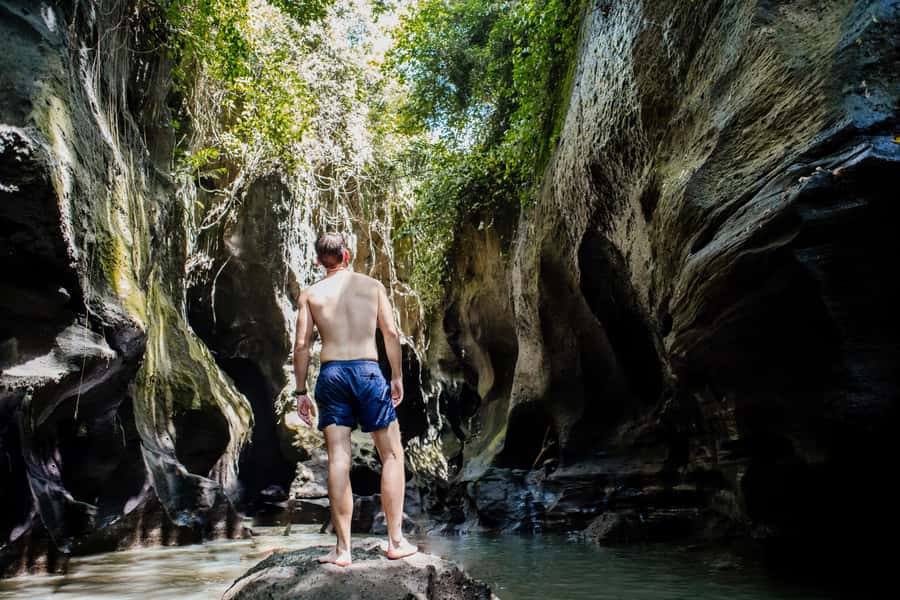
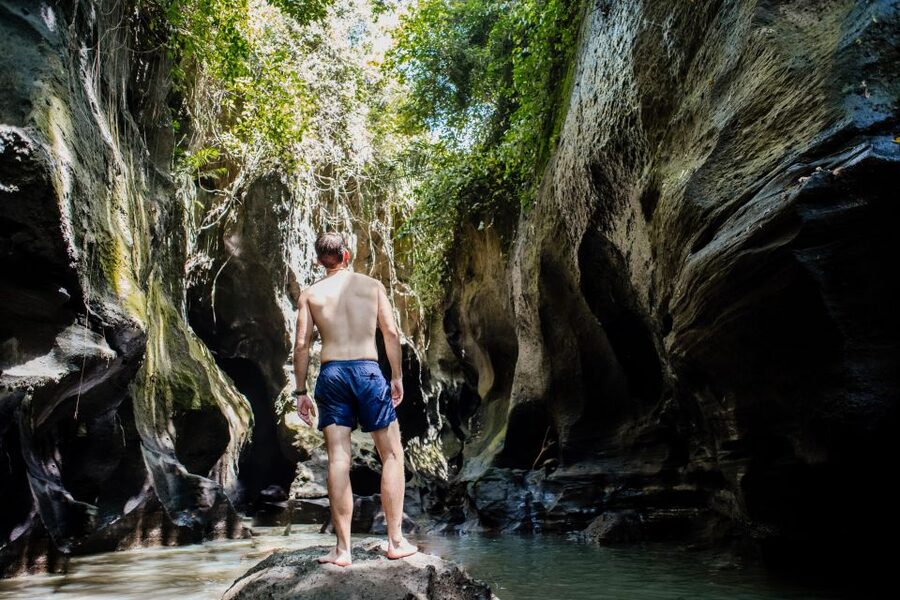
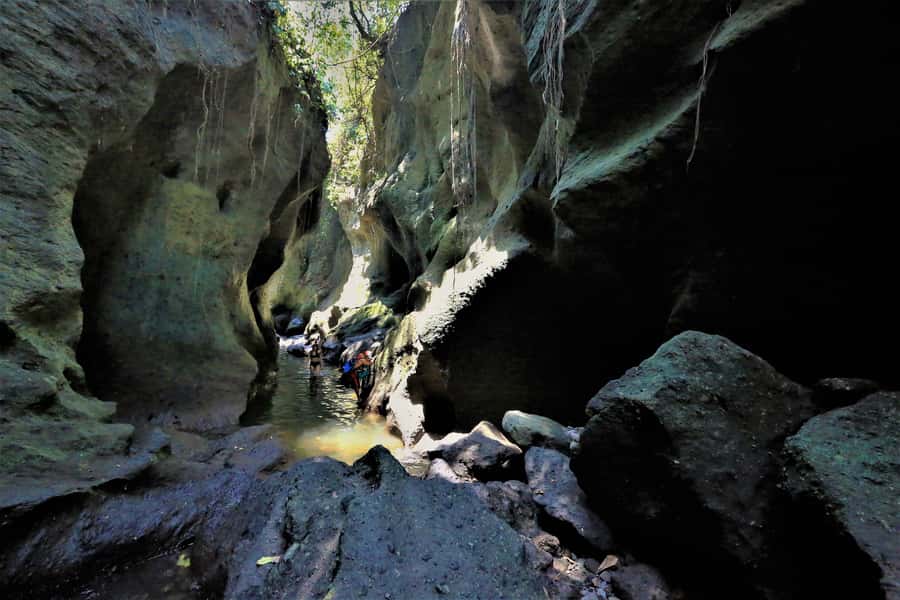
Beji Guwang Hidden Canyon is not a viewpoint where you step out, take a picture, and climb back into the van. You change into swimwear, leave large bags behind, and enter the canyon with a local guide. The route involves walking barefoot or in water shoes, wading, climbing, and swimming through the rock passage.
The canyon guide has an important job. The rocks can be slick and uneven, currents can become strong, and it is not always obvious where to place your feet. Guides such as Wayan and Putu have helped with safe routes and photographs, while the main tour guide stays involved with the wider day. You should still take responsibility for your own pace and ability.
The water is refreshing, but this is not a gentle riverside stroll. Some sections require confidence in the water, and you may need to pull yourself over rocks or pass through narrow channels. If you are uneasy swimming, have a heart or respiratory condition, are pregnant, or have limited mobility, choose another activity.
The canyon is at its best when you accept that you will get wet. Wear comfortable shorts and a T-shirt, and pack a dry change of clothes. Mesh water shoes with a firm sole are a smart choice. Flip-flops are a poor match for slippery stone, and bare feet can take a beating on the rough sections.
Lockers and towels are included with the Hidden Canyon options that provide them. Check the exact booking option before you pay, since the package details differ. A camera or phone is useful, but keep it secure and expect water, mud, and awkward climbing.
A few more waterfall trips around Bali worth a look
- Ubud: Waterfall, Rice Terraces & Monkey Forest Private Tour
★ 4.9 · 4,894 reviews - Ubud: Spectacular Waterfalls Tour
★ 4.9 · 1,066 reviews - Ubud: Rice Terrace, Waterfall, & Elephant Cave
★ 4.9 · 862 reviews
Tegenungan Waterfall gives you a scenic pause
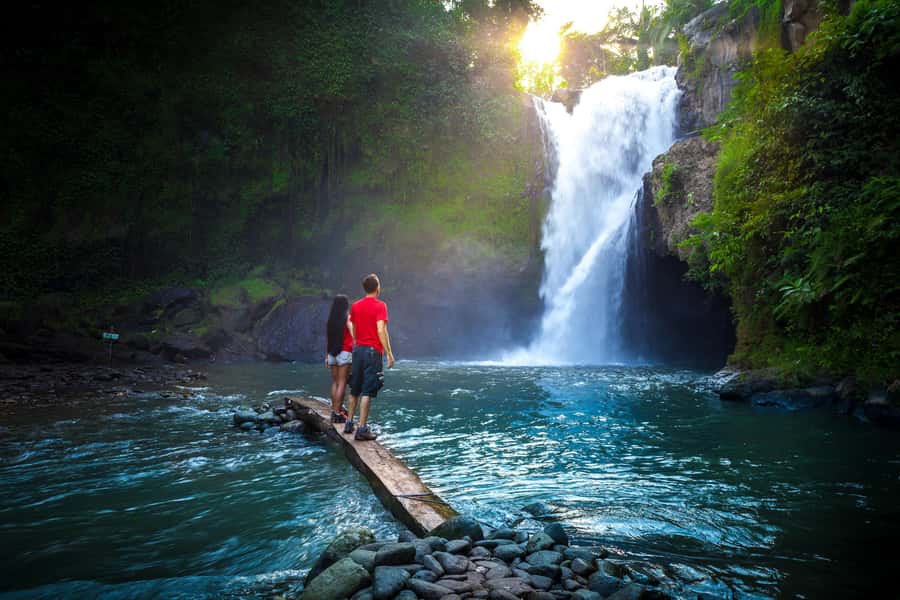
After the canyon, the tour continues to Tegenungan Waterfall, a popular stop a short distance from Ubud. You walk down more than 100 steps to reach the waterfall area, then climb those steps again. That sounds simple, but after the canyon it adds up.
The waterfall makes a good contrast with Beji Guwang. Here you get a broad scenic setting rather than a tight rock passage, with time for photographs and a closer look at the falling water. It is one of Bali’s best-known nature stops, so do not expect solitude.
Swimming conditions depend on the weather. Heavy rain the night before has sometimes left the water dirty, making a swim unattractive or unavailable. Even when swimming is possible, the stop can feel crowded. I would treat Tegenungan primarily as a waterfall visit and consider any swim a bonus.
The entry charge listed for Tegenungan is IDR 20,000. This is small, but it illustrates why you should not leave your wallet behind in the van. Keep some Indonesian cash dry and accessible.
Goa Gajah brings you into Bali’s sacred past
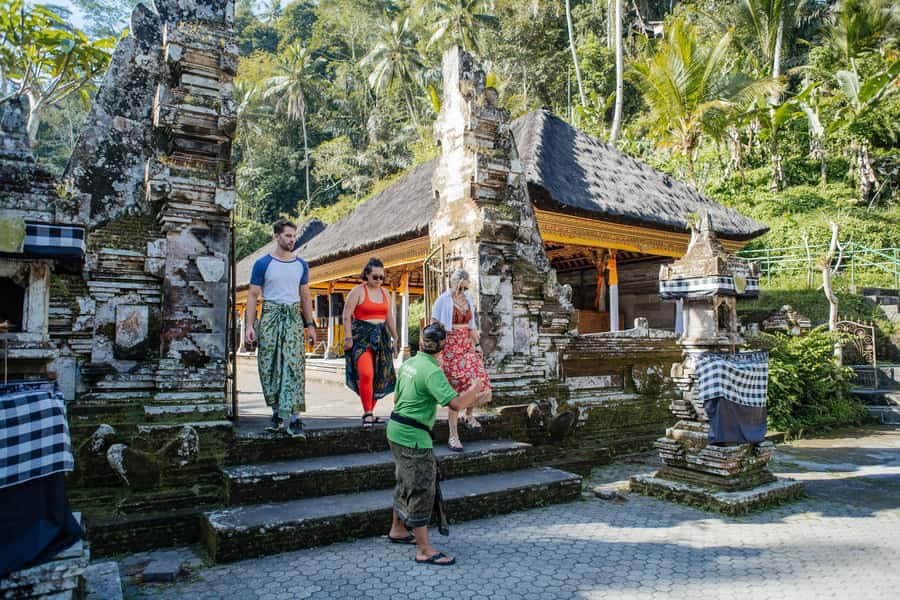
Goa Gajah, often called the Elephant Cave, changes the mood again. You move from wet canyon walls to carved stone, temple courtyards, and large tree roots spreading around the old site. The entrance has an atmospheric, almost theatrical quality, with elaborate carvings and a cave opening that gives the place its name.
This is a place where a guide adds value. The details can be easy to skim past if you arrive alone, especially when you are trying to keep track of temple etiquette and photography. Guides including Komang, Dewa, and Putu have been praised for explaining Balinese Hindu customs, family life, and local traditions in plain language.
Bring or borrow a sarong for temple visits. Dress modestly and keep a shirt or cover-up handy after the canyon. Sudden rain is possible, and one guide has even provided umbrellas during an unexpected shower, but you should not rely on that.
The listed entrance fee for Goa Gajah is IDR 50,000. This is separate from the tour price unless your selected booking option includes entrance tickets.
Gunung Kawi is the quiet cultural finish
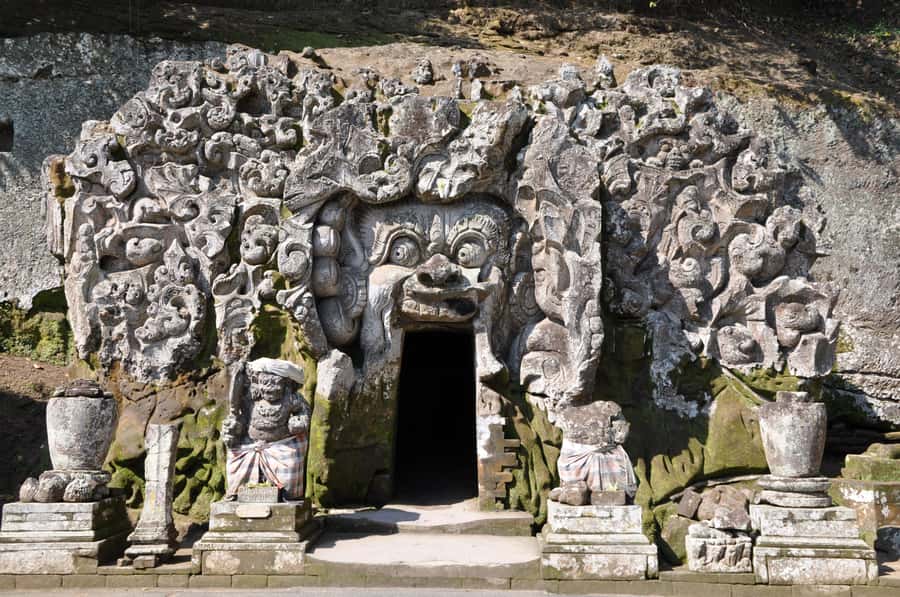
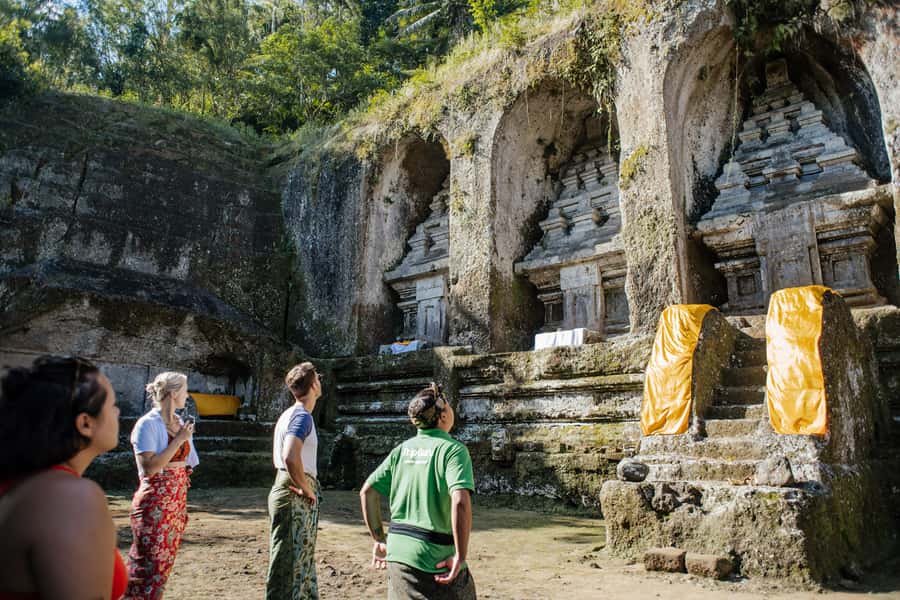
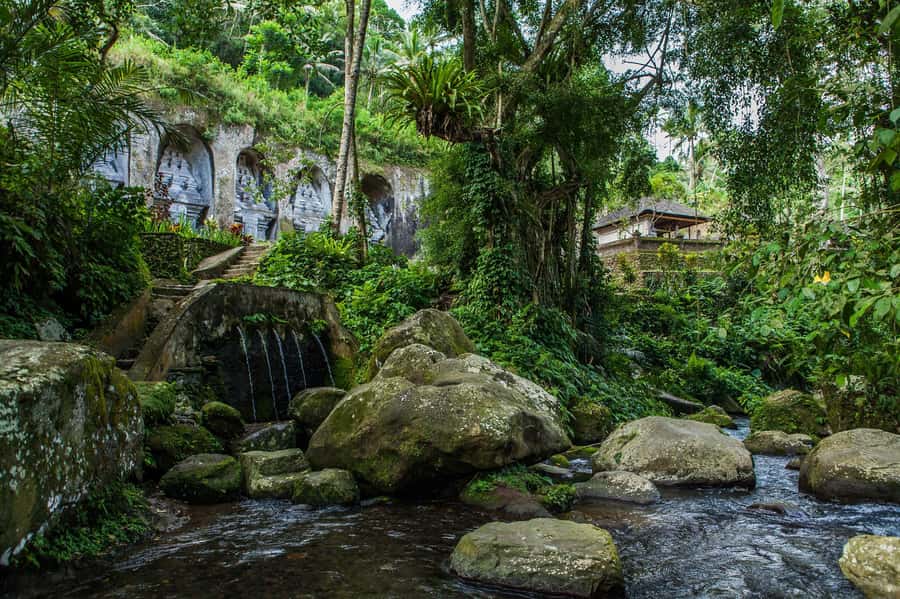
Gunung Kawi is reached through Bali’s famous rice terraces, and the walk down gives you a fine change of scenery. The site is associated with some of the island’s oldest monuments and is cut into the rock beside a river valley. You should expect more steps here as well, so save a little energy for the final cultural stop.
I find Gunung Kawi especially useful for understanding how Bali’s temples fit into the wider setting. The rice fields, stone monuments, water, and steep stairway are all part of the visit. This is not a quick photo stop. The setting rewards a slower pace and a guide who can explain what the carvings and temple spaces represent.
The listed entrance fee is IDR 50,000. As at Goa Gajah, you will need suitable clothing and a sarong. Comfortable shoes are more useful than stylish sandals, especially after the canyon.
The day’s temple visits are often the most peaceful part of the tour. Goa Gajah feels enclosed and dramatic, while Gunung Kawi feels more open and contemplative. Seeing both gives you a better sense of Bali than visiting only one famous temple.
Same stretch of river, a different day out:
- North Bali: Sunrise Tour with Dolphins, Waterfalls & Temples
★ 4.6 · 831 reviews - Ubud: Private Scenic Waterfalls and Rice Terraces Tour
★ 4.9 · 719 reviews - Bali: Lake Bratan, Handara Gate, Waterfall & Swing Tour
★ 4.8 · 714 reviews - Bali: Mount Batur Sunrise Hike and Hidden Waterfall
★ 4.8 · 591 reviews
The guide can make or break the day
This tour uses a driver-guide arrangement, with a separate local guide at the canyon. Names that have appeared with this experience include Komang, Komang Trisna Udiana, Dewa, Alit, Putu, Agus, Depik, Suma, and Anom. The strongest pattern is clear: the guide’s attitude shapes the whole day.
A good guide keeps you informed about pickup timing, helps you find safe footing, explains Balinese culture, and gives you time for photographs. Several guides have also helped with extra stops or small changes when the schedule allowed. If you are visiting Bali for the first time, the conversation in the vehicle can be nearly as useful as the formal temple explanations.
The five-person limit helps. You can ask questions without holding up a large bus, and the guide can pay closer attention during the canyon. Solo departures have also happened, which can feel more like a private day while still using the small-group format.
Guide languages are English, French, and German. Confirm that your preferred language is available when booking if this matters to you.
Transport and timing from the beach areas

Hotel pickup and drop-off are offered from areas including Kuta, Legian, Seminyak, Jimbaran, Sanur, Kerobokan, Canggu, Nusa Dua, and Ubud. The driver contacts you the evening before with the exact pickup time because the route depends on where the participants are staying.
From the southern beach districts, the drive can be long. The listed vehicle time is about 1.5 hours each way, though Bali traffic can affect the actual day. This is one reason the tour works best when you want to combine several major stops rather than make separate trips.
Transportation is by air-conditioned vehicle. That matters after the canyon, when you will want to change clothes and cool down before continuing. Do not bring oversize luggage. Carry only what you need for the day in a small bag.
The published duration is 510 minutes. The stops are substantial, with about 2.5 hours allocated to the canyon, 1.5 hours at the waterfall, a lunch break, and time at both temple sites. Treat the schedule as a full-day framework rather than a minute-by-minute promise.
What the $73 price really covers
At $73 per person, the value depends on the booking option. Hotel transfers, an air-conditioned vehicle, a guide, and water are included. Canyon packages may also include the canyon entry fee, welcome drinks, locker storage, and towels.
Standard small-group pricing does not include meals or entrance tickets. The listed fees are IDR 300,000 for Hidden Canyon entry and guide, IDR 20,000 for Tegenungan Waterfall, IDR 50,000 for Goa Gajah, and IDR 50,000 for Gunung Kawi. If none of these are included in your selected option, prepare about IDR 420,000 per person, plus lunch.
That extra cost is worth calculating before booking. The tour is not just transport between four locations. It combines a guided canyon activity, a waterfall visit, temple interpretation, hotel transfers, and a small group. If you tried to arrange those pieces separately, you would need to coordinate drivers, entry payments, and a canyon guide yourself.
Lunch is taken at a local restaurant, but it is not included. The schedule allows about 1.5 hours for the break, and nasi goreng has been a meal option on some days. Bring cash and do not assume meals are covered by the headline price.
Free cancellation is available up to 24 hours before the activity, and you can reserve now and pay later. Those terms are useful when your Bali plans are still shifting.
Pack for water, temples, and tropical weather
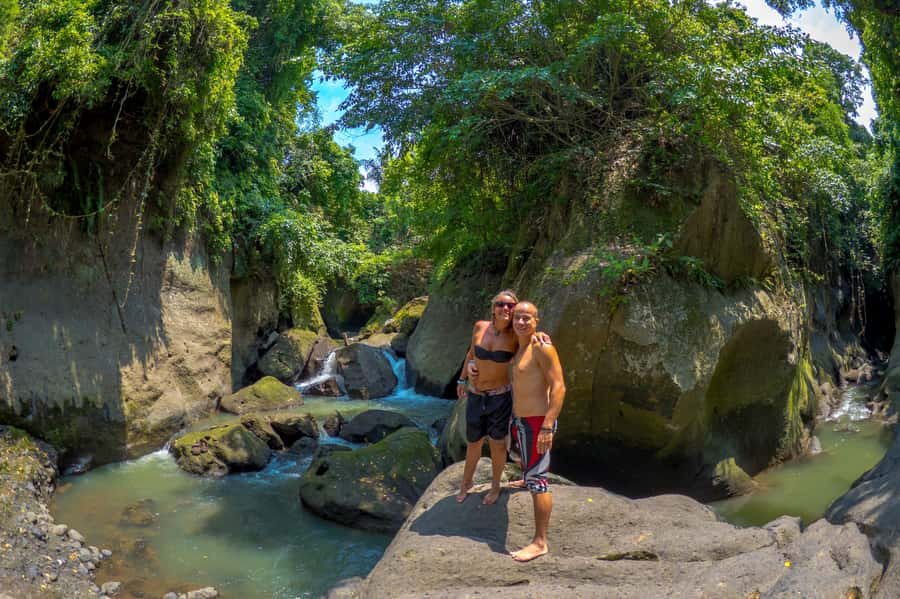
You will be more comfortable if you prepare for two very different halves of the day. Pack swimwear, a dry change of clothes, water shoes, sunscreen, insect repellent, sunglasses, a hat, and a small towel.
Add comfortable walking shoes or hiking shoes for the temple sections. A sarong is needed for the sacred sites. Bring cash in a waterproof pouch, along with water and a camera that you can protect from spray.
Leave large luggage at your accommodation. You may have locker storage for the canyon, but space in the vehicle and at the activity sites is limited.
The most useful single item is a pair of proper water shoes. Several people have found the canyon rocks sharp, slippery, or rough enough to make bare feet uncomfortable. Shoes will not remove the physical challenge, but they improve grip and protect your soles.
Who should book this Bali day trip
This tour suits you if you want more than temples and viewpoints. It is a strong choice for first-time visitors who want one day covering adventure, scenery, Hindu culture, rice terraces, and local conversation.
Families with children aged seven and older can join, provided the children are comfortable in water and can manage the climbing. The minimum age does not mean the canyon is easy. Parents should judge swimming ability and stamina rather than rely on the age rule alone.
Solo visitors may find the small format especially appealing. A friendly guide can make the long drive feel more social, and the photo help is useful when you are exploring alone.
You should skip it if you want a gentle sightseeing day, dislike getting wet, or have difficulty with stairs and uneven ground. Pregnant people and those with heart or respiratory problems are specifically advised not to participate.
Should you book the Hidden Canyon and temples tour?
Book it if Beji Guwang is the reason you are considering this outing. The canyon supplies the memorable physical challenge, while Tegenungan, Goa Gajah, and Gunung Kawi stop the day from becoming a single-purpose adventure.
Before paying, check whether your option includes canyon entry, temple tickets, waterfall entry, towels, lockers, and welcome drinks. Add lunch and cash fees to your budget. If you bring water shoes, swim confidently, and accept that Tegenungan may be crowded, the $73 base price offers a useful mix of Bali’s nature and culture in one well-supported day.
FAQ
How long does the tour last?
The advertised duration is 510 minutes, or about eight and a half hours. Pickup and drop-off timing can vary because the route depends on the participants’ hotel locations.
What locations does the tour visit?
The tour visits Beji Guwang Hidden Canyon, Tegenungan Waterfall, Goa Gajah, and Gunung Kawi Temple. It also includes a lunch break at a local restaurant.
Is hotel pickup included?
Yes. Pickup and drop-off are available from listed Bali areas including Kuta, Legian, Seminyak, Jimbaran, Sanur, Kerobokan, Canggu, Nusa Dua, and Ubud. The driver confirms the exact time the evening before.
How many people are in the group?
The group is limited to five participants. Some departures may have fewer people, depending on bookings.
Do I need to know how to swim?
You should be a confident swimmer because the Hidden Canyon section includes swimming and moving through water. The canyon also involves climbing over slippery and uneven rocks.
Are lunch and entrance fees included?
Lunch is not included. On the Standard Small Group Tour, entrance fees are also excluded. The listed fees are IDR 300,000 for the Hidden Canyon, IDR 20,000 for Tegenungan Waterfall, IDR 50,000 for Goa Gajah, and IDR 50,000 for Gunung Kawi.
What should I wear?
Wear comfortable shorts and a T-shirt for the canyon, plus swimwear and a change of clothes. Bring water shoes, walking shoes, sunscreen, and a sarong for the temples.
Who should not join this activity?
The tour is not suitable for pregnant women, people with mobility impairments, or people with heart or respiratory problems. The minimum participant age is seven.
Just added around Bali
- Monkey Forest, Ubud, Waterfall and Rice Terrace★ 4.5 · 53 reviews
- Bali: Tirta Gangga, Taman Ujung and Cepung Waterfall Trip★ 4.8 · 101 reviews
- Ubud: Rice Terrace, Holy Water Temple & Waterfalls Trek Tour★ 4.9 · 115 reviews
- Private Sekumpul Waterfall Hiking Tour★ 4.9 · 116 reviews
- North Bali: Ulun Danu, Waterfalls, Swing and Monkey Forest★ 5.0 · 39 reviews
- North Bali: Sekumpul and Banyumala Waterfalls & Rice Terrace★ 4.9 · 138 reviews
- Bali: Gitgit Canyon Canyoning Trip with Breakfast and Lunch★ 5.0 · 193 reviews
- From Bali: Bromo, Ijen, & Tumpak Sewu Waterfall 3-Day Tour★ 5.0 · 8 reviews
Bali Waterfall Tours, compared.
North Bali: Sunrise Tour with Dolphins, Waterfalls & Temples
Read our review →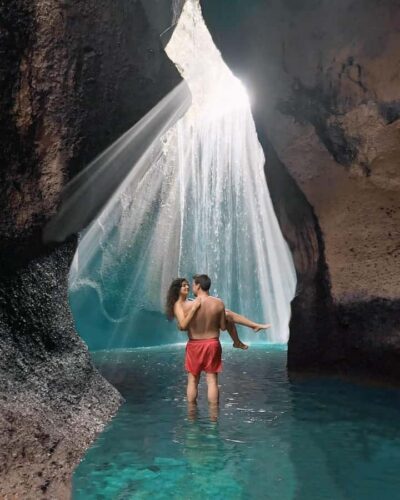
Ubud: Private Scenic Waterfalls and Rice Terraces Tour
Read our review →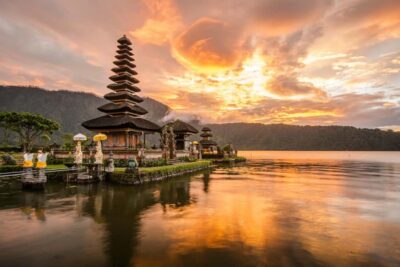
Bali: Lake Bratan, Handara Gate, Waterfall & Swing Tour
Read our review →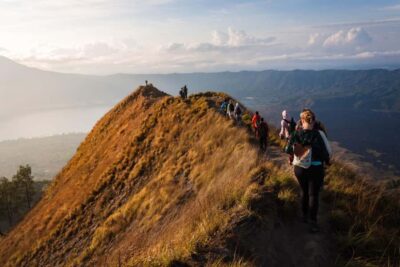
Bali: Mount Batur Sunrise Hike and Hidden Waterfall
Read our review →
Bali: Swing with Falls, Rice Terrace, & Monkey Forest Option
Read our review →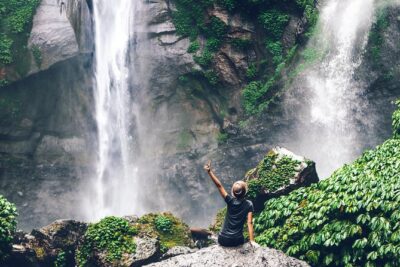
North Bali: Sekumpul Waterfalls and Ulun Danu Temple Tour
Read our review →Browse the lists this tour appears in